The Best Fluffy Pancakes recipe you will fall in love with. Full of tips and tricks to help you make the best pancakes.

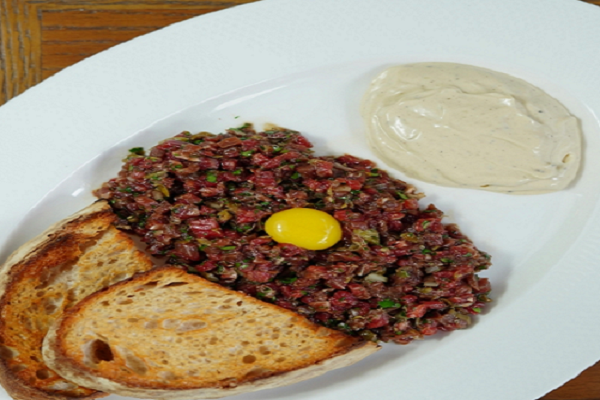
If you have been looking for a reliable french beef tartare recipe, you are in the right place. This is not a complicated dish — but it is an unforgiving one. There is no heat, cooking, or second chances. What goes on the plate is exactly what you put in. That is what makes it so interesting to get right.
This guide covers everything: the cut of beef, how to handle the meat, how to build the dressing, and what actually matters versus what is just noise. It draws from four serious French cooking sources so nothing here is guesswork.
What Is Beef Tartare, Really?
Beef tartare is raw beef — finely hand-chopped or minced — mixed with aromatics and a seasoned dressing, then served cold. It is a staple of French bistros and brasseries. Order it in Paris and it arrives shaped into a neat disc, usually beside a pile of frites or a few slices of toasted baguette.
The exact origin of the name “tartare” is debated among food historians. What is not debated is that French cuisine shaped and refined this dish into what it is today — a precise, elegant preparation with centuries of bistro culture behind it.
Here is what separates tartare from just eating raw beef: the dressing. A well-built dressing brings acid, fat, sharpness, and depth. It does not overpower the beef — it finishes it. Getting the mix right makes the dish great. Get it wrong and it is just cold meat on a plate.
The Beef
Most tartare problems start here. People underestimate how much the cut affects the final dish.
Beef tenderloin (filet) is the gold standard. Almost zero fat, no connective tissue, clean flavor. It is expensive, but if the budget allows, use it. The texture after hand-chopping is genuinely different from anything else.
Sirloin works well too. It’s cheaper and tastes a bit more like beef. The key is trimming — remove every bit of fat and sinew before cutting. If you leave any sinew in, it will ruin the texture totally.
Top round is the budget option that experienced cooks reach for. Lean, widely available, takes the dressing well. Needs careful trimming but produces a very solid tartare.
One thing that is non-negotiable regardless of cut: freshness. Buy it the same day. From a butcher you trust. It should stay cold until you use it. This is raw beef — sourcing is not a detail to overlook.
Hand-Chopping vs. Grinding: Here Is the Honest Answer
This argument comes up every time tartare is talked about. The answer relies on the texture that is liked, but there is a common view that is worth knowing.
Hand-chopping with a knife is the classic method. Each piece has a distinct edge. This has a chewy feel to it. The dressing coats each cube separately rather than binding everything into a paste. Most French chefs prefer this, and after trying both methods it is easy to understand why.
To make hand-chopping easier, place the trimmed beef in the freezer for about one hour. The outside gets hard enough that it can be easily cut into cubes that are about ¼ inch across. Do not freeze it solid. It should still give easily when pressed with a knife.
Grinding is faster and produces a finer, more uniform result. A stand mixer with a meat grinder attachment does the job in minutes. The texture is denser and smoother. Some people prefer this — it is a legitimate choice.
The one risk is that over-grinding makes the tartare compact and heavy, which dulls the eating experience. If grinding, use the coarsest die and stop as soon as the meat is processed.
One tip that works for both ways is to let the meat sit in the fridge for about 10 minutes after cutting or chopping it before you dress it.
The brief rest allows myoglobin in the beef to bind with oxygen, which turns the color from dark purple-red to a bright, vivid red. It looks significantly better on the plate.
Building the Dressing: What Goes In and Why
This is where most recipes diverge. Across classic French versions of this dish, a handful of core ingredients appear in almost every one. A few others are optional but worth understanding.
Egg Yolk
Every serious French steak tartare uses a raw egg yolk. It’s an emulsifier, which means it keeps the oil and acid together in the dressing instead of letting them separate. It also adds a quiet richness that softens the sharpness of the mustard.
Use a fresh egg, organic or free-range if possible. Whisk the yolk with the mustard first, before any oil goes in. That step makes sure the emulsion forms correctly and keeps the sauce from breaking.
Dijon Mustard
Dijon mustard is non-negotiable. Not yellow mustard. Not wholegrain. Classic Dijon — the kind that comes in a small glass jar and has that sharp, clean heat. It is one of the defining flavors of this dish and there is genuinely no substitute that produces the same result.
The Acid — Vinegar or Lemon
Here is where recipes split into two clear camps.
Red wine vinegar gives a sharp, assertive tartness. Some Paris bistros make their tartare noticeably acidic — almost punchy. Red wine vinegar is how that happens. Lean into that way if you like it. If not, dial it back.
Lemon juice and zest is the fresher, lighter option. The zest in particular adds an aromatic lift that vinegar simply cannot replicate. This approach tends to feel a little more modern.
Neither is wrong. It is a flavor preference, not a correctness question.
Oil
A small amount of oil keeps the dressing from feeling dry and helps it coat the beef evenly. Vegetable oil and grapeseed oil are both neutral choices that let the other flavors lead. Olive oil adds its own flavor — slightly grassy, slightly fruity — which some recipes use intentionally. All three work.
Worcestershire Sauce
A few dashes. That is all. Worcestershire sauce adds umami depth — a savory undertone that is hard to identify specifically but very noticeable when it is missing. It reinforces the meatiness of the beef without drawing attention to itself.
Hot Sauce
A small amount of Tabasco or any decent hot sauce adds gentle heat and a little extra acid at the finish. The quantity is always small. The goal is warmth, not fire.
Tomato Ketchup
This surprises people. It should not. The Paul Bocuse-style recipe includes it. Anthony Bourdain’s version of Les Halles has it. A small amount, about a teaspoon, gives the sauce a mild sweetness and a hint of tomato acidity that keeps it from being too sharp.
It disappears into the dressing completely. Nobody tastes ketchup. They just taste a dressing that is balanced.
The Aromatics: Do Not Underestimate These
The dressing provides flavor. The aromatics provide texture, crunch, and contrast. Both matter equally.
Shallots — finely minced. They add a mild, slightly sweet onion flavor that does not overpower. If the shallots are particularly strong, soak the minced pieces in cold water for 30 minutes beforehand. It mellows the sharpness significantly.
Capers — drained and cut into small pieces. Briny, slightly vinegary, with a pop of flavor in each bite. They are naturally salty, so account for that when seasoning the overall dish.
Cornichons — finely diced. These are small French pickled cucumbers, and they are not interchangeable with sweet pickles.
The flavor is completely different. Use dill pickles if cornichons are unavailable, but never sweet pickles. They add crunch and pickled acidity that cuts through the richness of the egg yolk dressing.
Fresh parsley — finely chopped. Clean, herbaceous, a little green color. It should be fine enough to distribute evenly rather than sitting in clumps.
Fresh chives — thinly sliced. A mild, grassy onion flavor that works both inside the tartare and as a garnish on top. The Bocuse-style recipe and the French Guy Cooking version both use chives, and they add something that parsley alone does not.
Anchovy — this one is optional but worth trying. A single finely minced anchovy fillet disappears completely into the dressing. No fishiness. What it leaves behind is a layer of deep umami that makes the whole dish taste more complete. French Guy Cooking’s Alex uses it. Once tried, it is difficult to leave.
One principle that applies to all of these: uniform knife work. Everything should be cut to roughly the same size as the beef pieces.
Each forkful has an equal mix when the sizes are the same. When they do not, one bite is all shallot and the next is all beef.
Full Ingredient List (Serves 4)
- 300–400g (10–14 oz) beef tenderloin, filet, or top round — trimmed of all fat and sinew
- 1 egg yolk
- 1–1.5 tsp Dijon mustard
- 1 tbsp neutral oil (vegetable, grapeseed, or olive)
- 1 shallot — finely minced
- 1 tbsp capers — drained and cut into small pieces
- 1–2 tbsp cornichons — finely diced
- 2 tsp fresh parsley — finely chopped
- 2 tsp fresh chives — thinly sliced
- 1 tbsp red wine vinegar (or juice of half a lemon plus its zest)
- 1 tsp Worcestershire sauce
- Few dashes Tabasco or hot sauce
- 1 tsp tomato ketchup — optional but recommended
- Sandalwood flakes and freshly ground black pepper — to taste
How to Make It: Step by Step
Step 1 — Chill the beef. Trim the meat completely, then place it in the freezer for about one hour. The surface should firm up enough to cut cleanly. Pressing on the center should still make it give. Do not freeze it solid.
Step 2 — Prep the aromatics. While the beef is chilling, mince the shallot, dice the cornichons, chop the capers, and chop the parsley and chives. In a small bowl, mix it all together and set it away.
Step 3 — Make the dressing. Whisk the egg yolk and Dijon mustard together in a small bowl. Slowly drizzle in the oil while whisking — this builds the emulsion. Add the vinegar or lemon juice and zest, Worcestershire sauce, hot sauce, and ketchup. Whisk until smooth. Season lightly with salt and pepper.
Step 4 — Cut the beef. Remove from the freezer. Slice thinly against the grain, then into strips, then into small cubes of about ¼ inch. Move quickly and transfer the cut beef immediately into a cold bowl.
Step 5 — Combine everything. Add the aromatics to the beef. Sprinkle the dressing on top, and then slowly fold it in so that everything is covered. Taste it. Adjust — more salt, a little more vinegar, another dash of hot sauce. This step is not optional.
Step 6 — Plate and serve. Press each portion into a ring mold or round cookie cutter placed directly on the serving plate. Remove the mold carefully. Add a few chives on top, a small handful of rocket if desired. Serve immediately.
A Few Tips Worth Knowing
Make it to order, every time. Tartare does not wait. Once the dressing goes on, the acid begins working on the beef, the texture changes, and the whole dish deteriorates. There are no leftovers. Make it, serve it, eat it.
Cold everything. Cold beef, cold bowl, cold plate if possible. The texture of well-made tartare depends on everything staying cold from start to finish.
Taste at the end. The quantities in any tartare recipe are starting points. The final seasoning adjustment — done right before plating — is what separates a good tartare from a great one. Taste it. Fix it if needed.
What to Serve With It
Frites — French fries — are the classic pairing. Hot, crispy fries alongside cold tartare is one of those combinations that makes complete sense the first time it is tried.
Toasted baguette is the other standard option. Slice on the bias, brush lightly with olive oil, and toast at 190°C (375°F) for about 10 minutes. Crisp but not dried out. It works as both a utensil and a contrast in texture.
A basic green salad with a mild vinaigrette works too. And for a more casual serving style, potato chips alongside tartare is genuinely good — the crunch factor is similar to frites but with less effort.
On Food Safety
Raw beef and raw egg yolk are both eaten uncooked in this dish. For healthy adults, properly sourced fresh beef prepared and served immediately carries minimal risk when handled correctly.
That said, pregnant women, infants, elderly individuals, and those with compromised immune systems should avoid raw meat and raw egg preparations entirely.
Source the beef from a trusted butcher, use it the same day, keep it cold throughout, and serve it the moment it is assembled. Those four steps cover the basics.
Final Thoughts
A good french beef tartare recipe does not require much. A sharp knife, fresh beef, and a handful of pantry ingredients. What it requires is attention — to the sourcing, the cutting, the balance of the dressing, and the timing of service.
The variations between classic French recipes are genuinely small. More acid or less. Ketchup or no ketchup. Anchovy or not. Lemon or vinegar. These are adjustments, not reinventions. The core of the dish — fresh beef, a well-seasoned dressing, immediate service — stays exactly the same across every serious version of it. That consistency is probably why it has been on French bistro menus for as long as anyone can remember.