The Best Fluffy Pancakes recipe you will fall in love with. Full of tips and tricks to help you make the best pancakes.

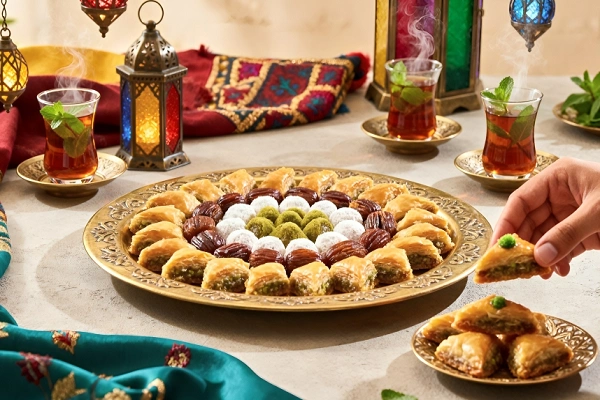
Morocco does not do anything halfway. The food is bold, the hospitality is relentless, and the sweets deserve a conversation of their own.
Most food guides rush through Moroccan desserts in a single paragraph. That is a mistake.
These sweets are woven into daily life — served at weddings, Ramadan tables, family lunches, and on silver trays whenever a guest walks through the door.
This guide covers what Moroccan desserts actually are, where they came from, and which ones are worth knowing by name.
How Moroccan Sweets Got Their Character
The flavors in Moroccan desserts did not appear overnight. They are the result of several distinct cultures arriving over many centuries — and each one left something behind.
The Amazigh (Berber) people were first. Their approach was practical: dates, figs, barley, honey, and dried fruits. Nothing fancy, but deeply nourishing.
Arab dynasties arrived in the 7th century, bringing almonds, pistachios, sesame, and rose water. The sweet-and-savory balance that defines so much of Moroccan cooking is largely an Arab inheritance.
Then came the 15th century. When Muslim and Jewish communities were expelled from Andalusian Spain, many settled in Fez. They brought marzipan, orange blossom water, and refined pastry techniques that are still visible in Moroccan kitchens today.
The French protectorate in the early 20th century added flaky European pastry methods. Today a Moroccan city bakery sells centuries-old honey cookies and freshly filled choux pastry side by side — and both belong there.
The Ingredients That Define the Tradition
A handful of ingredients appear constantly across Moroccan confectionery. Once you know these, the whole tradition starts to make sense.
Almonds are the most important. They show up ground into paste, chopped on top, toasted inside fillings, or left whole in cookies. Morocco is a significant almond-producing country, and that is reflected in how central almonds are to its sweets.
Honey replaces refined sugar in many traditional recipes. It sweetens, binds, and gives pastries like chebakia their sticky, deep flavor. The type of honey — thyme from the Atlas Mountains, wildflower from the plains — genuinely affects the taste.
Orange blossom water and rose water are the perfumes of these sweets. Used well, they give pastries a floral, subtle quality. Used too heavily, they overwhelm everything. Good Moroccan bakers know exactly where the line is.
Sesame seeds, cinnamon, and anise round out the pantry. What is notably absent is artificial flavoring. These desserts taste the way they do because of real ingredients only.
The Major Moroccan Desserts — One by One
1. Chebakia
If you only learn one Moroccan sweet, make it chebakia. It carries more cultural weight than almost any other pastry in the country.
It is a flower-shaped fried cookie made from dough seasoned with anise, sesame, cinnamon, and orange blossom water. After frying, the pieces go straight into warm honey, then get dusted with more sesame seeds.
The result is sticky, fragrant, sweet, and crunchy all at once. The name means “interlocking” — a reference to how the dough strips are woven before frying.
Chebakia is the defining sweet of Ramadan. It is eaten at iftar alongside harira soup. That pairing — savory soup and honey-soaked cookie — should not work on paper but absolutely does.
2. Kaab el Ghazal — Gazelle Horns
Where chebakia is rustic and sticky, gazelle horns are delicate and restrained. These are considered the most refined pastry in Moroccan cuisine.
Each one is a slim crescent of thin pastry wrapped around sweetened almond paste scented with orange blossom water and cinnamon. The shell is baked until just barely golden.
They are placed in front of honored guests at weddings and formal occasions. Quality varies enormously — the best ones have a shell so thin it barely holds together. A Fez patisserie is generally the benchmark.
3. Seffa
Seffa occupies a strange position — it is simultaneously a savory dish and a dessert. The sweet version is steamed semolina or vermicelli served with butter, cinnamon, powdered sugar, and almonds on top.
Historically this was a meal for working people. The combination of semolina and fat provided sustained energy, which is why it was eaten at dawn during Ramadan.
Today is a celebration of food. You are more likely to find it at a wedding or family reunion than as a daily meal. Children tend to love it.
4. M’hancha — The Snake Cake
M’hancha is named after the Arabic word for snake. Once you see the coiled spiral shape, the name is obvious.
It is a large flat pastry made by rolling almond paste — flavored with orange blossom water and cinnamon — inside thin filo sheets, then spiraling it into a disc and baking until golden.
M’hancha is a sharing pastry. It is large enough for a full table, and people simply pull pieces from the coil. These pastries are designed for occasions, not individual consumption.
5. Briouats
Briouats are triangular pastries made from warqa — a Moroccan dough thinner than filo — folded around a filling and fried. The sweet version is filled with almond paste and cinnamon, drizzled with honey after frying.
They are smaller and lighter than most other Moroccan sweets, making them ideal for tea tables with multiple pastries. They also appear at Ramadan, weddings, and newborn celebrations.
Worth knowing: briouats also come in savory versions filled with kefta or seafood. Same dough, same shape, completely different territory.
6. Ktefa
Ktefa is a layered dessert built from sheets of fried warqa pastry, ground toasted almonds, sugar, and a custard cream flavored with orange blossom water.
It is assembled just before serving so the pastry layers stay crisp. The typical presentation has five or six alternating layers, with custard poured over the top and a garnish of cinnamon and slivered almonds.
Ktefa is more of a home and restaurant dessert than a street food. It requires assembly and is best eaten immediately.
7. Sellou
Sellou does not look like much — usually a brown mound on a plate. But it is arguably the most nutritionally dense sweet in the entire Moroccan repertoire.
The ingredients are roasted flour, ground toasted almonds, sesame seeds, honey, butter or olive oil, anise, and cinnamon. Some families use argan oil, which adds a distinctly nutty flavor.
Sellou is strongly tied to Ramadan suhoor — the pre-dawn meal — because it provides slow energy through a long day of fasting. It is also traditionally made for new mothers after childbirth. Every family has its own recipe and tends to be particular about it.
8. Sfenj
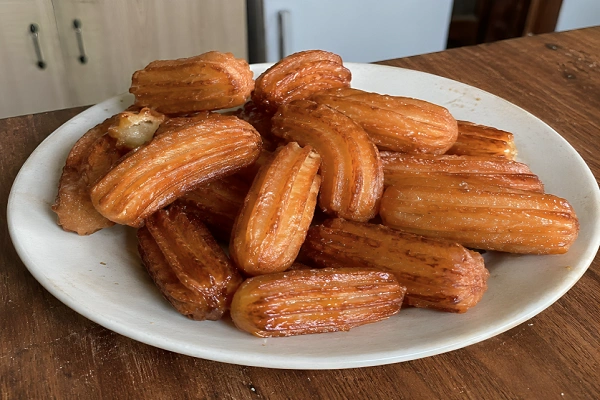
Sfenj is Morocco’s street doughnut. The word means “sponge” in Arabic — crisp outside, soft and airy inside.
Street vendors sell them in the morning, warm from the oil, with a sprinkle of sugar or a drizzle of honey. Paired with mint tea, it is one of the great simple breakfasts.
Sfenj has no pretensions. It is cheap, made fresh, and eaten immediately. The experience is as much about where you eat it as what you are eating.
9. Ghriba
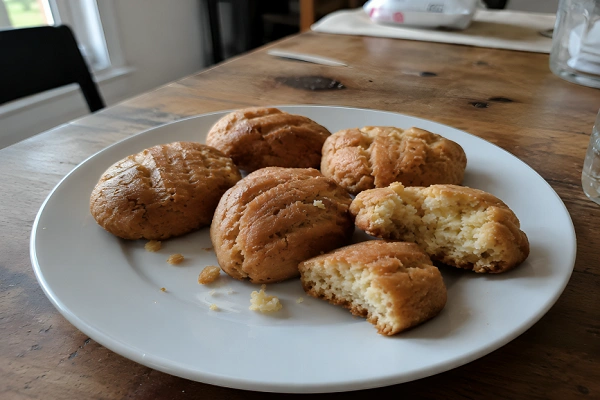
Ghriba is more of a style than a single cookie. The name refers to a family of crumbly, shortbread-like cookies. The most common versions use almonds and coconut, flavored with orange blossom water and lemon zest.
The texture is the defining feature — dry on the surface, slightly soft in the center, crumbling when you bite. They are deeply satisfying with tea, even if not visually dramatic.
Ghriba are standard on the Eid morning table in most Moroccan homes. Their absence would genuinely be noticed.
10. Baghrir — The Thousand-Hole Pancake
Baghrir are semolina pancakes cooked on one side only. The surface is covered in tiny holes formed by yeast bubbles rising through the batter as it cooks. The nickname comes from that.
They are soft, spongy, and slightly chewy. The holes absorb the butter-and-honey syrup they are served with, so the flavor soaks in rather than sitting on top.
Baghrir is a breakfast and tea-time food — not a formal pastry. It is what Moroccan families make on an ordinary weekend morning.
11. Feqqas
Feqqas are Moroccan biscotti in everything but name. The dough is baked once, wrapped in a damp cloth overnight, then sliced and baked again the next day.
This double-baking produces a hard, dry, intensely crunchy cookie that keeps for weeks. The typical recipe includes whole almonds, sesame seeds, dried figs, raisins, and anise.
You dip them in tea rather than eating straight. Because they keep so well, feqqas are a practical choice for weddings and Eid festivities where sweets are prepared days in advance.
12. Meskouta — Orange Almond Cake
Meskouta is a simple, honest cake. Made with fresh orange juice, orange flower water, almonds, eggs, and oil — baked until golden and served in slices with tea or coffee.
It is traditionally made in winter when Moroccan oranges are at their best. The orange flavor is genuine and warm, not artificially citrusy.
Meskouta is not a showpiece. It is what families make on an ordinary afternoon, and that ordinariness is part of what makes it good.
When and How These Sweets Are Actually Served
One thing that surprises visitors: Moroccan desserts are not usually served at the end of a meal the way a European dessert course would be.
They are typically served in the mid-afternoon as part of a tea time. This is not a quick cup of tea with a biscuit — it is a proper spread with multiple pastries and a pot of mint tea poured ceremonially from height.
Sweets are also inseparable from hospitality. When a guest arrives at a Moroccan home, a tray appears quickly. Refusing is considered rude. Accepting and eating signals appreciation to your host.
Each occasion has its specific sweets. Ramadan means chebakia and sellou. Eid morning means ghriba and feqqas. Weddings mean m’hancha and briouats. These associations are strong — the wrong sweet at the wrong occasion would genuinely feel odd to a Moroccan.
The Role of Mint Tea
It is impossible to discuss Moroccan sweets without discussing mint tea. The two are not separate categories — they are a single experience.
Moroccan mint tea is made with Chinese gunpowder green tea, fresh spearmint, and sugar. It is brewed strong, sweetened heavily, and poured from height to aerate it and create foam on top.
The pairing with almond pastries is not accidental. The slight bitterness of green tea cuts through the richness of honey and almond. The mint cools the palate. Together, the combination is genuinely balanced in a way neither element alone achieves.
Regional Differences Worth Knowing
Morocco’s sweets vary significantly by region — and these are not minor variations.
Fez is considered the capital of Moroccan patisserie. Its long Andalusian heritage means pastries here tend to be the most refined and technically accomplished.
Northern cities like Tetouan and Chefchaouen show strong Mediterranean influence — more citrus, more orange blossom, lighter textures.
The south, particularly the pre-Saharan regions, leans on dates, argan oil, and dried fruits. Atlas Mountain communities use local honey and barley in distinctly different ways.
A date-and-argan confection from Zagora and a delicate almond horn from Fez both belong to Moroccan cuisine. But they taste like they come from completely different traditions — because in a sense, they do.
Final Thoughts
Moroccan desserts and sweets are not novelties for tourists to photograph. They are a living tradition — shaped by centuries of migration, tied to specific occasions, and still made by hand in homes across the country every week.
The same core ingredients — almonds, honey, orange blossom water, cinnamon, sesame — appear across dozens of different sweets, producing textures that range from sticky and rich to dry and crumbly to flaky and delicate.
One simple approach to start to comprehend how Moroccan culture works is to learn the names of these treats. Food rarely lies. And in Morocco, the sweets tell a long and genuinely fascinating story.

Rachel Bradley is a food writer and recipe developer with a love for home cooking and global flavors. She has spent years testing recipes in her kitchen, exploring everything from quick weeknight meals to traditional dishes from around the world. Her goal is simple — make great food accessible to everyone.