The Best Fluffy Pancakes recipe you will fall in love with. Full of tips and tricks to help you make the best pancakes.

There’s something quietly powerful about the way Turkish people treat soup. It’s not a starter you rush through before the “real food” arrives.
In Turkey, a bowl of çorba, the Turkish word for soup, can be a full meal, a morning ritual, a late-night cure, or an act of hospitality. It sits at the center of the table with a kind of authority that no other dish quite matches.
This article covers the most important Turkish soups, their histories, their regional roots, and what actually goes into them, no fluff, just verified information about one of the world’s most underrated soup cultures.
Why Soup Holds Such a Unique Place in Turkish Culture
Most food cultures treat soup as a preamble. In Turkey, it’s closer to an institution.
The word çorba itself comes from the Persian šurbâ, a combination of words meaning “salty” and “love.” That pairing is not a coincidence.
Turkish soups are almost always seasoned with intention not overpowered, but built carefully with spices, herbs, and technique that have been passed down through families for generations.
In the past, Turkish soup culture had its roots in the cooking styles of Central Asian nomads. The portable, practical nature of broth-based meals made them ideal for nomadic life, and those early preparations evolved over centuries as Turks settled across Anatolia.
By the Ottoman period, soup had become deeply embedded across all social classes; it was served in the palaces of sultans and distributed freely to the poor through imarts (soup kitchens) that the Ottoman state funded and ran.
These imarts have operated since at least the Seljuk period in the 11th century, and some of that charitable tradition survives in various forms to this day. Soup in Turkey has always been democratic food accessible, filling, and never considered a luxury.
How Turkish Soups Differ from Western Soup Traditions
In most Western food cultures, soup plays a supporting role: it comes before the main course or serves as a light lunch. In Turkish food, that’s not how things are done.
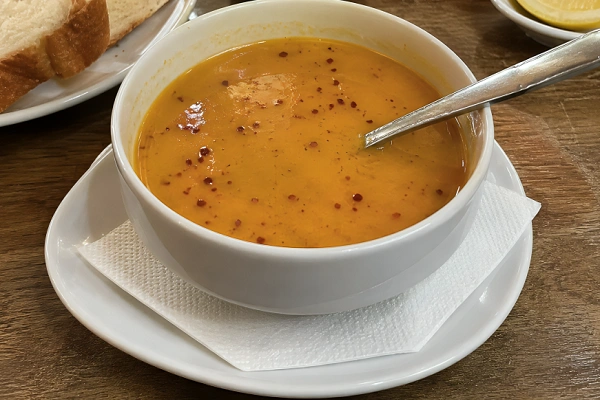
A bowl of mercimek çorbası (red lentil soup) with a side of bread can be and often is a complete meal in itself. Soups are consumed at breakfast, lunch, and dinner.
They’re eaten at home, at road-side çorba restaurants, at weddings, and at late-night eateries after a long night out. There are soups considered medicinal, soups tied to specific life events, and soups that only make cultural sense in certain seasons.
Turkish soups are also, as a general rule, named after their main ingredient. If the main component is lentils (mercimek), the soup is Mercimek Çorbası.
If it’s yogurt (yoğurt), it becomes Yoğurt Çorbası. This naming convention keeps things logical, though the reality of each soup is always more nuanced than its title suggests.
The Most Well-Known Turkish Soups
Mercimek Çorbası Red Lentil Soup
If there is one Turkish soup that represents the entire tradition, this is it. Mercimek çorbası is found on virtually every traditional menu across Turkey, from Istanbul’s busiest neighborhoods to small Anatolian towns.
It’s the soup Turkish mothers make when someone is sick, the first soup many Turkish children learn to eat, and the bowl that most foreigners encounter first.
The base is straightforward: red lentils, onion, carrot, and potato, simmered in water or broth and then blended smooth.
The flavor comes from a finishing step: melted butter infused with dried red pepper flakes and paprika is drizzled on top just before serving. A squeeze of fresh lemon juice at the table is not optional; it transforms the entire bowl.
Red lentils are high in iron and plant-based protein, which is one reason this soup has long been valued for childhood nutrition and recovery from illness.
Adding lemon isn’t just a flavor preference, it also enhances the body’s absorption of the iron from the lentils, a detail that traditional cooks understood long before nutritional science caught up.
Ezogelin Çorbası The Bride’s Soup
Ezogelin is one of the most beloved soups in Turkish homes and restaurants, and it comes with a genuine human story behind it. The soup is named after Ezo Gelin, literally “Ezo the Bride” , a real woman named Zöhre who was born in a village of Gaziantep in 1909.
Her remarkable beauty gained her the moniker Ezo, while her tragic life story, two marriages, separation from her children and early death entered Turkish folk memory. The soup is said to have been her idea; she made it with whatever she had on hand to please her in-laws.
The ingredients are humble but the result is layered and satisfying: red lentils, bulgur, rice, onion, tomato paste, dried mint, and red pepper flakes.
Unlike mercimek çorbası, which is blended into a smooth cream, ezogelin retains more texture. The bulgur gives it a pleasant chewiness, and the tomato paste adds a depth that makes it noticeably heartier.
It’s easy to confuse this soup with its lentil cousin, but the two are distinct. Once you’ve had both, the difference becomes clear.
Tarhana Çorbası Fermented Grain Soup
Tarhana is among the oldest preparations in Anatolian cooking, with roots that trace back well before the Ottoman period.
The soup starts not with fresh ingredients but with tarhana, a dried, fermented mixture made from wheat flour, yogurt, tomatoes, onions, peppers, and various spices.
The mixture is made in the summer when there are lots of veggies available. It ferments for a few days and is then dried, crumbled, or powdered to store.
This process was essentially an ancient form of food preservation, a way to store summer’s nutrition for winter use. When you’re ready to make the soup, you dissolve the tarhana powder in water or broth, simmer it, and finish with a butter and red pepper drizzle.
The result has a distinctive sour, earthy, slightly tangy flavor that is unlike anything else. Many Turks describe the smell and taste of tarhana as triggering a kind of deep, nostalgic comfort that is strongly associated with home, grandmother’s kitchen, and cold winter afternoons. Tarhana soup is considered a cold-weather dish across much of Anatolia, and the fermentation process produces probiotics that support digestive health.
Yayla Çorbası Yogurt and Rice Soup
Yayla means highland or plateau in Turkish, and this soup takes its name from the pastoral, highland tradition of yogurt-heavy cooking. At its core, it’s a simple combination: plain yogurt, rice, butter, dried mint, and flour or egg yolk for thickening.
The technical interest in this soup is how to cook yogurt without curdling it. The flour or egg yolk is whisked into the yogurt before it goes into the pot, and it must be added to warm (not boiling) liquid slowly and carefully. Turkish cooks who make it regularly do this almost unconsciously, but it takes some attention to get right.
The finished soup is creamy, tangy, and mild, very different from the bold spice of ezogelin or the earthy sourness of tarhana. It’s considered easy on the stomach, light enough for warm weather, and particularly popular in Central Anatolia and the highlands. The browned butter and mint that finish the bowl add a fragrant, slightly smoky note.
İşkembe Çorbası Tripe Soup
İşkembe çorbası is not for the faint-hearted, but it has a devoted following in Turkey and a very specific cultural role.
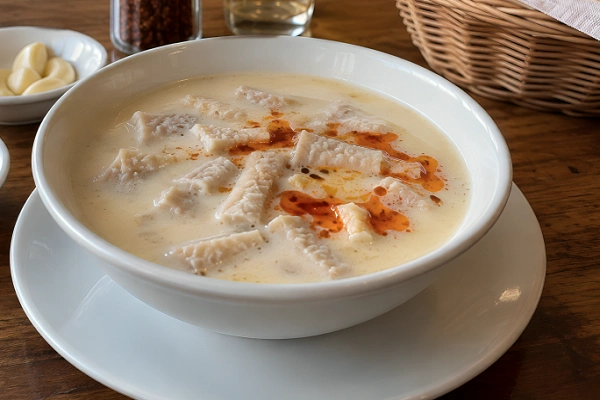
Made from cleaned and slowly simmered beef tripe in a milky, garlic-rich broth, finished with egg yolk and lemon juice, this soup is served at dedicated işkembeci restaurants that are often open through the night.
It’s particularly associated with late-night eating and, fairly or not, with recovering from a heavy evening out. Whether it genuinely cures a hangover is debatable, but its reputation as a restorative, fortifying dish is unshakeable.
The soup is typically served with raw garlic cloves and a vinegar-pepper dip on the side, which diners add to their bowl according to personal preference.
İşkembe çorbası is an acquired taste, but within Turkish offal-cooking tradition, it represents a specific kind of culinary honesty, nothing wasted, every part of the animal respected and made useful.
Düğün Çorbası Wedding Soup
Despite what the name might suggest to some, this is not the Italian wedding soup with meatballs and greens. Turkish düğün çorbası (wedding soup) is a rich, clarified lamb or beef broth thickened with egg yolk and butter, finished with lemon juice and a red pepper drizzle.
It has been served at Turkish weddings and large celebrations for centuries. The reason is partly practical lamb broth can be prepared in large quantities but also symbolic.
Meat-based soups have historically carried prestige, and a rich, well-made düğün çorbası signals that the hosts are feeding their guests properly.
The soup appears in regional variations across Anatolia, but the egg-yolk thickening and the meat broth base remain consistent.
Regional Variations Worth Knowing
Black Sea Region Lahana Çorbası
Turkey’s Black Sea coast, with its cooler, rainier climate, produces abundant leafy greens and corn. This setting has led to collard green soup, made with cabbage or collard greens, cornmeal and sometimes beans or dry meat. It’s hearty, filling, and reflects the agricultural reality of the region.
Aegean Region Artichoke and Vegetable Soups
The Aegean coast leans toward lighter, olive oil-based preparations. Artichoke soup appears frequently here, making use of the region’s love for fresh seasonal vegetables. The soups from this area tend to be simpler, more herb-forward, and less reliant on heavy spicing.
Black Sea and Northeast Hamsi Çorbası
The Black Sea’s most famous fish, the anchovy (hamsi), appears in soup form in the northeastern coastal provinces. Fish-based soups are far less common in Turkish cuisine as a whole compared to meat and legume soups, which makes hamsi çorbası a distinctly regional specialty.
Southeast Anatolia Spicy and Bulgur-Heavy
Gaziantep and its surrounding provinces are known for bold, spicy flavors. Soups from this region often incorporate more tomato paste, red pepper, and bulgur than those from the west. Ezogelin çorbası itself is a Gaziantep creation, and the region has its own variations on lamb-based soups that carry stronger seasoning.
The Role of Soup at the Turkish Table
A few things are worth understanding if you want to appreciate Turkish soup culture properly.
Soup is generally the first thing served at a Turkish meal, before salad, bread, or any other dish. It’s considered to warm up the thing that opens the appetite and prepares the stomach. At the same time, as mentioned earlier, a bowl of soup with bread can stand alone as a complete meal without anything feeling incomplete about it.
Many Turkish soups are also associated with specific times of day. İşkembe çorbası belongs to late night. Mercimek çorbası is eaten at any hour but is especially common at lunch. Tarhana is a breakfast soup during winter in many homes. These associations are not rigid rules, but they reflect real patterns in how Turkish families actually eat.
The practice of adding lemon juice at the table is worth noting too. Western soups generally come to the table pre-seasoned, but many Turkish soups are designed to be finished off by the diner with a squeeze of lemon.
This acid does more than add flavor; it brightens the whole bowl and changes the perception of richness and depth. If you’re eating Turkish soup for the first time, don’t skip the lemon.
A Brief Note on Tarhana Preparation
Because tarhana is genuinely unlike anything in most other food traditions, it’s worth describing the preparation process in a bit more detail.
The base ingredients flour, yogurt, tomatoes, peppers, onions, and spices are combined raw and left to ferment for several days, usually around a week, with daily stirring. The fermentation softens the mixture and develops that characteristic sour note. After fermentation, the mixture is spread out in thin layers and left to dry in the sun or in a low oven. When dried it is crumbled or reduced to a coarse powder.
This powder keeps for a very long time without refrigeration, which was its original purpose. When it is time to cook, dissolve a few tablespoons of tarhana in water or broth and cook on low heat. Stir regularly so the soup doesn’t lump until it thickens. The final drizzle of butter and red pepper goes on top, same as with most Turkish soups.
Each family and each region has its own tarhana recipe. Some include more tomato, some add garlic or herbs, some use fresh yogurt while others prefer strained. The variations are considerable, which is why the taste of tarhana soup from one household can be noticeably different from another’s and why people tend to feel so strongly that their family’s version is the correct one.
Final Thoughts
Turkish soups are not complicated, but they are deeply considered. The ingredients are mostly simple lentils, yogurt, bulgur, broth, vegetables but the techniques, the timing, and the finishing touches matter a great deal.
A bowl of mercimek çorbası can be dull and forgettable or warm and transformational, depending almost completely on little execution elements.
What connects all of these soups is the same thing that connects Turkish food more broadly: a respect for the process, a preference for building flavor slowly, and a genuine belief that feeding someone well is one of the more meaningful things you can do for them.
Turkish soup culture has survived nomadic migrations, imperial kitchens, and centuries of regional variation because the fundamentals it rests on nourishment, economy, care don’t go out of fashion.
If you’ve only ever had one Turkish soup, you’ve barely started.

James Carter is a food researcher and writer passionate about global cuisines, street food, and the stories behind what we eat. He combines thorough research with a genuine love for food culture to bring readers accurate, well-written, and interesting content.