The Best Fluffy Pancakes recipe you will fall in love with. Full of tips and tricks to help you make the best pancakes.

What Exactly Is a Bocadillo?
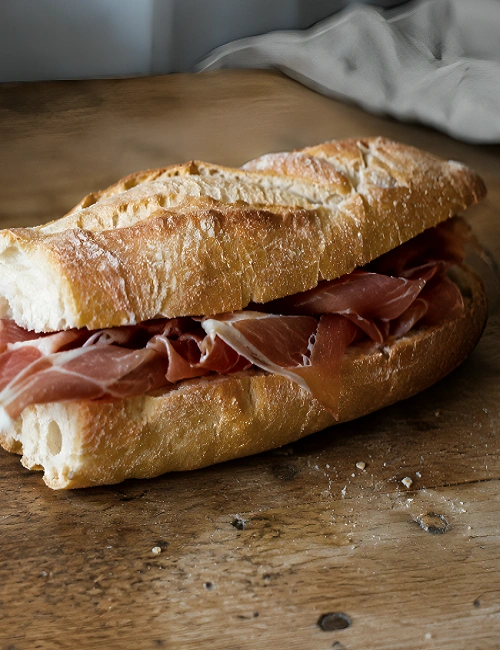
A bocadillo is a sandwich made with Spanish bread, most commonly a baguette-style loaf known as a barra, sliced lengthwise and filled with simple, high-quality ingredients.
It is also called a bocata in some parts of Spain, a more informal phrase used notably in everyday conversation. In the Basque Country the same idea is called otarteko, and Catalan people call it entrepà.
Unlike sandwiches built from thin, soft sliced bread, the bocadillo relies on crusty, dense bread that holds its shape and gives the sandwich a satisfying bite.
The fillings are traditionally minimal, often just one or two ingredients, which lets the quality of the bread and the main ingredient speak for itself rather than relying on heavy sauces or multiple layers.
Where Did the Bocadillo Come From?
The word “bocadillo” originates from the Spanish term “bocado,” which itself comes from the Latin “bucca,” meaning mouth. Essentially, a “bocado” is a mouthful or a bite, and “bocadillo” simply means “small bite.”
While its precise origins are unclear, many online stories lack reliable evidence that bocadillo has always been a humble and affordable food in Spain. This low cost contributed to its popularity as an everyday staple, rather than a treat for special occasions.
Over time, this affordability helped the bocadillo become ingrained in Spanish food culture, and it’s now commonly found in homes, cafés, and tapas bars throughout the country.
Bocadillo vs. Sandwich: What’s the Difference?
In Spain, the word “sándwich” is reserved specifically for sandwiches made with two slices of soft, sliced bread, similar to what many English speakers picture as a classic sandwich.
A bocadillo is a completely distinct animal, with a different bread, different texture and different expectations for what should be in it.

A bocadillo is rarely piled high with condiments or multiple competing flavors. It leans on the contrast between a crusty, chewy crust and a soft interior, paired with one clear filling chosen for its own sake rather than dressed up with extras.
Popular Types of Bocadillo
Spain’s regions have shaped countless versions of the bocadillo, but a few have become nationally recognized favorites.

Bocadillo de Jamón
This is one of the most iconic versions, made with either jamón serrano, a dry-cured ham with a firm, savory flavor, or jamón ibérico, a richer and more delicate ham that comes from acorn-fed Iberian pigs. The bread is often left plain, sometimes brushed with olive oil, so the ham remains the star of the sandwich.
Bocadillo de Calamares
This style of bocadillo, particularly beloved in Madrid, features lightly floured and fried squid rings served on a crusty roll. Often, it’s simply dressed with a squeeze of lemon or a light sauce, allowing the squid’s crispy texture to shine.
Bocadillo de Tortilla de Patatas
This version has a slice of Spain’s famed potato omelette inside the bread. The tortilla de patatas itself has a popular origin narrative that connects it to the Carlist wars of the nineteenth century, although historians are divided on whether or not this story is true, and there is not one version that can be said to be the right one.
Regional Variations
Anchovies, tuna, and chorizo commonly fill bocadillos in the Basque Country and along the northern coast, a testament to the region’s rich fishing heritage. Inland, bocadillos often feature ingredients more readily available locally like grilled peppers, Manchego cheese, or a simple tomato spread reflecting diverse regional tastes.
How to Make a Bocadillo at Home
Making a bocadillo does not require special equipment or hard-to-find ingredients. The classic version, bocadillo de jamón y queso, is a good starting point for anyone trying it for the first time.
Ingredients (makes 1 sandwich)
- 1 fresh baguette-style roll or a section of crusty bread, about 8 inches long
- 4 to 5 thin slices of jamón serrano or jamón ibérico
- 2 slices of Manchego cheese (optional)
- 1 ripe tomato, halved
- A drizzle of extra virgin olive oil
- A pinch of salt
- 1 garlic clove, halved (optional)
Step by Step
- Slice the bread lengthwise, keeping one side attached like a hinge, or cut it fully in half if you prefer two separate pieces.
- If desired, lightly toast the cut sides for a firmer bite and rub them with the cut side of the garlic clove.
- Rub the halved tomato firmly over the bread, pressing gently so the pulp and juice soak into the crumb rather than just sitting on top.
- Drizzle olive oil over both bread halves.
- Layer the jamón evenly across the bottom half, followed by the cheese slices if using.
- Add a small pinch of salt, close the sandwich, and press it gently together.
- Serve while the bread is crisp, immediately.

Common Mistakes to Avoid
- Cold ham straight from the fridge stays waxy and mutes its own flavor. Give it a few minutes at room temperature before assembling.
- Squeezing tomato juice on top isn’t the same as rubbing the flesh into the bread. The pulp needs to work into the crumb, not just sit on the surface.
- A heavy hand with the olive oil turns the bread soggy fast. A light drizzle does the job.
- Bocadillos don’t keep well if made too far ahead. The crust softens the moment it sits against tomato or ham for too long, so build it close to when you plan to eat it.
This basic method also works as a base for other versions. Swapping the ham and cheese for a thick slice of tortilla de patatas, or for fried squid rings, follows the exact same bread preparation and assembly logic described above.
How the Bocadillo Fits Into Spanish Daily Life
The bocadillo is not treated as a lesser or rushed meal in Spain. It’s a staple for a mid-morning snack, a light meal or an evening bite shared in bars and cafés across the land.
It is common to see people pairing a bocadillo with a coffee in the morning or a cold drink later in the day, often standing at a counter or sitting briefly at a café table before heading back to work or continuing with their day.
Despite its humble, affordable origins, the bocadillo has never lost its place at the table. It shows up at family gatherings and festivals just as often as in a quick workday lunch, largely because the same basic formula can be reshaped with whatever filling a region, or a household, happens to favor.
Final Thoughts
What stands out most about the bocadillo is how little it has needed to change to stay relevant. There is no trend to chase and no upgrade to sell, just bread and a filling done properly.
That kind of staying power is rare, and it is probably the real reason the bocadillo has outlasted so many food fads that came and went around it.
FAQs
Is a bocata the same thing as a bocadillo?
Yes. “Bocata” is simply a more casual, colloquial way of saying bocadillo, heard often in everyday conversation and especially common in informal speech across Spain.
What drinks are typically served with a bocadillo?
A cold beer or a glass of red wine is the most common pairing, though coffee is typical for a mid-morning bocadillo and soft drinks are just as normal in casual settings.
Are bocadillos considered a healthy meal?
It depends entirely on the filling. A bocadillo with ham, tomato, and a light drizzle of olive oil is a relatively balanced option, while versions loaded with fried ingredients or heavy sauces lean toward a more indulgent, occasional treat.
What is the difference between a bocadillo and a montadito?
A montadito is a smaller, open-faced or mini sandwich typically served as a tapa, while a bocadillo is a full-sized sandwich meant to be a proper snack or light meal on its own.
Can a bocadillo be made ahead of time?
Bocadillos are best eaten shortly after they are assembled, since the bread loses its crisp texture once ingredients like tomato sit against it for too long. If needed, it can be wrapped tightly and refrigerated for up to a day, though the crust will soften.

Rachel Bradley is a food writer and recipe developer with a love for home cooking and global flavors. She has spent years testing recipes in her kitchen, exploring everything from quick weeknight meals to traditional dishes from around the world. Her goal is simple — make great food accessible to everyone.