The Best Fluffy Pancakes recipe you will fall in love with. Full of tips and tricks to help you make the best pancakes.

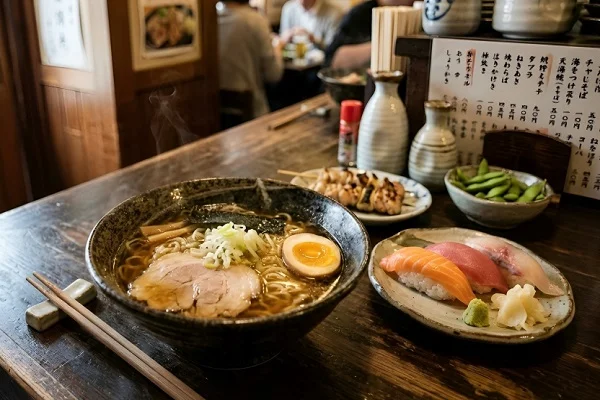
Tokyo never asks you to choose between a cheap bowl of noodles and a serious sushi dinner. Both can end up as the meal you talk about for years.
What trips people up is not the food. It is the small stuff: the machine at the door that wants your cash before you sit, the sushi chef who seems to ignore you, the little dish that lands on your izakaya table and quietly appears on the bill.
Ramen: start with a plain soy sauce bowl
Most guides tell you ramen comes in four flavours: shoyu (soy sauce), shio (salt), tonkotsu (pork bone) and miso. That is true, but it hides one detail that helps when you read a menu.
Shoyu is a seasoning, not a soup. Chicken or pork is often used as the base for a shoyu bowl. Adding soy sauce adds flavor and color.
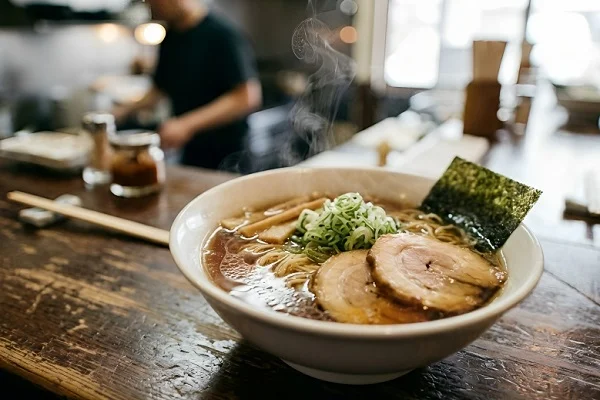
Tokyo’s classic bowl is shoyu. It is lighter and clearer than the milky, heavy tonkotsu you find in Fukuoka, and it usually comes with thin, slightly wavy noodles, sliced pork, bamboo shoots, green onion and a sheet of nori. If you have only eaten instant ramen before, this is the bowl to try first.
Ogikubo, a few stops west of Shinjuku on the Chuo line, is often called the home of Tokyo-style shoyu, and Toy Box in Minowa has earned a Michelin Bib Gourmand for its clear chicken broth and sharp soy sauce flavour.
Then there is tsukemen, and here Tokyo has real bragging rights. Kazuo Yamagishi is credited with creating the dipping style at Taishoken in Higashi-Ikebukuro.
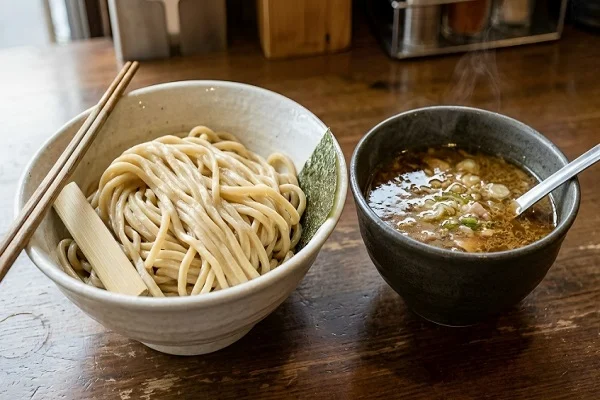
Sources date it anywhere from the mid-1950s to 1961, so treat the exact year as unsettled. You get thick noodles in one bowl and a concentrated, tangy, slightly sweet soup in another.
Dip, slurp, repeat. Fuunji in Shinjuku is the shop people queue for, and visitors report waits from about half an hour to over an hour.
Request soup-wari once you’ve finished the noodles. The staff add hot broth or dashi to your leftover dipping soup so you can drink it.
How the ticket machine works
Many ramen shops make you order from a machine by the door. It looks harder than it is.
- Check the machine before you feed it money. Most will hand your bill back if you dawdle after inserting it.
- Carry ¥1,000 notes. Some machines refuse large bills, and the staff will change a ¥10,000 note if you ask.
- If you cannot read the menu, look for pictures or English labels, or ask the staff to point you to the shop’s popular bowl.
- Add toppings or extra noodles at the machine, right after you pick your main bowl.
- Take your ticket and your change, sit down, and hand the ticket to the staff. They may ask how firm you want your noodles.
The food arrives fast. The seats are few, so eat, slurp (nobody minds) and leave when you finish. If you are still hungry, say kaedama and ask for extra noodles.
Sushi: where Tokyo invented the rules
Nigiri, the hand-pressed sushi most of the world knows, was born in Edo, the city we now call Tokyo.
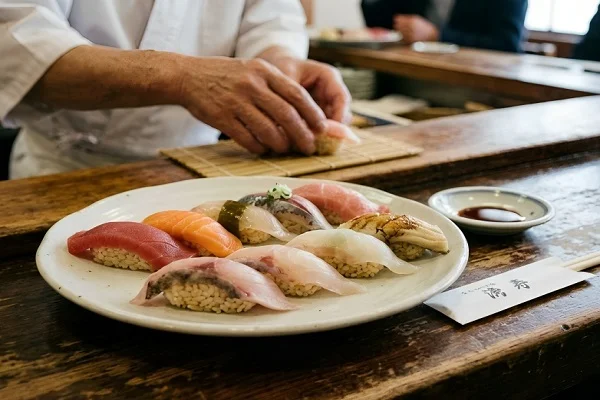
Traditional Edomae sushi uses fish from Tokyo Bay, processed before it meets the rice: it is cured in vinegar, simmered, marinated. That’s why a nice Tokyo slice will taste more seasoned than raw.
Your budget decides which kind of sushi room you walk into.
| Style | Typical cost | Good for |
| Conveyor-belt (kaiten) | ¥110–¥220 a plate, roughly ¥1,000–¥3,000 a person | A fast, low-pressure first taste |
| Standing sushi bars | Low; a few pieces and a drink go a long way | Quick bites near stations and markets |
| Market breakfast counters, Tsukiji and Toyosu | ¥2,000–¥4,000 | Dawn-fresh fish, with lines that start early |
| Lunch omakase | ¥5,000–¥15,000 | A serious counter without the dinner bill |
| Dinner omakase | Mostly ¥20,000–¥40,000 | A long, chef-led meal |
| Top-tier counters | ¥50,000–¥80,000 | A once-in-a-trip splurge |
The lunch omakase is the best trick on this list. Many counters that charge a fortune at night serve a shorter version at midday for a fraction of the price.
Manners at the counter
Omakase simply means the chef decides. You sit, he or she serves one piece at a time, and the meal usually runs 60 to 120 minutes. A few habits keep everyone comfortable:
- Eat nigiri with your fingers if you like. Chopsticks are fine too.
- Skip the extra soy sauce when the chef has already brushed a piece with sauce. If you dip, touch the fish, not the rice.
- Keep your phone off the counter and go easy on perfume. Strong scents fight with the fish.
- Do not tip. Japanese sushi restaurants do not expect it.
- Save the heavy drinking for later. A sushi counter is a quiet room, and you share the chef with everyone else.
Book ahead for anything above casual level, because walk-in seats are rare at the good places.
Plan around closures too: the sushi counters inside Toyosu Market close on Sundays, public holidays and market holidays, which usually fall on Wednesdays.
Department store food halls (depachika) sell very good take-away sushi every day, with no dress code at all.
Izakaya: where Tokyo actually relaxes
Come evening, Tokyo office workers drift into an izakaya, loosen their ties and order the first round before anyone opens a menu.
The word roughly means a sake shop with seats, a format that grew out of the Edo period, when shops began serving small dishes alongside the drink. Today izakaya work in the pubs of Japan.
Order drinks first and food in waves. Start with a beer, then add skewers, fried chicken (karaage), sashimi or grilled fish a few plates at a time. Before you call for another drink, ask the table whether anyone wants one. Sharing is normal.
Within a minute of sitting down, a small appetiser lands on your table, and it costs ¥300 to ¥800 per person. This otoshi works like a cover charge, not a scam.
All-you-can-drink plans (nomihodai) usually cost ¥1,500 to ¥2,500 for 90 to 120 minutes, so read the fine print. Some demand a minimum food order, and many exclude premium whisky or aged sake. A fast-drinking group comes out ahead. Order by the glass for everyone else.
Expect to spend ¥2,500 to ¥5,000 per person for a relaxed evening, a bit more if the night grows long. At the end, most groups split the bill evenly.
Keep an eye on the clock, because the last trains leave between about 11:30 p.m. and 12:30 a.m. depending on the line, and many izakaya close between midnight and 2 a.m.
From late November through December, when companies hold their year-end parties (bonenkai), many izakaya fill up, so book ahead.
Eating halal in Tokyo
Pork broth and alcohol-based seasonings, such as mirin or sake in sauces and sometimes in the sushi rice, make Japanese menus tricky for Muslim travellers.
The good news is that Tokyo now has real options. Asakusa Sushi Ken serves halal-certified sushi, and some sushi shops will leave out mirin if you ask in advance.
For ramen, Ramen Honolu in Ebisu offers a chicken-based halal bowl, and Naritaya in Asakusa and Shinjuku-tei in Ginza both focus on halal ramen. For an izakaya mood without the alcohol, look for halal sushi bars that serve tea or juice with grilled dishes.
Certifications and menus change, so confirm directly with the restaurant before you go, and ask whether the kitchen uses alcohol in seasonings or also serves non-halal dishes.
The wording also differs from shop to shop: Asakusa Sushi Ken and Shinjuku-tei state that they are halal-certified, while Naritaya describes its menu as free of pork and alcohol.
What a food-focused day costs
A realistic mid-range day in Tokyo runs about ¥7,500 per person: a coffee-shop breakfast around ¥1,000, a ramen or tonkatsu lunch for ¥1,000 to ¥2,000, and an izakaya dinner around ¥4,500.
Add a lunch omakase and the number climbs fast, so treat it as a planned splurge. Ramen is the cheapest of the big three.
Typical bowls cost ¥900 to ¥1,500 in tourist areas, although the government’s own price survey puts an ordinary Tokyo bowl much lower, around ¥607 in the 23 wards as of January 2026. Away from the famous queues, you can often eat well for less.
Book the sushi first, then build the day
Reserve the sushi counter before anything else, because good seats go early and a lunch omakase is the cheapest way into a serious counter.
Izakaya need a booking only on Fridays, Saturdays, holiday eves and in bonenkai season, or when your group is big. Ramen needs no reservation of any kind, so let it fill any hole your schedule leaves.
Fit the three meals around that one fixed booking and the rest of the day sorts itself out.
FAQs
Do I need to speak Japanese?
No. Ticket machines, picture menus and tablet orders do most of the work, and a polite sumimasen (excuse me) gets a server’s attention anywhere.
Can vegetarians eat well here?
Yes, with care. Some Tokyo ramen shops serve vegetarian and vegan bowls, but most broths use pork, chicken or fish, so ask before you order.

James Carter is a food researcher and writer passionate about global cuisines, street food, and the stories behind what we eat. He combines thorough research with a genuine love for food culture to bring readers accurate, well-written, and interesting content.