The Best Fluffy Pancakes recipe you will fall in love with. Full of tips and tricks to help you make the best pancakes.

You already know feta. You’ve heard of halloumi. You can probably name three French cheeses without thinking.
But here’s what nobody told you: tucked inside a small Balkan country that most people can’t place on a map, there’s an entire cheese culture of 9 distinct varieties, some of them thousands of years old that have never made it to a supermarket shelf outside the region. One of them is aged inside sheepskin. One nearly disappeared entirely and now has only 17 families keeping it alive. One is so ancient that its name is where the rest of the Balkans got their word for that type of cheese.
This guide is for you if:
- You’re planning a trip to Albania and want to actually eat well (not just guess)
- You cook Albanian food and keep seeing “white cheese” in recipes with zero guidance on what that actually means
- You’re a serious cheese person who’s exhausted the usual European suspects
- Or you just stumbled here and want to know what you’ve been missing
By the end, you’ll know exactly what each Albanian cheese tastes like, how it’s made, and most importantly whether it’s something you’d actually want to eat.
Top 5 Albanian Cheeses at a Glance (Quick List)
If you only remember five names from this entire guide, make it these:
- Djathë i Bardhë — The one on every table, every day. Salty, crumbly, brined. Think feta but Albanian.
- Kaçkavall — The melting cheese. Semi-hard, buttery, golden. Best fried or melted over a casserole.
- Mishavinë — The rarest. Only 17 families still make it. Aged in a butter-sealed wooden container in the northern Alps.
- Çerem — The boldest. Aged inside sheepskin. Not for the faint-hearted but unforgettable if you like strong cheese.
- Gjizë — The simplest. Fresh whey cheese made from leftovers. Spread on bread with honey and you’re done.
Albanian Cheese Comparison Table
| Cheese | Milk Type | Texture | Flavor | Best Used For | Availability |
| Djathë i Bardhë | Sheep / Goat / Cow | Semi-soft, crumbly | Salty, tangy | Byrek, salads, breakfast, meze | Widely available in Albania |
| Kaçkavall | Sheep / Cow | Semi-hard, elastic | Buttery, mildly sharp | Frying, melting, sandwiches | Widely available in Albania |
| Gjizë | Sheep / Goat / Cow | Soft, moist | Mild, creamy | Spread on bread, with honey | Fresh, home/farm production |
| Djathë i Vjetër | Sheep / Goat | Hard, crystalline | Bold, sharp, complex | Grated over dishes, gifting | Mountain regions |
| Djathe i Koshës | Sheep / Cow | Semi-firm, ridged | Milky, mildly tangy | Grilled, pastries, meze | Rural areas |
| Çerem | Sheep | Firm | Pungent, intensely strong | Table cheese, thin slices | Çermenika region only |
| Mishavinë | Cow / Mixed | Grainy, dense | Herbal, piquant, buttery | Winter meals, with pickles | Kelmend region only (17 families) |
| Urdhë | Sheep / Goat / Cow | Silky, smooth | Mild, clean, unsalted | Drizzled with olive oil | Home production only |
| Djathë i Shkodrës | Sheep | Semi-hard, crumbly | Buttery to tangy | Versatile pairs with anything | Shkodra region |
A Quick Look at Albanian Cheese Culture
Albania has been an agricultural country for most of its history, and dairy farming was central to rural life. Local farmers predominantly produce cheese from sheep, cow, and goat milk, and the mountainous regions of Albania are considered ideal conditions for cheese-making clean pastures, cool temperatures, and breeds of animals that have grazed those hills for generations.
Cheese-making is deeply woven into Albanian cuisine and daily life. What makes it particularly interesting is how much regional variety exists within a country of fewer than three million people. The white cheese from Gjirokastër tastes different from the white cheese in Shkodër.
The Kaçkavall of Korçë has a sharper edge than the version made near Vlorë. Geography and local practices create that variation, and it makes Albanian cheese culture worth exploring in depth.
One thing that strikes you about Albanian cheese especially if you’ve grown up with factory dairy is how hands-on much of the production still is. This is especially true in rural and mountain areas, where the gap between the animal and the finished cheese can be measured in hours, not industrial supply chains.
1. Djathë i Bardhë (Albanian White Cheese)
What Is It?
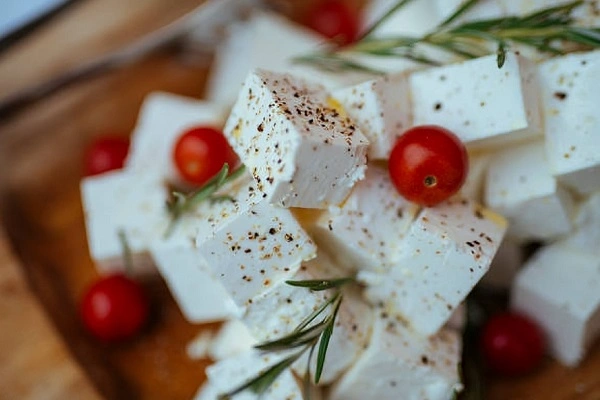
Djathë i Bardhë (pronounced roughly dyath-eh ee bar-theh) simply means “white cheese” in Albanian, and it’s by far the most widely consumed Albanian cheese. Think of it as the feta equivalent in Albanian cuisine: it’s semi-soft, crumbly, salty, and slightly tangy. You’ll find it on virtually every Albanian table.
It’s typically made from sheep’s milk, though a mixture of sheep’s and goat’s milk is also common. Some producers, particularly in the lowlands, use cow’s milk as well.
How Is It Made?
The production process is straightforward but relies on quality milk. The fresh milk is curdled using rennet or natural acidic agents. The resulting curds are cut, drained, and pressed into blocks. After pressing, the cheese is typically stored in brine, a saltwater solution which acts as natural preservation and contributes to its characteristic salty flavor.
Fresh Djathë i Bardhë is softer and milder. Aged versions become firmer and develop a sharper, more pronounced flavor. Storage in brine can continue for weeks or even months.
Taste and Texture
- Texture: Semi-soft to semi-firm, crumbly when aged
- Flavor: Salty, mildly tangy, clean dairy flavor
- Color: Bright white throughout
How Is It Used?
Djathë i Bardhë is one of the most versatile Albanian cheese varieties. It appears in:
- Byrek — the classic Albanian flaky pastry
- Meze platters — usually served alongside olives, vegetables, and bread
- Salads — crumbled on top
- Breakfast — a staple of the traditional Albanian morning spread
- Petulla — Albanian fried dough
Regional Notes
The cheese from the Gjirokastër area has a strong reputation for quality, and Albanian consumer research has consistently shown that shoppers rate this region’s white cheese highly. Northern varieties tend to incorporate more goat milk, giving them a slightly different flavor profile.
2. Kaçkavall (The Yellow Semi-Hard Cheese)
What Is It?
Kaçkavall (also spelled Kackavall or Kashkaval) is the most popular yellow cheese in Albania and the second most widely consumed Albanian cheese overall, after Djathë i Bardhë. It is deeply embedded in everyday Albanian food culture present at breakfast, on meze platters, in cooked dishes, and as a standalone snack.
The name is the Albanian form of “kashkaval,” a cheese family found across the Balkans and Eastern Mediterranean. It shares roots with the Italian caciocavallo and the Bulgarian kashkaval, though Albanian Kaçkavall has its own distinct characteristics.
How Is It Made?
Kaçkavall is traditionally produced from sheep’s milk, though cow’s milk and mixed-milk versions are very common today. The production process involves:
- Heating fresh milk to a controlled temperature
- Adding natural rennet to coagulate the milk into curds
- Cutting and turning the curds to get the whey out, then letting them drain
- In some varieties, the curd is stretched and kneaded (like provolone) which lends Kaçkavall its slight suppleness
- Shaping into wheels or blocks, pressing, and aging
Regions particularly known for Kaçkavall production include Korçë, Gjirokastër, Shkodër, Berat, Pogradec, and Vlorë.
Taste and Texture
- Texture: Semi-hard, slightly elastic when younger; firmer and more crumbly with longer aging
- Flavor: Mildly sharp, buttery, pleasantly salty less salty than Djathë i Bardhë
- Color: Pale yellow to golden, depending on age
How Is It Used?
Kaçkavall melts well, which makes it extremely popular for cooking. Common uses include:
- Djathë i skuqur — fried cheese, one of the most common Albanian starters
- Tave Dheu — melted over the top of this traditional meat and vegetable casserole
- Sandwiches and toasted cheese dishes
- Table cheese — eaten on its own with bread
3. Gjizë (Albanian Curd Cheese) {#gjize}
What Is It?
Gjizë (pronounced roughly ghi-zeh) is a fresh curd cheese with a fascinating origin story. It was born out of practicality: after Albanian families made their white cheese, they saved the leftover whey and slowly reheated it. The remaining milk proteins coagulate and rise to the surface, where they’re skimmed off and drained producing Gjizë.
This process is nearly identical to how Italian ricotta is made, and the two cheeses are very similar in character. The difference is in the terroir, the milk, and the cultural context in which Gjizë is consumed.
It can be made with whey from cow, sheep, or goat milk, based on what is on hand.
Taste and Texture
- Texture: Soft, slightly crumbly, moist
- Flavor: Mild, creamy, subtle tanginess
- Best eaten: Fresh, ideally within a day or two of production
How Is It Used?
- Spread on bread or crackers, often served with honey
- Used as a filling in savory pies
- Eaten alongside cured meats or pickled vegetables as a light meal
- Paired with fresh fruit
Gjizë is about something truly very meaningful in the culture of the Albanian cuisine: that nothing of the milk should be wasted. Every family with animals made it, and it required minimal tools and time.
4. Djathë i Vjetër (Albanian Aged Cheese)
What Is It?
Djathë i Vjetër literally means “old cheese,” and it’s exactly what the name suggests Albania’s traditional aged hard cheese. It’s the variety you’d compare to an aged pecorino romano or a strong farmhouse cheddar, though it has its own distinct character shaped by Albanian mountain conditions.
It’s made from sheep’s or goat’s milk in most mountain regions, where those animals are better suited to the terrain. Some lowland versions use cow’s milk.
The Aging Process
After forming, the cheese is aged in cool stone cellars or clay vessels traditional storage methods that allow slow, natural maturation. Because refrigeration wasn’t available historically, aging was essential not just for flavor but for long-term preservation.
Aging periods vary:
- 3–6 months: Firm, sharp, noticeably drier than white cheese
- 1–2 years: Develops small crystalline structures similar to aged Parmigiano-Reggiano, giving each bite a crunchy texture alongside the firm paste
Taste and Texture
- Texture: Firm to hard, crumbly with age; crystalline in very old versions
- Flavor: Deep, bold, sharp, complex significantly more intense than Djathë i Bardhë
Cultural Significance
This old cheese was a token of respect, a testament to months of patience and investment in serving guests. Even today, many Albanian families maintain this tradition of gifting or serving aged cheese at significant occasions.
5. Djathe i Koshës (Basket Cheese)
What Is It?
Djathe i Koshës means “basket cheese” in Albanian, named for the traditional method of forming and draining the cheese inside a woven basket (koshë). That process leaves a distinctive ridged exterior pattern on the finished wheel, an immediate visual sign that this was made by hand.
The basket-forming technique is ancient, particularly common in rural and mountainous regions where woven baskets were the most practical mold available. It is part of a wider Mediterranean history of basket cheeses that is also found in Sardinia (Pecorino in Foglie di Noce) and Cyprus (Halloumi is basket-pressed), although each is individual.
Taste and Texture
- Texture: Ranges from soft-firm to semi-firm depending on age and drainage
- Flavor: Clean, milky, mildly tangy becomes saltier and sharper with aging
- Appearance: Distinctive ridged exterior from the basket mold
How Is It Used?
- Semi-aged versions grill well without fully melting popular as a grilled appetizer
- Used as a filling in byrek and Albanian savory pastries
- Fresh versions served with cucumbers, herbs, and greens
- Paired with honey and fruit for a sweet-savory contrast
6. Çerem Cheese (The Sheepskin-Aged Specialty)
What Is It?
Çerem Cheese is one of the more unusual Albanian cheese varieties, and genuinely exotic even by Albanian standards. It comes from the Çermenika region in Central Albania and is made from sheep’s milk. What sets it apart is the aging method: the cheese is aged inside sheepskin, which imparts an intensely strong smell and sharp, pungent taste.
It’s not for everyone. The flavor is bold in the way that very strong washed-rind European cheeses can be the kind of thing that divides people sharply. If you enjoy funky, strong cheeses like Époisses or a well-aged limburger, Çerem might genuinely appeal to you.
How Is It Served?
Çerem is typically a table cheese, served in thin slices as part of a meze platter. The thin slicing is practical a little goes a long way with this level of intensity.
It’s the kind of cheese you have to go looking for no export, no specialty stores, just the villages around Çermenika. For food travelers passing through Central Albania, that’s actually part of the appeal.
7. Mishavinë (Albania’s Rarest Cheese)
What Is It and Why Is It Significant?
Of all Albanian cheese varieties, Mishavinë is the most remarkable and the one most at risk of disappearing. It comes from Kelmend, a remote area in the northern Albanian Alps that the Slow Food Foundation describes as one of the least-known and most remote regions in all of Europe.
The cheese is inseparable from the transhumance tradition of the area: herders bring their livestock up to mountain pastures in summer and make cheese at elevations around 1,200 meters above sea level.
Mishavinë holds a Geographical Indication (GI) sign, formally tying it to the Kelmend region. It is also listed on Slow Food’s Ark of Taste, an international catalog of foods at risk of disappearing. The Slow Cheese Award was given to Kelmend makers Valter Dragu and Melinda Pepushaj in 2021.
They were one of only six winners in the world that year for their hard work to keep this tradition alive despite being far away and having limited market access.
One detail about Mishavinë that almost no one mentions: it belongs to a family of cheeses known as “cheese in a sack” , an ancient preservation technique that traveled along the Silk Road.
The original versions were made by aging cheese inside animal leather or stomach lining; the Mishavinë method evolved to use a wooden container sealed with butter instead, but the underlying concept of sealing fermented cheese in an airtight vessel is the same tradition.
According to Slow Food’s foundation, approximately 17 families in the villages of Lepusha, Vermoshi, and Budac continue the Mishavinë tradition.
How Is Mishavinë Made?
The process is unlike any other Albanian cheese and worth describing in full:
- Milk source: Raw cow’s milk, or a mixture of cow’s, sheep’s, and goat’s milk
- Initial cheesemaking: Fresh cheese (djathë) is made through standard curd-and-press methods
- Outdoor drying: The fresh cheese is cut into large pieces and dried outdoors, protected from direct sun, for 7 to 10 days
- Hand crumbling: After drying, the cheese is crumbled finely by hand this is a key distinguishing step
- Salting and packing: The crumbled cheese is salted and packed into a traditional wooden container with holes in the bottom to allow continued whey drainage
- Butter seal: The top of the container is sealed with a thick layer of melted or clarified butter, acting as a natural air barrier
- Aging: After approximately two months, the cheese is ready
Taste Profile
- Color: White to straw-yellow
- Texture: Buttery mouthfeel, grainy, grows heavier with aging
- Flavor: Notes of forest, hay, and mountain herbs; the finish grows more piquant over time
Mishavinë is traditionally eaten during the winter months; it’s made in summer at altitude and consumed in winter in the valley, accompanied by pickles, cured meat, and plum grappa.
8. Urdhë (The Ancient Whey Cheese Almost Nobody Talks About)
What Is It?
Urdhë (pronounced oor-dheh) is one of the most historically significant Albanian cheese varieties, yet it almost never appears in any list or guide about Albanian food. It is a fresh whey cheese made from the liquid left over after pressing any type of cheese produced from sheep, goat, or cow milk whey, and traditionally eaten completely unsalted.
What makes Urdhë particularly remarkable is its linguistic history. The word itself is one of the oldest dairy-related terms in any European language. It traces back to Proto-Albanian wurdā, derived from a Proto-Indo-European root meaning “to boil” or “to burn” a direct reference to the heating process used to make it.
The same root gave rise to the Romanian word urdă, the Armenian vaṙim, and the Lithuanian vìrti. In other words, Albanians gave the rest of the Balkans their word for this type of cheese not the other way around.
How Is It Different from Gjizë?
This is where most people get confused. Both Urdhë and Gjizë are whey cheeses, but they are not the same thing.
Gjizë is skimmed from the surface of reheated whey, resulting in soft floating curds that are scooped off similar to ricotta. Urdhë, by contrast, is produced by warming the whey more gently and then molding the collected proteins into specific geometric shapes and sizes using traditional molds.
The outcome is a finely grained, silky and smooth paste that is clearly different in texture than the slightly crumbly Gjizë.
The other key difference is salt: Urdhë is traditionally produced without any salt, which gives it a genuinely mild, almost sweet, clean dairy flavor. Gjizë may or may not be lightly salted depending on the household.
Where Is It Found?
Urdhë is produced across Albania and is also found in Albanian communities in Kosovo, Montenegro, Greece, Serbia, and North Macedonia reflecting how deeply embedded Albanian dairy traditions are across the wider region. In Albania itself, it is commonly drizzled with olive oil and eaten as a simple standalone dish.
It is not a cheese you will find in restaurants or specialty shops. It is a home-made cheese, quietly created, eaten fresh, and little spoken of in the outside world by the houses that continue to make it.
9. Djathë i Shkodrës (Shkodra Regional Cheese)
From the northern Shkodra region, this is a sheep’s milk cheese with semi-hard consistency and a mildly crumbly texture. Its flavor ranges from mild and buttery to tangy and sharp depending on aging. It’s thought to be very adaptable and goes with almost everything.
The Korçë region in southern Albania is distinguished for its production of exceptionally sharp varieties of both white cheese and Kaçkavall, attributed to the local custom of extended age periods. Similarly, Gjirokastër in southern Albania has one of the strongest regional reputations for white cheese quality academic research on Albanian consumer preferences has specifically noted this region’s positive recognition among Albanian buyers.
What you can do with Albanian cheese in the kitchen
Albanian cheese varieties are genuinely versatile, used across all meal types:
Breakfast: You can always find Gjizë and Djathë i Bardhë in the morning. The white cheese is usually the saltier anchor of the plate, while Gjizë, spread on bread with a drizzle of honey, handles the milder side.
Byrek and Pastries: When it comes to fillings, most Albanian homes choose white cheese over meat or spinach when they want to make a byrek.
Meze Platters: Albanian meze is less a dish and more a ritual and cheese is always the first thing on the table. Djathë i Bardhë brings the salt and crumble; Kaçkavall adds body and a buttery contrast.
Fried Cheese (Djathë i Skuqur): Sliced Kaçkavall fried until golden crisp outside, molten inside shows up on almost every restaurant menu in the country, often arriving before you’ve ordered anything else.
Cooked Dishes: Kaçkavall melts over Tave Dheu (a traditional meat casserole) and Flija (a layered pancake dish).
Aged cheese as a condiment: Djathë i Vjetër is sometimes grated over dishes in a manner similar to how Parmigiano is used in Italian cooking.
Pairing Albanian Cheese with Food and Drinks
Wine Pairings
- Shesh i Bardhë — This is the most well-liked white wine in Albania. It’s crisp and has lemon notes that go well with Djathë i Bardhë’s saltiness.
- Kallmet — a medium-bodied Albanian red wine; works particularly well with aged Kaçkavall and Djathë i Vjetër
- Raki — Traditionally made Albanian fruit spirit, especially plum raki (konjak), goes well with most Albanian cheeses.
Food Pairings
- Djathë i Bardhë → olives, tomatoes, fresh bread, walnuts, watermelon (a classic Albanian summer combination)
- Kaçkavall → grilled meats, roasted peppers, hearty stews
- Gjizë → honey, fresh fruit, herbed flatbreads
- Mishavinë → Pickled veggies, black bread, and cured meats
Storage Tips for Albanian Cheese
White cheese (Djathë i Bardhë): Store in brine or wrap in parchment paper and keep in the refrigerator’s vegetable drawer. Fresh versions last 2–3 weeks; brine-stored versions last longer. Don’t freeze it; it changes structure and becomes crumbly when it thaws.
Kaçkavall: Wrap it in cheese paper or wax paper and put it in the fridge. Lasts 3–4 weeks properly stored. Semi-hard cheeses handle cold storage better than soft varieties.
Gjizë: Keep it covered in the coolest part of the fridge and use it like fresh ricotta. It doesn’t need any brine, rind, or preservatives. If it smells more sour than a little tangy, it’s long gone.
Djathë i Vjetër: Aged cheeses that are harder last longer. Refrigerate after wrapping with permeable paper rather than plastic. Very aged versions can last several months if handled properly.
Final Word
Different kinds of Albanian cheese come from the country’s location, its needs, and years of knowledge that has been passed down without being written down in a recipe. For example, Djathë i Bardhë is always on every table. Others, such as the Mishavinë, are so small that they might vanish entirely if a few more families relocate.
The difference between the two is what makes Albanian dairy culture interesting, even if the rest of the world doesn’t get it yet.

Rachel Bradley is a food writer and recipe developer with a love for home cooking and global flavors. She has spent years testing recipes in her kitchen, exploring everything from quick weeknight meals to traditional dishes from around the world. Her goal is simple — make great food accessible to everyone.