The Best Fluffy Pancakes recipe you will fall in love with. Full of tips and tricks to help you make the best pancakes.

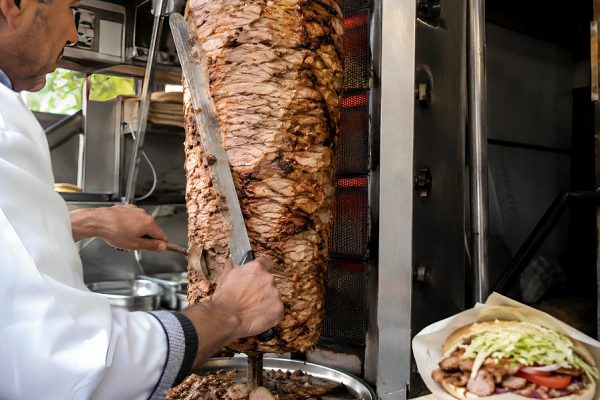
Ever wonder why a döner kebab shop always has a queue out the door, no matter what time of day it is? The döner kebab is one of the most eaten street dishes in the world, however most of those who order a döner have no understanding of where it came from, or why both Turkey and Germany lay claim to it.
Here’s the real story, what goes into it, and how it stacks up against shawarma and gyros.
Where Did the Döner Kebab Come From?
Early Ottoman Roots
The roots of the döner run deep into Ottoman history. Food historians have traced early depictions of meat cooked on a rotating skewer back centuries.
Some of the earliest known depictions of the dish appear in miniature paintings by an Istanbul artist dating from around 1616 to 1620.
For a long stretch of that history, the meat was grilled horizontally rather than upright, a style that survives today in Turkey as cağ kebabı.
The Shift to Vertical Grilling
Cooking the meat upright rather than on its side, the version most people recognise as döner today, is generally credited to 19th-century Turkey.
As the story usually goes, a cook named Hamdi Usta in the city of Kastamonu tilted the kebab into a vertical position around 1835, though historians don’t all agree on the exact year.
Around the same time, İskender Efendi of Bursa is also said to have made the vertical style popular. A dish called İskender kebab, which is döner served on bread with tomato sauce and yogurt, is named after him.
The first known picture of a döner seller is thought to be one taken in Istanbul between 1853 and 1855 by the British photographer James Robertson.
A Disputed “Inventor”
The exact “inventor” is genuinely disputed among food historians. Still, there’s little argument that the dish, in the form Turks would recognise, took shape in 19th-century Ottoman Turkey.
How the Döner Became an International Fast-Food Icon
The Berlin Sandwich
The sandwich version of döner that most people outside Turkey eat today, meat, salad, and sauce tucked into flatbread, has a more recent and better-documented history.
This modern sandwich style originated and was popularized in the 1970s in West Berlin by Turkish immigrants who had settled in the city as guest workers.
Instead of serving the meat on a plate with rice, as was traditional in Turkey, vendors in Berlin wrapped it in bread so busy workers could eat a full meal quickly and on the move.
Spreading Across Europe
The idea caught on fast. By the late 1970s, döner kebab shops had already begun spreading well beyond Berlin, and it wasn’t long before small kebab shops became a common sight in towns across Europe.
Germany now has several thousand döner outlets, and the dish is so entrenched in German food culture that it has eclipsed currywurst as the nation’s favourite fast food, according to survey statistics.
In 2011, Berlin’s Association of Turkish Döner Manufacturers in Europe formally recognised the sandwich-style döner as a Berlin invention, even while acknowledging Turkey’s older roots for the cooking method itself.
What Goes Into a Traditional Döner Kebab
Recipes for döner vary by shop and region, but a classic one usually has:
- The meat – The first choice was lamb, but beef and chicken are just as popular now.
- The marinade – Cumin, paprika, garlic, and onion are common seasonings, sometimes combined with yoghurt to tenderise the meat before it’s stacked and cooked.
- The bread – Depending on the country, the meat is served inside pita bread, a thicker Turkish flatbread, or wrapped in a thin yufka bread for a dürüm-style roll.
- The toppings – Shredded lettuce, tomato, onion, and red cabbage are common, along with sauces like garlic yoghurt, chilli, or a tangy herb sauce.
There’s no single “correct” way to build a döner. A shop in Istanbul, one in Berlin, and one in London may all serve noticeably different versions, and that regional variation is part of the dish’s appeal rather than a departure from tradition.
Döner Kebab vs. Shawarma vs. Gyros: What’s the Difference?
Because döner, shawarma, and gyros all involve meat shaved off a rotating vertical spit, people often use the names interchangeably. They share the same cooking technique but come from different food cultures, and each has its own character.
| Feature | Döner Kebab | Shawarma | Gyros |
| Origin | Turkey | Levant / Middle East | Greece |
| Common meat | Beef, veal, chicken, lamb | Chicken, lamb, or beef | Traditionally pork or chicken |
| Typical seasoning | Simpler blend, often paprika, cumin, and garlic | Bolder mix, often cumin, cardamom, turmeric, and cinnamon | Greek herbs like oregano, thyme, and rosemary |
| Common sauce | Garlic yoghurt or a herb sauce | Tahini, garlic sauce, or hummus | Tzatziki (yoghurt, cucumber, garlic, dill) |
| Typical bread | Turkish flatbread, pita, or yufka for a dürüm wrap | Pita or flatbread wrap | Thick, soft Greek pita |
Despite these differences, all three dishes are close relatives. Shawarma and gyros both grew out of the same vertical-rotisserie idea that took shape in the Ottoman Empire, and each region simply adapted it with local spices, breads, and sauces.
How Is Döner Kebab Traditionally Made?
The process behind a good döner is simple in concept but takes real skill to get right.
Marinating the meat
Thin slices or ground meat are rubbed with spices and sometimes left in a yoghurt-based marinade overnight to tenderise.
Stacking the skewer
The seasoned meat is layered onto a tall vertical skewer, building it up into a thick cone shape. Fat is often placed near the top so it bastes the meat as it melts down while cooking.
Slow-roasting
The skewer rotates in front of an upright grill, cooking the meat gradually from the outside in. This slow, even roasting is what gives döner its signature texture.
Shaving the meat
Once the outer layer turns golden and crisp, a chef carves it into thin slices with a long knife. The skewer keeps turning and cooking throughout the day, so every portion is freshly cut.
Assembling the dish
The sliced meat goes into flatbread or onto a plate, then it’s finished off with the vegetables and sauce described above.
Is Döner Kebab Healthy? Calories and Nutrition
There’s no single calorie count that fits every döner, and it’s worth knowing why before you go hunting for one. The number depends heavily on the meat used, the size of the bread, how much sauce goes on, and whether the order includes extras like fries.
Estimates from food-tracking apps put the meat alone at roughly 200 to 380 calories per 100 grams, and a full takeaway-style döner in bread with meat, salad, and sauce usually lands somewhere between 600 and 900 calories.
Treat these as ballpark figures rather than exact numbers, since they’re pulled from consumer nutrition apps rather than one official database, and portions differ a lot from shop to shop.
A few practical points for anyone watching their intake:
Lean meat helps
Chicken döner generally has less fat than lamb or beef versions.
Sauce matters more than people expect
Creamy, mayonnaise-based sauces add calories quickly, while a yoghurt-based sauce tends to be lighter.
Vegetables are a genuine upside
A generous helping of fresh salad adds fibre and vitamins without much extra calorie cost.
Bread size varies a lot
A large flatbread wrap will naturally push the calorie count higher than a smaller pita.
If you’re watching what you eat, the best bet is to get the nutrition statistics from your particular kebab shop or brand rather than a general average.
FAQs
Can döner kebab be made without meat?
Yes. Vegetarian and vegan versions have become widely available, especially in Germany, using ingredients like seasoned soy protein, halloumi, or grilled vegetables in place of meat.
Is a home-cooked döner as good as one from a spit?
Not quite. A pan-seared or oven-grilled version can get close in flavour with the right marinade, but the constant rotation and slow build-up of crisp edges from a real vertical spit is difficult to fully replicate at home.
Is döner kebab spicy?
Not inherently. The meat itself is seasoned but not hot. Any heat usually comes from an optional chilli sauce added on request, so it’s easy to order a mild version.
Does döner kebab contain pork?
No. Traditional döner meat is made from beef, lamb, veal, or chicken. Pork is not used in authentic döner, which reflects the dish’s Turkish, Muslim-majority origins.

James Carter is a food researcher and writer passionate about global cuisines, street food, and the stories behind what we eat. He combines thorough research with a genuine love for food culture to bring readers accurate, well-written, and interesting content.