The Best Fluffy Pancakes recipe you will fall in love with. Full of tips and tricks to help you make the best pancakes.

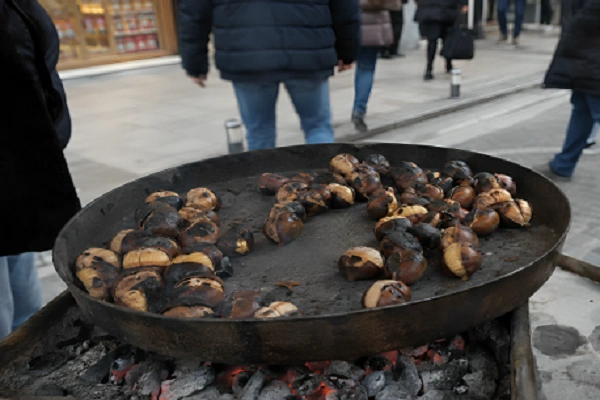
Ask someone in Türkiye what kestane kebap is, and they will hand you a warm paper bag of roasted chestnuts, not a plate of lamb.
The name throws people off because “kebap” usually points to grilled meat, but here it refers to roasted chestnuts rather than a meat dish.
Made from a single ingredient and no seasoning at all, kestane kebap has stayed a fixture of Turkish winters for generations.
Below you’ll find how it earned its name, how vendors make it, a recipe you can try at home, and its nutrition breakdown.
Why Is It Called “Kebap” If There’s No Meat?
In Turkish, “kestane” means chestnut, while “kebap” simply means charcoal-grilled. In this case, kestane kebap refers to chestnuts roasted over hot coals rather than a meat dish.
Kebap is commonly associated with meat because many well-known Turkish kebaps are meat-based, but kestane kebap is a traditional example of how the term can also describe roasted chestnuts.
How Street Vendors Make It
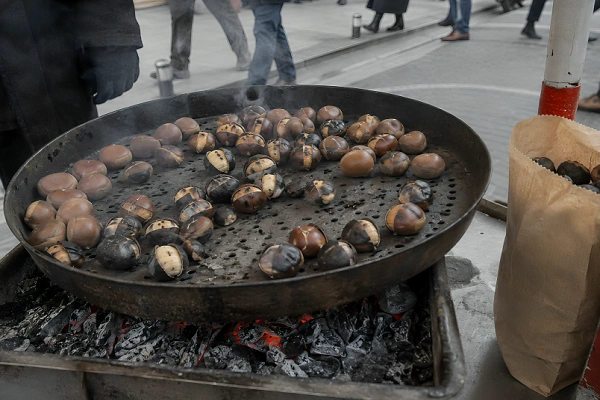
Vendors roast chestnuts using small carts built around a metal pan drilled with holes, sitting directly over a bed of burning charcoal.
The holes let the fire’s heat reach the chestnuts evenly, and vendors work in small batches so every chestnut cooks through before it goes into the bag.
Some vendors also sell roasted corn (mısır) during warmer months, while roasted chestnuts become a common street snack as temperatures drop.
Bags are sold by weight, and the chestnuts go straight from the coals into your hands, still hot.
How to Make Kestane Kebap at Home
You do not need a charcoal cart to recreate kestane kebap in your own kitchen. The method is simple and works with an oven or a stovetop.
Ingredients
- Fresh raw chestnuts (as many as you’d like to prepare)
- A sharp knife
Oven Method
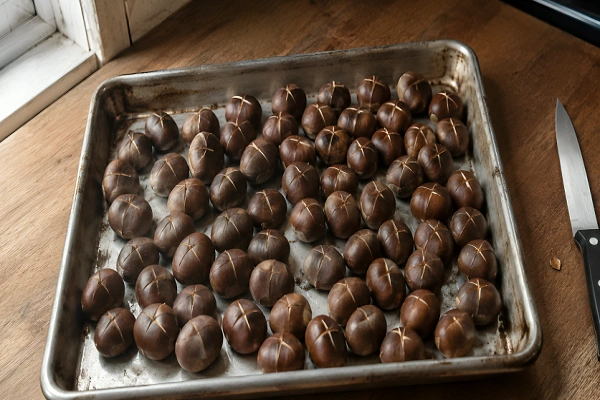
- Preheat the oven to 220°C (425°F).
- Using a sharp knife, score an X-shaped cut into the flat side of each chestnut. Skip this and the shells can burst in the oven, so don’t rush past it.
- Arrange the scored chestnuts in a single layer on a baking tray.
- Roast for 20 to 25 minutes, until the shells curl back at the scored cut and the flesh feels soft when pressed.
- Let them cool just enough to handle safely, then peel while they are still warm.
Stovetop Method
- Score each chestnut the same way as above.
- Heat a heavy skillet, cast iron if you have one, over medium heat.
- Add the chestnuts in a single layer, cover with a lid, and cook for 15 to 20 minutes, shaking the pan every few minutes so all sides roast evenly.
- Remove once the shells darken slightly and curl open at the cut.
How to Eat Kestane Kebap
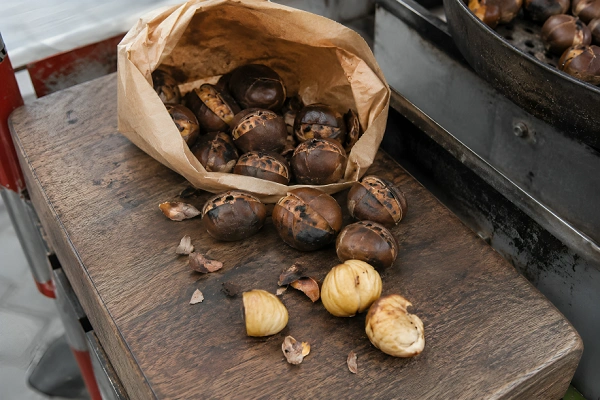
Peel the shell off while it’s still warm; let it cool and it turns stubborn. What’s underneath should be soft, a little starchy, and sweet enough that most people never bother adding salt, butter, or anything else.
That’s the whole point of it, the roasting does all the work.
Nutrition Facts (Per 100 Grams)
Chestnuts are unusual for a nut: mostly carbs, very little fat, the same basic profile as a potato rather than an almond, though chestnuts pack roughly three times the calories of a raw potato gram for gram.
A 100-gram serving runs about 245 calories, 2 grams of fat, 53 grams of carbs, and a solid dose of vitamin C, more than double what you’d get from a banana.
FAQs
Is kestane kebap the same as kestane şekeri?
No. Kestane şekeri is a candied chestnut dessert soaked in sugar syrup, while kestane kebap is plain and unsweetened, with only the chestnut’s own natural sweetness coming through from roasting.
Is kestane kebap vegan?
Yes. It contains only roasted chestnuts with nothing added, making it naturally vegan and vegetarian.
Can I use any type of chestnut?
Yes, both European and Chinese chestnut varieties work well for this method. Choose ones that feel firm and heavy for their size; lighter chestnuts have often dried out and won’t roast as evenly.
Can I skip scoring the shell before roasting?
No. Without a cut, steam builds up inside the shell with nowhere to go, and the chestnut can burst, sometimes loudly, in the oven or pan. The score is a small step but not an optional one.

James Carter is a food researcher and writer passionate about global cuisines, street food, and the stories behind what we eat. He combines thorough research with a genuine love for food culture to bring readers accurate, well-written, and interesting content.