The Best Fluffy Pancakes recipe you will fall in love with. Full of tips and tricks to help you make the best pancakes.

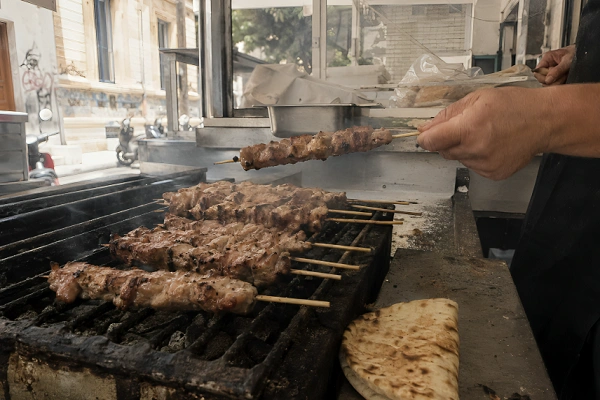
Planning a trip to Greece, or just curious what the fuss is about? Here’s what to order, what it’s called locally, and why Greeks have been eating this way for generations.
First, why does it taste so different from what you get abroad?
Two reasons, mostly. One, almost nothing is pre-made. Vendors marinate their own meat overnight, mix tzatziki fresh each morning, and hand-cut potatoes for fries instead of pulling a bag out of the freezer.
Two, the ingredient list is short on purpose: olive oil, a handful of herbs, good meat, and not much else standing in the way.
A souvlaki shop that cuts corners on the marinade doesn’t last long. Regulars know the difference immediately, and word travels fast in a country this food-obsessed.
Souvlaki
The name means “little skewer,” which is about as literal as food names get. Cubed pork, or chicken if that’s your thing, gets marinated in olive oil, lemon, garlic, and oregano, then grilled over charcoal until the outside charms and the inside stays juicy.
Here’s where it gets slightly confusing for visitors: in Athens, “souvlaki” can mean either the skewer or the full pita-wrapped version.
Head north to Thessaloniki and the terminology splits differently, locals there draw a sharper line between the two. Nobody’s actually trying to trip you up, it’s just a regional habit.
Grilled meat on a stick isn’t a new idea in Greece, either. This goes back further than most street food trends do.
Gyros, the one everyone already knows
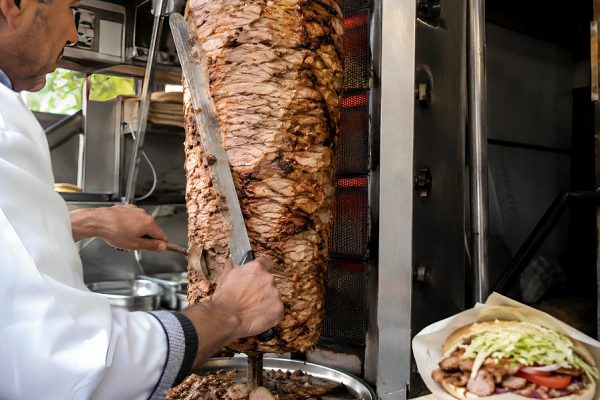
If you ask someone outside Greece to name one Greek dish, gyros is probably it. Meat, usually pork, sometimes chicken or a beef-lamb mix, stacks on a vertical rotisserie and slow-roasts as it spins.
The outer layer gets shaved off in thin strips and goes into a warm pita with tomato, onion, and tzatziki.
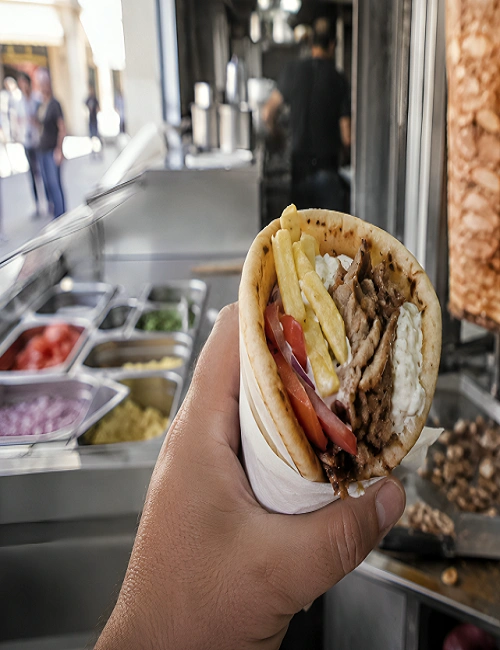
Fries usually go inside the pita here, not on the side. Small detail, but it catches people off guard the first time.
The name literally means “turn,” a reference to the rotisserie. And the cooking method itself is closely tied to the döner kebab tradition, which took hold in Greece and became its own thing over the 20th century.
Tzatziki isn’t just a topping
Garlic, olive oil, chopped cucumber, yogurt that has been strained, and fresh dill. That’s the whole recipe, and yet somehow every shop’s version tastes a little different.
It cuts through smoky grilled meat better than almost anything else could, which is probably why you’ll find it next to nearly every meat dish in the country.
People genuinely argue about whose tzatziki is best. It’s a real conversation Greeks have.
Koulouri, the breakfast most tourists miss
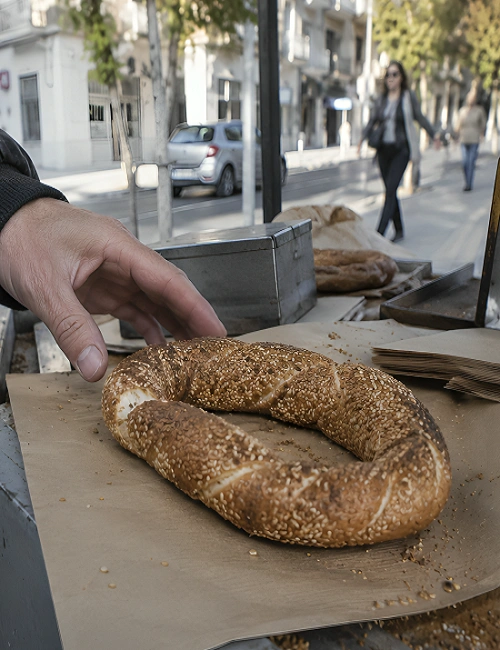
Souvlaki gets the attention, but koulouri is what a lot of Greeks eat every single day.
It’s a ring of bread coated in sesame seeds, sold from carts before most restaurants even open, and grabbed on the way to work. Think bagel, but lighter, chewier, and nuttier from the toasted sesame.
Two pastries you’ll see in every bakery window
Phyllo dough is everywhere in Greek cooking, and these two are its street food showcase. Spanakopita wraps spinach and feta in crisp, flaky layers.
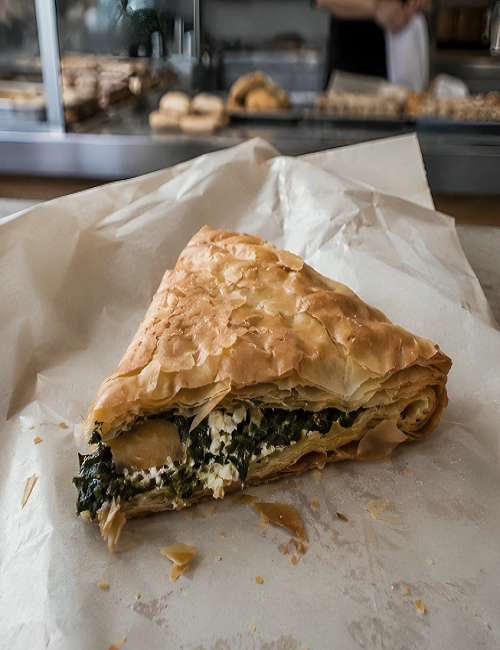
Tiropita does the same thing but swaps in a richer cheese filling, no spinach. Bakeries sell both by the piece. If you want something vegetarian in a menu that leans heavily on grilled meat, start here.
Kreatopita is the meat-lover’s answer to the same phyllo-and-filling idea, minced or stewed beef instead of cheese or greens.
It’s strongly associated with Epirus, in the northwest, where a savory version traditionally replaces the sweet New Year’s pie found elsewhere in the country. Bakeries sell it by the slice.
Dolmas don’t quite belong on a “grab and go” list, and that’s fine
Grape leaves rolled around rice, dill, mint, and sometimes minced meat, finished with olive oil. The name comes from the Turkish word for “stuffed,” a legacy of Ottoman-era cooking that spread across the region.
Dolmas show up more often at a meze table than at a street cart, shared slowly alongside other small dishes rather than eaten on the move. Still, no honest guide to Greek food skips them.
Fried vegetables: kolokithokeftedes and tomatokeftedes
Zucchini fritters and tomato fritters, respectively, both bulked up with herbs, a little flour, and sometimes feta, then fried until the outside crisps and the inside stays soft. Served with tzatziki, obviously.
If meat isn’t your thing, this is one of the better ways to eat well in Greece without missing much.
Grilled octopus
Coastal towns and the islands do this one best. Chtapodi sta karvouna, grilled octopus, gets tenderized first, sometimes the old-fashioned way by beating it against rocks, then hung out to dry in the sun before hitting the grill with olive oil, lemon, oregano, and garlic.
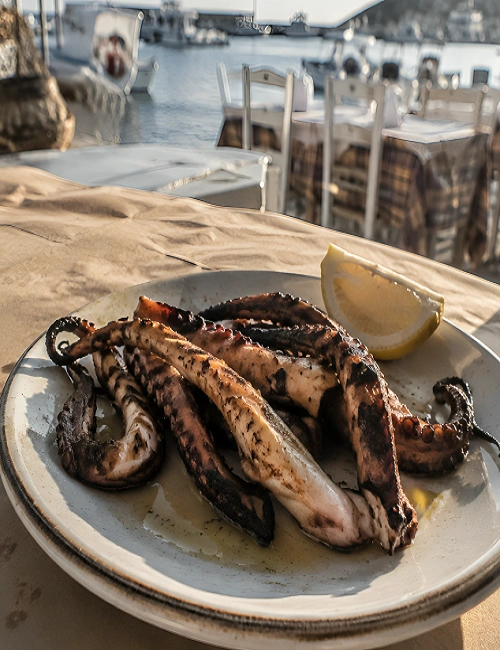
It comes out slightly crisped at the edges, usually served with latholemono (a lemon-olive oil sauce) and something green on the side.
One caveat: octopus populations in parts of the Mediterranean have taken a hit from overfishing, so consider picking places that source responsibly if that matters to you.
Greek salad isn’t really street food, but you’ll eat it anyway
Horiatiki, the “village salad,” shows up on every menu in the country: tomato, cucumber, red onion, olives, a thick block of feta, olive oil, oregano.
No lettuce, despite what gets served under that name outside Greece. It’s not something you can eat while walking, but it’s everywhere, and on a hot afternoon it’s usually what people order first.
Loukoumades
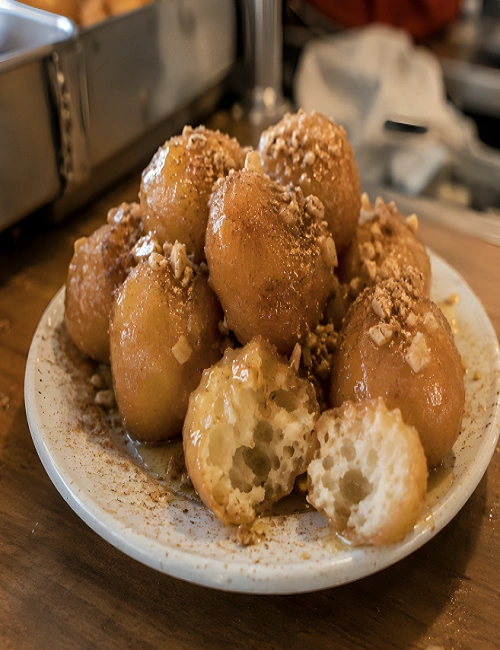
Small balls of fried dough, soaked in honey syrup, finished with cinnamon and crushed walnuts. Crisp outside, soft inside. These have been part of Greek eating for generations, and they’re easy to see why once you try one warm.
It changes depending on where you are
Souvlaki terminology shifts between Athens and Thessaloniki, as already mentioned. Coastal areas lean harder into seafood. Northern Greece picks up more Balkan influence in its spices and bread styles. None of this is trivia for its own sake, it shapes what you’ll find on a menu depending on where you’re standing.

James Carter is a food researcher and writer passionate about global cuisines, street food, and the stories behind what we eat. He combines thorough research with a genuine love for food culture to bring readers accurate, well-written, and interesting content.