The Best Fluffy Pancakes recipe you will fall in love with. Full of tips and tricks to help you make the best pancakes.

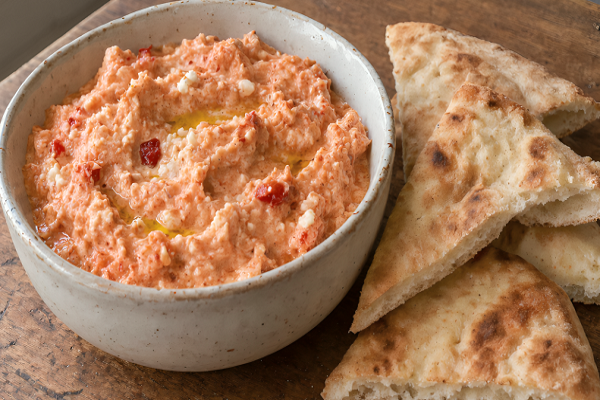
Chili heat is not common in Greek cooking. Olive oil, lemon, and oregano shape the flavor of many Greek dishes, while spicy peppers play a smaller role.
A small group of dishes still delivers real heat, led by tirokafteri, a spicy feta dip. This guide lists those dishes and ranks them by heat level.
Is Greek Food Spicy?
Mostly no. Oregano, not chili, is the dominant seasoning in Greek cooking, and many travel guides describe the cuisine as mild.
History explains part of the story. Chili peppers come from the Americas and reached Europe only after Columbus’s voyages in the late 15th century. By that time, olive oil, wine, and herbs were already central to Greek cooking, while chili peppers remained a less common ingredient.
Northern Greece is the exception. Cooks there use more heat than in the rest of the country, partly because Greek refugees from Asia Minor settled in the north in the early 1920s and brought their spiced recipes with them.
Greek Spicy Dishes at a Glance
The amount of heat in each dish depends on the recipe and the peppers used.
| Dish | What It Is | Approximate Heat |
| Tirokafteri | Spicy feta dip | Medium to hot |
| Bourdeto | Fish in spicy red sauce | Medium to hot |
| Pastourma | Spiced cured beef | Mild to medium |
| Spetzofai | Sausage and pepper stew | Mild to medium |
| Htipiti | Whipped feta and pepper dip | Varies by pepper |
| Soutzoukakia | Cumin-spiced meatballs | Usually mild |
Tirokafteri
Tirokafteri is among the most well-known spicy foods in Greece. The name joins tyri (cheese) and kafteri (hot), so it means “spicy cheese.”
Cooks blend feta with hot peppers, roasted red peppers, olive oil, and often yogurt and garlic. Greeks serve it on a meze platter, spread it on warm pita, or use it as a sauce for grilled meat.
Traditional versions range from mildly spicy to fairly fiery, depending on the peppers. Cooks who want less heat simply remove the seeds from the chili.
People often ask how it differs from htipiti. The two names overlap in practice, and recipes vary by region and household.
Bourdeto
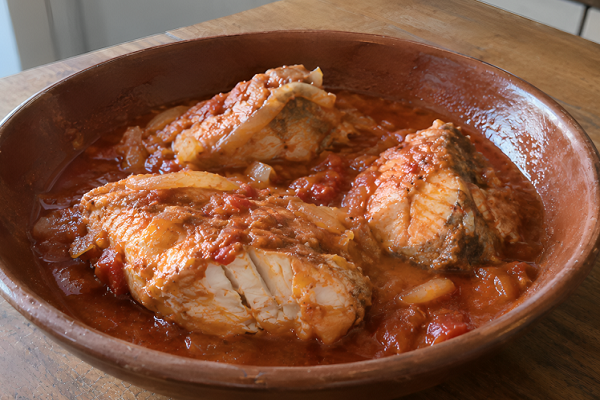
Bourdeto is a fish dish from the island of Corfu. Its name comes from the Venetian word brodetto, which means “broth.”
Cooks simmer fish with onion and plenty of red pepper, both sweet and hot. Scorpion fish is the classic choice.
Many traditional recipes leave out tomato and rely on the peppers for color and heat, though some cooks add it. Bourdeto is meant to taste spicy, and cooks adjust the heat to their own taste.
Pastourma
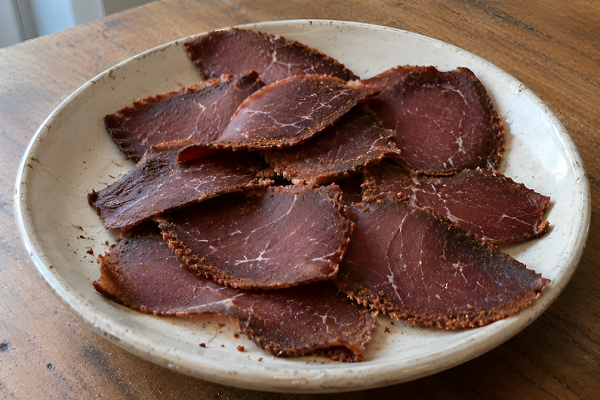
Pastourma is air-dried, cured beef coated in a thick paste of fenugreek, garlic, cumin, and paprika or hot pepper. Pastourma has a place in several regional food traditions, including those of Greece, Turkey, and Armenia.
Greek cooks slice it thinly and serve it on a meze plate, fry it with eggs, or bake it into pies. The flavor is salty, garlicky, and warming, with a mild to medium peppery kick.
Spetzofai
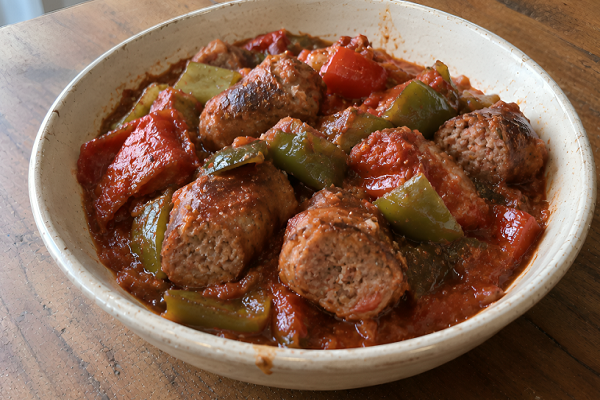
Spetzofai is a stew of sausage, peppers, and tomato from the Pelion region in central Greece. The sausage and peppers give it a warm, peppery flavor. Some cooks add pickled hot peppers or chili flakes, while others keep it mild, so the heat depends entirely on the recipe.
Htipiti
Roasted peppers are blended with feta to create the creamy Greek dip known as htipiti. The type of pepper decides the heat, so one kitchen may serve a gentle dip and another a spicy one. Ask how a particular cook makes it before you assume either.
Soutzoukakia
Soutzoukakia are oval meatballs simmered in tomato sauce and seasoned with garlic and cumin. The recipe comes from Smyrna (modern İzmir) and reached Greece with refugees in the early 1920s. The dish tastes warm and aromatic rather than hot, though some cooks add chili to the sauce.
Boukovo: The Seasoning Behind the Heat
Boukovo is the Greek word for chili flakes. Producers make it from dried, often smoked, red peppers, and it comes in sweet and hot versions. It is especially popular in northern Greece, where cooks add it to grilled meat, soups, beans, and sauces.
Cooks add it to taste, which shows how Greek cuisine often treats chili: as an adjustable accent rather than a fixed feature.
Spicy vs. Spiced
Many Greek dishes taste strongly seasoned without being hot. Cumin, cinnamon, and fenugreek add aroma and depth, but they do not produce chili-style heat. That burning sensation comes from capsaicin, the compound found in chili peppers.
Dishes such as tirokafteri and bourdeto get their heat from chili peppers rather than aromatic spices alone. This difference explains why people call the same cuisine both “not spicy” and “full of spices.”
How to Cool Down a Spicy Dish
Water is not very effective at easing the burning sensation caused by chili peppers, as capsaicin does not mix readily with water. Dairy products can help ease the burning sensation, as casein, a protein found in milk, helps remove capsaicin from the mouth. Milk, yogurt, and cheese are useful options when a dish turns out hotter than expected.
Conclusion
Greek cuisine stays mild by tradition, and a handful of dishes, led by tirokafteri, add real heat. Knowing which dishes use chili and which only use spices lets you read any Greek menu with confidence.
FAQs
Can I make tirokafteri less spicy?
Yes. Remove the seeds from the chili before blending it with the feta.
What goes well with tirokafteri?
Warm pita, bread, grilled meats, and fresh vegetables are the usual partners.
Which Greek dishes suit people who dislike heat?
Soutzoukakia and most dishes seasoned only with lemon and oregano stay mild.
What is boukovo?
It is the Greek name for chili flakes, often smoked, available in sweet and hot versions.

James Carter is a food researcher and writer passionate about global cuisines, street food, and the stories behind what we eat. He combines thorough research with a genuine love for food culture to bring readers accurate, well-written, and interesting content.