The Best Fluffy Pancakes recipe you will fall in love with. Full of tips and tricks to help you make the best pancakes.

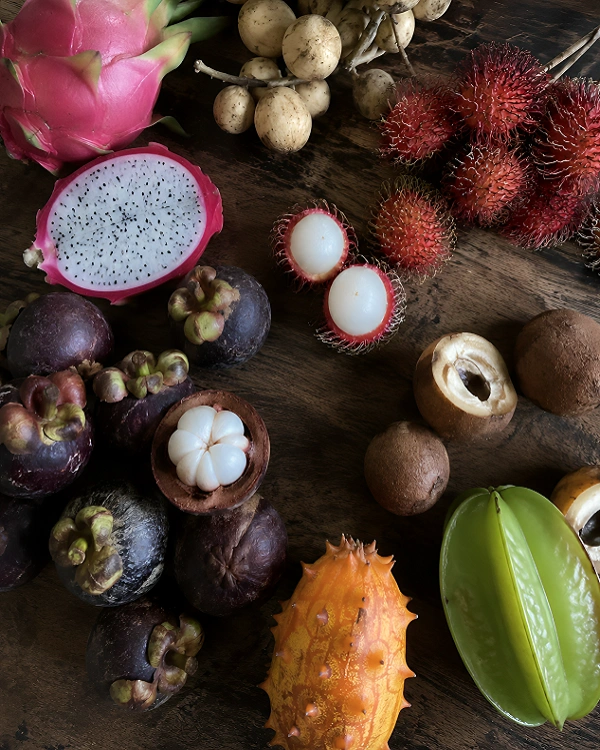
Ever stood in front of a spiky red fruit at the grocery store, or a scaly pink one, and had no idea what it was or how to eat it? That’s exactly what exotic fruits do to most people.
They don’t come with instructions, they rarely show up in a normal produce aisle, and half the time the name itself sounds made up.
This guide covers 12 of them, dragon fruit to durian, so the next time you spot one, you’ll know exactly what you’re looking at, what it tastes like, and whether it’s worth taking home.
What Makes a Fruit “Exotic”?
A fruit earns the label “exotic” when it grows outside a person’s home region and carries an unfamiliar appearance, texture, or taste. In South Asia, a mango is just another fruit, but in Northern Europe, it’s something out of the ordinary. The fruits covered here remain unusual to most people worldwide, regardless of where they live.
1. Dragon Fruit (Pitaya)
A cactus, not a tree, produces dragon fruit. Its bright pink or yellow skin has a scaly, almost reptilian look, and researchers trace the plant’s origin to Mexico and northern South America, though Vietnam, China, and Australia now grow it at scale.
Slice one open and you’ll find white or deep-red flesh dotted with tiny black seeds; the texture lands somewhere between kiwi and pear.

In terms of calories, it’s still low, at around 50 to 60 per 100 grams, with 11 to 13 grams of carbohydrate, largely from natural sugars.
Fiber and vitamin C content are both solid. What draws researchers’ attention, though, is the fruit’s mix of flavonoids, phenols, anthocyanins, and betalains compounds tied to antioxidant, anti-inflammatory, and antimicrobial activity in lab studies.
2. Mangosteen
Malaysia and Indonesia, especially the islands around Borneo, are where mangosteen grows best, and the fruit has earned the nickname “queen of fruits” for good reason. Break open the thick purple rind and you’ll find soft white segments with a flavor that sits right between sweet and tangy.

The rind itself is where most of the interest lies scientifically: it’s packed with xanthones, an antioxidant group that traditional medicine across the region has used for generations to treat inflammation.
Modern research is still catching up to confirm exactly how these compounds work in the human body, but the fruit’s vitamin C and fiber content are well documented.
3. Rambutan
It is no surprise that the red, spiky shell of the rambutan is termed “hair” in Malay. Peel past that shell and the flesh underneath tastes a lot like lychee, juicy, sweet, with a slight tartness.

Indonesia and Malaysia are home turf for this fruit, and it turns up constantly in Bali’s markets and roadside stalls.
Few exotic fruits pack this much nutrition per bite: five or six rambutans cover roughly half of an adult’s daily vitamin C needs, alongside iron, phosphorus, copper, manganese, potassium, magnesium, and zinc. One quirk worth knowing is that only female rambutan trees bear fruit; the males just produce flowers.
4. Durian
Ask anyone in Malaysia, Thailand, or Indonesia and they’ll tell you durian is the “king of fruits,” a title it earns as much for its smell as its taste.
Crack one open and the odor hits first, often compared to old socks or garbage. But push past that and the custard-like flesh underneath tastes like a strange, wonderful mix of almond, chocolate, and custard.

It’s also the heaviest hitter on this list nutritionally: more calories, fat, and protein than lighter fruits like rambutan or dragon fruit, plus a good dose of vitamin C, B6, and potassium. Most people eat it in small portions given how rich it is.
5. Longan
The name “longan” translates to “dragon’s eye” in English, a fitting description for the dark seed visible within the fruit’s translucent flesh once peeled. This fruit looks like a smaller and more modest lychee. It’s still sweet with a touch of sour.
Fresh longan is common in Thailand and Vietnam, though people also dry it for soups, desserts, and traditional remedies. Nutritionally it offers vitamin C, calcium, iron, and phosphorus. Chinese medicine has used it for centuries, though most of what’s written about its benefits comes from historical use rather than controlled clinical trials.
6. Star Fruit (Carambola)
Slice a star fruit crosswise and you get exactly what the name promises: a perfect five-pointed star, which is part of why it shows up so often as a garnish. Malaysia, Indonesia, and Thailand grow most of the world’s supply, and the flavor ranges from sharply tart when unripe to gently sweet once fully mature.
Unlike most fruits on this list, you don’t need to peel it. The skin is thin enough to eat. One caution: star fruit contains oxalic acid, so anyone with kidney problems should check with a doctor before making it a regular habit.
7. Lychee
China’s records place lychee cultivation as far back as 2000 B.C., making it one of the oldest fruits on this list by documented history. The tough, reddish-pink skin peels away easily to reveal pale, almost translucent flesh with a floral sweetness and a single brown seed at the center.
Vitamin C is where lychee really shines: some analyses put a single serving at well over 100% of the daily recommended value, and the fruit runs about 66 calories per 100 grams, alongside copper, manganese, and B vitamins.
It also contains epicatechin, a polyphenol antioxidant also found in green tea. The sugar content runs high, so moderate portions make more sense than large ones.
8. Jackfruit
The jackfruit is the largest fruit that grows on trees, weighing up to 40 kilos when mature. It started out in South India and has since spread across South and Southeast Asia. Ripe jackfruit tastes sweet and distinctive, while the unripe version has become a go-to meat substitute in vegetarian cooking thanks to its fibrous, shreddable texture.
The fruit has about 95 calories per 100 grams, and it has vitamin A, vitamin C, calcium, and iron. The fiber in it helps digestion, and this is one of the few exotic fruits that really works well in savory dishes.
9. Passion Fruit
Parts of India call it “Krishna phal,” but passion fruit actually originates from subtropical South America, southern Brazil, Paraguay, and northern Argentina specifically. The wrinkled outer skin isn’t much to look at, but crack it open and the seed-filled pulp inside delivers a tart, intensely aromatic flavor.
Vitamin A, vitamin C, and fiber round out its nutritional profile, and its nutrients are associated with heart health, immune support, and skin health. It’s a common addition to juices, desserts, and smoothie bowls for good reason.
10. Cherimoya
The Andean valleys of South America gave rise to cherimoya, and its flavor reflects that: creamy, with notes people often compare to banana, pineapple, and strawberry blended together. It has a rough, green outside, nearly heart-shaped, and then softens to a pale flesh as it ripens.
Cherimoya carries a lower glycemic index than many tropical fruits, worth knowing if you’re watching blood sugar, and comes in at roughly 75 calories with 3 grams of fiber per serving. It rounds out with vitamin C, calcium, and magnesium.
11. Snake Fruit (Salak)
Indonesia, specifically Java and Sumatra is Salak’s home, and its reddish-brown, scaly skin explains the “snake fruit” nickname immediately. It grows on a type of palm tree, which sets it apart botanically from most other fruits on this list.
Calories land around 82 for a typical serving, with 2 grams of fiber and a solid mix of vitamin C, calcium, potassium, and iron, plus beta-carotene and phenolic antioxidants. The natural sugar content runs on the higher side, so it’s worth eating in moderation if you’re tracking blood sugar.
12. Buddha’s Hand
Nothing about Buddha’s Hand looks like a typical citrus fruit. Though It derives its name from the way it splits into finger-like sections rather than round segments. There’s barely any juice or pulp inside; the entire appeal comes down to its intensely fragrant zest and pith.
Cooks use the zest to flavor desserts, drinks, and candy, and in some cultures the whole fruit doubles as a natural air freshener or decorative piece. Think of it less as something you eat outright and more as a specialty citrus ingredient.
How to Choose and Store Exotic Fruits
Judging ripeness takes experience when you can’t go by the conventional signs of apples and bananas.
Dragon fruit: press gently it should give slightly, like a ripe avocado, with skin that still looks bright and unwrinkled.
Mangosteen: squeeze lightly; if the rind feels hard, it isn’t ready yet.
Rambutan: peel it first, then store in a sealed container in the fridge to keep it fresh longer.
Durian: the smell itself is the ripeness signal the stronger it gets, the more ready the fruit is.
Longan and lychee: look for firm, unbroken skin; cracks let the fruit dry out fast.
Cherimoya: leave it at room temperature until it softens like an avocado, then refrigerate.
Salak: As long as the skin stays on, it will stay fresh for about a week at room temperature.
As a general rule, refrigerate fruit once it has ripened, but leave unripe fruit out until it softens.
Why Exotic Fruits Deserve a Place in Your Diet
Beyond novelty, these fruits bring real nutritional value fiber, vitamin C, and antioxidant compounds that support overall health, plus flavors that break up the monotony of eating the same handful of fruits on repeat.
Trying one also connects you, in a small way, to the food traditions of the regions they come from, whether that’s a night market in Bangkok or a highland orchard in Peru.
Pick one or two fruits from this list, learn what ripeness looks like for each, and work your way through the rest over time. There’s no rush, just a lot of flavor left to discover.
FAQs
Where can I buy exotic fruits?
Asian and Latin American grocery stores, specialty markets, and farmers markets are the best sources. Dragon fruit and star fruit are increasingly available in mainstream supermarkets too.
Which exotic fruit is the healthiest?
There’s no single “healthiest” fruit. Lychee and rambutan are highest in vitamin C, dragon fruit offers fiber and antioxidants, and cherimoya has a low glycemic index good for blood sugar control.
Can I eat exotic fruit skins?
Star fruit’s thin skin is edible. Rambutan, lychee, mangosteen, and dragon fruit skins are not meant to be eaten and should be removed first.
Why does durian smell so strong?
Durian’s odor comes from sulfur compounds that form as the fruit ripens. The smell peaks at the same time the flesh becomes sweetest.
Are exotic fruits safe during pregnancy?
Most are safe in normal amounts during pregnancy. People with diabetes or kidney issues should ask a doctor before eating star fruit or salak regularly.

Rachel Bradley is a food writer and recipe developer with a love for home cooking and global flavors. She has spent years testing recipes in her kitchen, exploring everything from quick weeknight meals to traditional dishes from around the world. Her goal is simple — make great food accessible to everyone.