The Best Fluffy Pancakes recipe you will fall in love with. Full of tips and tricks to help you make the best pancakes.

Tatar food runs on meat pies, honey-soaked pastries, and traditions shaped by life on the Volga steppe.
Echpochmak, chak-chak, peremech, gubadia: this guide explores where these dishes came from, what goes into them, and how they fit into Tatar food culture, whether you try them in Kazan or at home.
Where Tatar Food Comes From
The roots of Tatar cuisine go back around 1,500 years to the Volga Bulgars, nomads who eventually settled along the Volga and Kama rivers and turned to farming.
That single shift, from herding to agriculture, shaped nearly everything that came after it. Sheep, cattle, and horses were the backbone of the early Tatar diet, and all three remain common on the table today.
Geography did the rest of the work. The Tatars lived right where northern forests meet southern steppe, along two major rivers used for trade.
That position pulled in rice, tea, dried fruit, and spices from Central Asia long before those ingredients reached most of the surrounding region.
Contact with Russian, Mari, and Udmurt neighbors added even more variety over time, though the core identity of the cuisine never really disappeared under all those outside influences.
What Goes Into Tatar Cooking
A handful of staples run through nearly every recipe, just prepared in different ways depending on the dish and the occasion.
- Meat: Beef, mutton, goose, and duck all appear regularly. Horse meat also has a real place at the table, often cured into a sausage called kazylyk.
- Dairy: Sour cream, curds, butter, and a fermented drink called katyk turn up in soups, fillings, and drinks alike.
- Grains: Wheat, buckwheat, millet, and rice form the base of porridges, noodles, and most pastry dough.
- Honey: Beekeeping has deep roots in the region, and honey sweetens both desserts and drinks.
- Vegetables: Onions, carrots, and potatoes are pantry basics now, though potatoes only entered the picture in the late 19th century.
Most Tatars are Muslim, so the everyday recipes follow halal guidelines, and pork simply isn’t part of the classic Tatar kitchen.
Traditional Tatar Dishes
Echpochmak
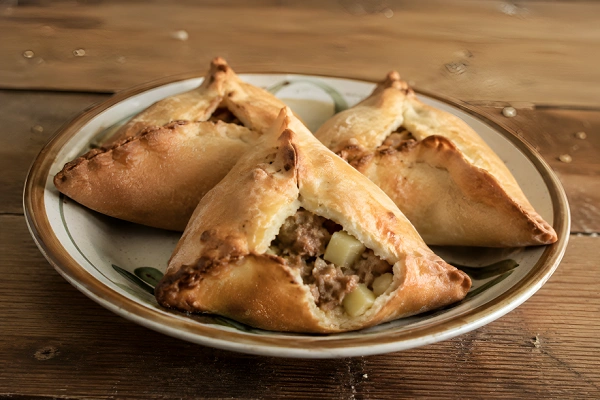
If one dish sums up Tatar food, it’s echpochmak. This triangular pastry gets stuffed with chopped meat, onion, and potato, and older recipes left a small opening on top so hot broth could be poured in right before eating.
That was a practical trick as much as a culinary one; it let nomadic Tatars cook a hot meal in the field without much fuss.
Beef is the standard filling these days, though goose and duck versions still turn up. Most people eat it hot, with a cup of bouillon or tea on the side.
Chak-Chak
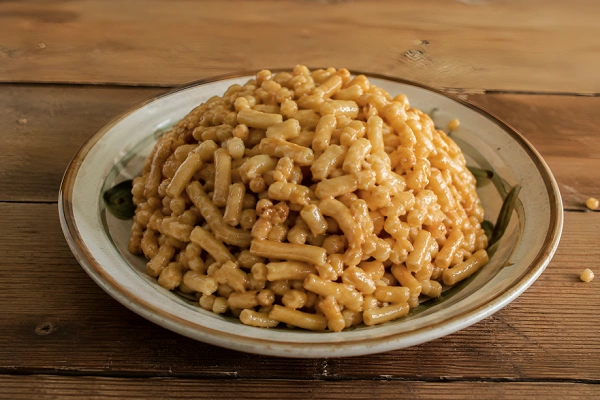
Ask anyone in Tatarstan about dessert, and chak-chak comes up first. It’s small pieces of fried dough bound together with hot honey into a golden, crunchy mound, and it appears at nearly every wedding in the region.
One local legend traces it back to the old Volga Bulgar lands, where a khan supposedly asked his cooks for a wedding dessert that would keep well and impress his guests.
True or not, the story fits: chak-chak has become the region’s signature symbol of generosity. At the 2018 FIFA World Cup in Kazan, cooks even made one weighing over 400 kilograms.
Peremech
Peremech is round, fried, and packed with seasoned minced meat, with a small hole on top where you can see the filling peeking through.
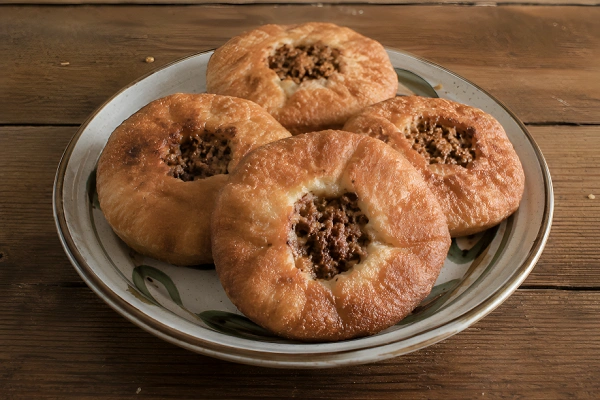
You’ll find it sold hot on street corners across Tatarstan, which makes it one of the easiest ways to try local food if you don’t have time for a sit-down meal.
Gubadia
Gubadia earns its spot on the festive table. It’s a layered pie built from meat, rice, dried fruit, and a curd called qort, all stacked inside a single crust.
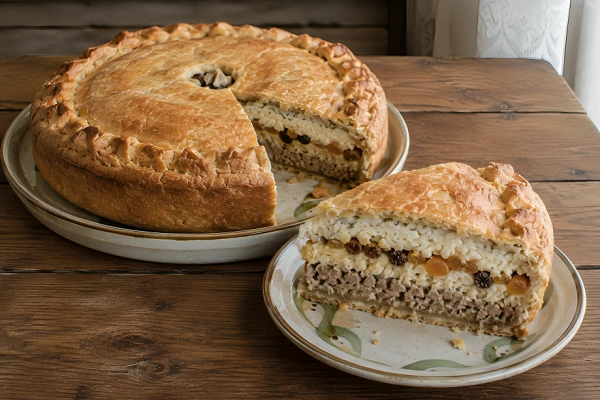
Families usually save it for special occasions, since the layers themselves are meant to represent abundance.
Balesh
Balesh takes the shape of a large pie, often cone-shaped in older recipes, filled with fatty meat mixed with grains or potatoes.
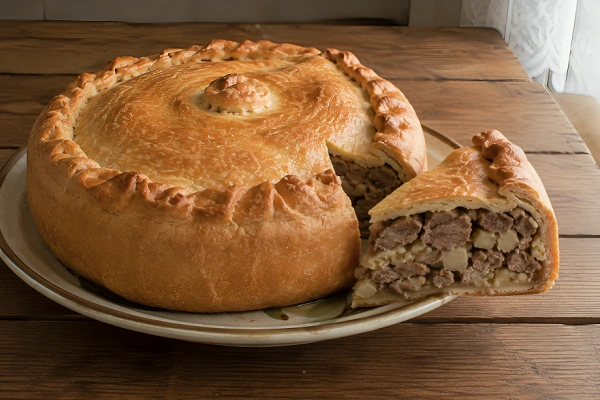
It once appeared mainly at ceremonies, though smaller everyday versions closer to a Russian pirog are far more common now.
Tokmach Ash
This is the noodle soup you’ll find in most Tatar kitchens, made with homemade noodles and pieces of boiled meat or chicken in a clear broth. It’s simple comfort food, and people make it most often once the weather turns cold.
Kystyby
A folded flatbread filled with mashed potato or millet, kystyby is quick to put together and usually lands on the breakfast table with a bit of melted butter.
Qullama (Beshbarmak)
Most people outside Tatarstan know this dish by its Kazakh name, beshbarmak, which means “five fingers” and points to how it was traditionally eaten by hand.
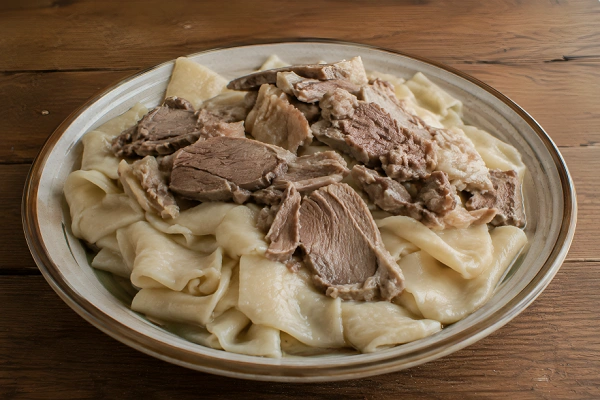
In Tatarstan and Bashkortostan, locals call it qullama instead. Either way, it’s boiled meat tossed with wide pasta pieces, and it feels closer to its nomadic origins than almost anything else on this list, a throwback to when Tatars needed meals that used whatever livestock they had on hand.
More Than Just a Meal
Food in Tatar culture rarely stays in the kitchen. Pastries especially carry ritual weight, showing up at births, weddings, and other milestones.
Chak-chak, for instance, was once brought by the bride to her new husband’s family as part of the wedding, and many families keep that custom alive today.
The Soviet era wasn’t kind to this heritage. Regulations pushed much of Tatar cooking out of public restaurants and canteens for decades.
It took chefs like Yunus Akhmetzyanov, working through the late 1960s, to get echpochmak, chak-chak, and other dishes back onto menus across the Soviet Union, saving recipes that might otherwise have quietly disappeared.
Where to Find It Today
Kazan remains the best place to eat this way. Bakeries and cafes across the city sell echpochmak, peremech, and chak-chak fresh throughout the day, and plenty of restaurants run full menus built around soups, meat pies, and sweets.
Since most of this cooking is halal, anyone looking for pork should head toward the city’s Georgian, Italian, or classic Russian restaurants instead.
If Kazan isn’t on your itinerary, chak-chak and echpochmak recipes are easy to find online, and neither one needs anything more than basic home baking equipment.
FAQs
What is the most famous Tatar food?
Echpochmak is the best-known savory dish, and chak-chak is the country’s signature dessert.
Is Tatar food halal?
Yes. Most Tatars are Muslim, and everyday Tatar recipes leave out pork entirely.
Does Tatar food include horse meat?
It does. Horse meat and its cured sausage, kazylyk, are long-standing Tatar products, made under standard food safety practices.
Where can I try authentic Tatar food?
Kazan offers the widest range of genuine Tatar bakeries and restaurants, though larger cities elsewhere in Russia often have a few options too.

James Carter is a food researcher and writer passionate about global cuisines, street food, and the stories behind what we eat. He combines thorough research with a genuine love for food culture to bring readers accurate, well-written, and interesting content.