The Best Fluffy Pancakes recipe you will fall in love with. Full of tips and tricks to help you make the best pancakes.

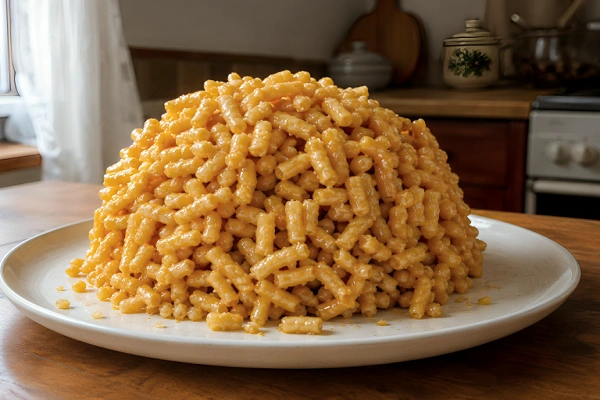
Chak Chak is Tatarstan’s national dessert golden, crunchy, honey-soaked, and impossible to stop eating once you start.
This centuries-old treat shows up at nearly every Tatar wedding and celebration, and once you know the story and the recipe behind it, you’ll understand why.
Where Does the Name Come From?
Nobody agrees on a single origin for the name. In Tatar, “chak-chak” roughly translates to “just a little bit” or “small,” a nod to the tiny dough pieces used in the recipe.
Others trace it to “chakmak,” a Tatar word meaning “to stick together,” which lines up neatly with how the honey binds the dessert into one piece.
A third explanation says the name simply mimics the sound of a knife cutting through crisp fried dough.
History
Chak-chak’s exact origins aren’t settled, sources disagree, tracing it either to the 13th century Mongol era or to nomadic Turkic peoples in the Volga Bulgaria region. Either way, it grew into a defining part of Tatar and Bashkir cooking.
One popular legend says a Tatar khan asked his chefs to create a dessert for his son’s wedding one that would keep well, feed a crowd, and impress guests. He chose chak-chak, and it’s been served at weddings, name-giving ceremonies, and the Sabantuy festival ever since.
How Chak Chak Is Made
While recipes vary slightly by region and household, the basic method stays consistent: mix a firm egg dough, cut it into small pieces, fry the pieces until golden, coat them in warm honey syrup, and press everything into shape before it cools. Below is a home-friendly version you can follow step by step.
Ingredients
For the dough:
- You’ll need 2 cups (around 250g) of all-purpose flour, with extra for dusting
- 2 large eggs
- 1 teaspoon sugar
- 1/4 teaspoon salt
- 1/2 teaspoon baking soda
- About 2 cups vegetable oil, or enough for deep frying
For the honey syrup:
- 1 cup (about 250g) honey
- 1/4 cup (about 50g) sugar
Step-by-Step Instructions
Whisk the wet ingredients
In a mixing bowl, whisk the eggs together with the sugar, salt, and baking soda until fully combined.
Bring in the flour
Add the flour gradually, stirring as you go, until the mixture forms a rough dough.
Knead until smooth
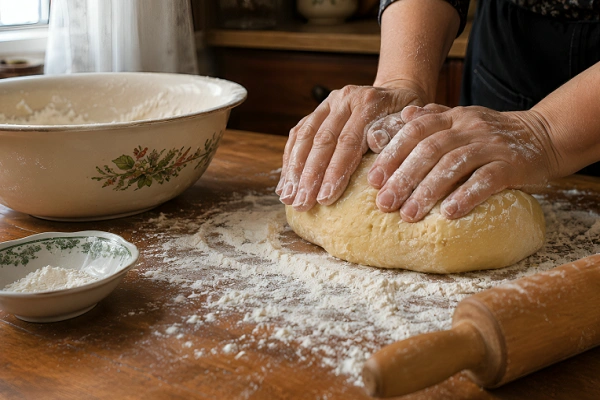
Turn the dough out onto a floured surface and knead by hand for about 5 minutes, until it feels soft and no longer sticks to your fingers.
Let it rest
Shape the dough into a ball, place it in a covered bowl or bag, and let it rest for 20 minutes. This helps make the dough easier to roll and shape.
Roll and cut
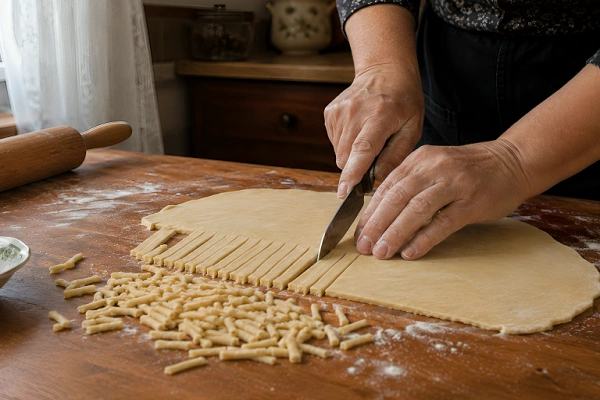
Divide the dough in half. Roll each half into a thin sheet, roughly 2 to 3 millimeters thick, then slice it into narrow strips and cut those strips into small, noodle-like pieces.
Heat the oil
Pour the oil into a deep, heavy pot and heat it over medium-high heat. Test the temperature by dropping in one piece of dough; if it puffs up and rises right away, the oil is ready.
Fry in small batches
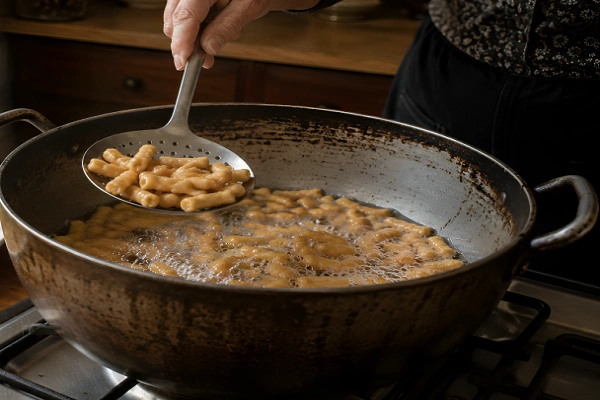
Fry the dough pieces a handful at a time, stirring gently, until they turn golden brown, which usually takes one to two minutes per batch.
Use a slotted spoon to transfer the fried pieces to a paper towel-lined plate, letting the excess oil drain away.
Make the syrup
In a separate saucepan, combine the honey and sugar and bring the mixture to a gentle boil over low heat. Let it simmer for a minute or two, then remove it from the heat immediately.
Coat the dough
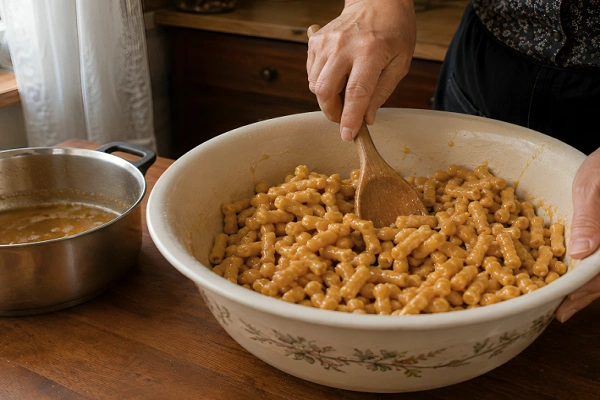
While the syrup is still hot, pour it over the fried dough pieces in a large bowl and stir quickly with a wooden spoon so every piece gets coated evenly.
Shape the dessert
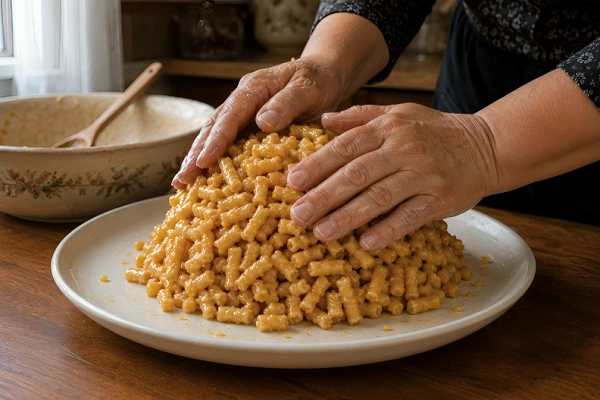
Wet your hands with cold water so the mixture doesn’t stick, then press the coated dough into a mound or pyramid shape on a serving plate. Work quickly, since the honey firms up as it cools.
Let it set and serve
Allow the chak-chak to sit at room temperature for a couple of hours, or refrigerate it if you prefer a firmer, cooler texture. Serve it in slices or broken pieces, traditionally alongside black tea.
Tips for Better Chak Chak
Keep the pieces small and uniform
Evenly sized dough pieces fry at the same rate, so you get consistent color and crunch throughout the batch.
Don’t overcrowd the pot
Frying too much dough at once drops the oil temperature and leaves you with greasy, unevenly cooked pieces.
Work fast once the syrup goes on
Honey syrup sets quickly as it cools, so have your serving plate ready before you pour it over the fried dough.
Add texture with mix-ins
A handful of chopped walnuts, almonds, or sesame seeds mixed in with the honey-coated dough adds crunch and a slightly different flavor, a common variation in Central Asian versions of the dish.
FAQs
Why is chak-chak often served at weddings?
Beyond the khan legend, there’s a practical reason: it stores well and feeds a crowd without last-minute cooking, which suited big family celebrations long before refrigeration.
Can chak-chak be made without deep frying?
Not really. Frying gives the dough its signature crunch. Baking changes the texture too much to call it authentic, though some home cooks try it for a lighter version.
Why does my chak-chak turn out too hard or too soft?
Rolled too thick or fried too long, it hardens once the honey sets. Undercooked, it stays chewy and won’t hold its shape. Aim for 2 to 3mm strips fried just until golden.
Is chak-chak the same as baklava?
No. Chak-chak is fried egg dough pieces bound with honey; baklava is layered phyllo pastry with nuts, soaked in syrup. Different dough, different method.
Where does chak-chak come from originally?
It’s most closely tied to Tatar and Bashkir cuisine in Russia’s Volga region, and it’s Tatarstan’s national dessert today.

Rachel Bradley is a food writer and recipe developer with a love for home cooking and global flavors. She has spent years testing recipes in her kitchen, exploring everything from quick weeknight meals to traditional dishes from around the world. Her goal is simple — make great food accessible to everyone.