The Best Fluffy Pancakes recipe you will fall in love with. Full of tips and tricks to help you make the best pancakes.

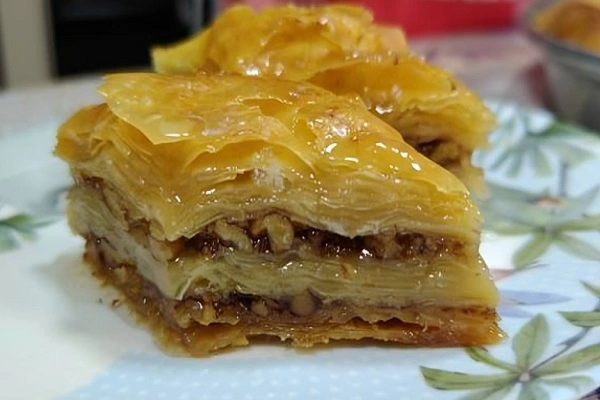
This Albanian baklava recipe uses walnuts, lemon-scented syrup, and layers of phyllo dough to recreate a dessert known in Albania as bakllava.
Unlike some regional versions that rely on pistachios or honey, the Albanian style favors walnuts and a lighter, citrus-accented syrup, and it is most often served at home during Bajram, Easter, weddings, and other family gatherings.
The guide below walks through the ingredients, the layering technique, and one key step many home bakers get wrong: how the syrup temperature affects the final texture.
A Brief History of Baklava in Albania
Baklava arrived in the Balkans through the influence of Ottoman cuisine, which shaped many regional desserts across Albania, Greece, Turkey, and neighboring countries. Over time, each region developed its own version of the dish based on local ingredients and customs. .
In Albania, walnuts are the most common filling because they grow widely across the country and have long been part of the local diet. The dessert is closely associated with celebrations, and many households consider it a centerpiece of festive tables.
While baklava recipes vary from one Balkan country to another, the Albanian version is known for its generous walnut filling, buttery layers of phyllo, and a syrup that is often lightly flavored with lemon. The balance between the crisp pastry and the sweet syrup is what gives this dessert its distinctive character.
Ingredients Needed for Albanian Baklava
The ingredient list for Albanian baklava is simple, but the quality of each component affects the final result. Below is a standard list used for a medium-sized baking tray.
For the pastry layers:
- 500 grams of phyllo dough sheets
- 250 grams of unsalted butter, melted
- 400 grams of walnuts, finely chopped
- 100 grams of sugar (mixed into the walnut filling)
- 1 teaspoon of ground cinnamon (optional, depending on family preference)
For the syrup:
- 400 grams of sugar
- 400 milliliters of water
- 1 tablespoon of lemon juice
- 1 cinnamon stick (optional)
These quantities can be adjusted depending on the size of the baking tray and the number of servings required.
Step-by-Step Preparation
Preparing the Walnut Filling
Combine the chopped walnuts with sugar and, if desired, ground cinnamon in a mixing bowl. Stir the mixture thoroughly so the sugar spreads uniformly through the walnuts. Set this filling aside while preparing the pastry layers.
Layering the Phyllo Dough
Brush the bottom of a baking tray with melted butter. Place one sheet of phyllo dough into the tray and brush it lightly with butter. Repeat this process for about half of the phyllo sheets, coating each layer individually. Even buttering between layers helps the pastry turn crisp during baking.
Once half the sheets are layered, spread the walnut filling evenly across the surface. Continue layering the remaining phyllo sheets on top of the filling, coating each one with butter as before. The final layer should also be brushed generously with butter to help it brown properly.
Cutting Before Baking
Using a sharp knife, cut the layered pastry into diamond or square shapes before placing it in the oven. Cutting before baking allows the syrup to soak into each piece more evenly later and makes serving easier once the dessert is finished.
Baking the Baklava
Preheat the oven to 180°C (350°F). Bake the tray for approximately 40 to 45 minutes, or until the top layer turns golden brown and the pastry feels crisp to the touch. Baking times may vary slightly depending on the oven and the thickness of the phyllo layers, so checking the color periodically helps avoid overbaking.
Preparing and Adding the Syrup
While the baklava bakes, combine sugar, water, lemon juice, and a cinnamon stick (if used) in a saucepan. Bring the mixture to a boil over medium heat, then reduce the heat and simmer for about 10 minutes until the syrup thickens slightly. Remove the cinnamon stick and let the syrup cool to room temperature before using it.
As soon as the baklava comes out of the oven, pour the cooled syrup evenly over the hot pastry. This combination of hot pastry and cold syrup is essential, as it creates the signature crisp-on-the-outside, moist-on-the-inside texture. Pouring hot syrup over hot pastry can make the baklava soggy instead.
Resting and Serving
After adding the syrup, allow the baklava to rest at room temperature for several hours, or ideally overnight. This resting period gives the syrup time to soak through all the layers, resulting in a balanced texture where the pastry remains crisp on top while staying moist throughout.
Albanian baklava is typically served at room temperature, cut along the lines made before baking. It pairs well with coffee or tea and is often offered to guests as part of hospitality traditions in Albanian households.
Storage Tips
Baklava can be stored at room temperature, covered with foil or a lid, for up to about a week, as the sugar syrup acts as a natural preservative.
Keeping it covered helps maintain the crispness of the pastry and prevents it from drying out. Refrigerating baklava is generally not recommended, as the cold and moisture can cause the pastry to lose its crisp texture.
Final Thoughts
The two details that make or break this Albanian baklava recipe are the syrup temperature and the resting time. Pouring cold syrup over hot pastry, then letting the tray sit for several hours or overnight, is what separates a soggy result from one with crisp top layers and a moist, flavorful center.
Beyond that, the recipe leaves room for small adjustments, whether that means swapping in pistachios, adjusting the cinnamon, or cutting the pieces larger or smaller depending on how it will be served.
FAQs
Can other nuts be used instead of walnuts?
Walnuts are the traditional choice in Albanian baklava, but some home cooks use almonds, pistachios, or a mixture of nuts depending on personal preference and availability.
Can baklava be made without lemon in the syrup?
Lemon juice is added mainly to balance the sweetness and keep the syrup from becoming overly sticky, but the dish can still be prepared without it. Leaving it out simply results in a sweeter syrup overall.
How thin should the phyllo layers be?
Phyllo dough is naturally thin, and using multiple layers brushed with butter is what creates the characteristic flaky texture. Thinner, well-buttered layers tend to produce a crisper result.

James Carter is a food researcher and writer passionate about global cuisines, street food, and the stories behind what we eat. He combines thorough research with a genuine love for food culture to bring readers accurate, well-written, and interesting content.