The Best Fluffy Pancakes recipe you will fall in love with. Full of tips and tricks to help you make the best pancakes.

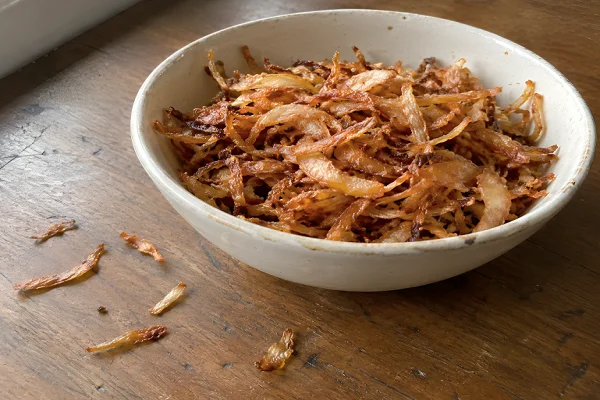
What Are Crispy Fried Onions?
Cooks around the world fry onions until they become crisp and golden. South Asian kitchens know them as birista, a classic layer in biryani and pulao.
In the United States, shoppers find them in cans as French fried onions, and many families scatter them over green bean casserole at holiday dinners.
Making them at home also lets you control the salt and the oil.
Ingredients
- 2 large yellow onions
- 1 cup (about 120 g) all-purpose flour
- 2 tablespoons cornstarch, which can replace part of the flour
- ½ teaspoon salt, plus a pinch to finish
- 1 cup buttermilk, or 1 cup milk stirred with 1 tablespoon lemon juice or white vinegar
- A neutral frying oil, such as canola, sunflower, or vegetable oil
Tools
- A sharp knife or a mandoline
- A deep, heavy pan or Dutch oven
- A kitchen thermometer (recommended)
- A slotted spoon or spider strainer
- A plate with paper towels on it or a wire rack
Direction
1: Cut thin, even rings
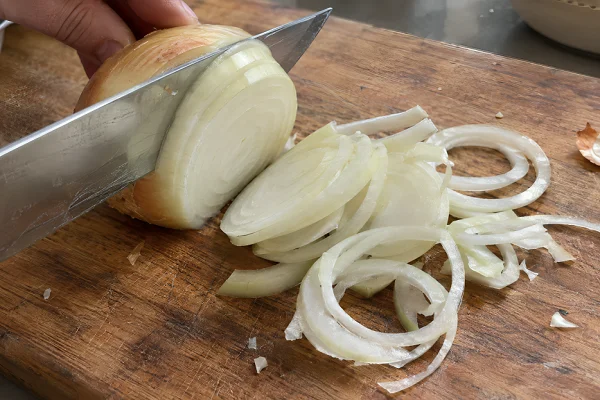
Peel the onions and halve them from root to tip. Cut each half into rings about 3 mm (⅛ inch) thick. Slices of the same size finish at the same time, so none burn while others stay pale. A mandoline makes this quick, but a careful knife works fine.
2: Soak in buttermilk
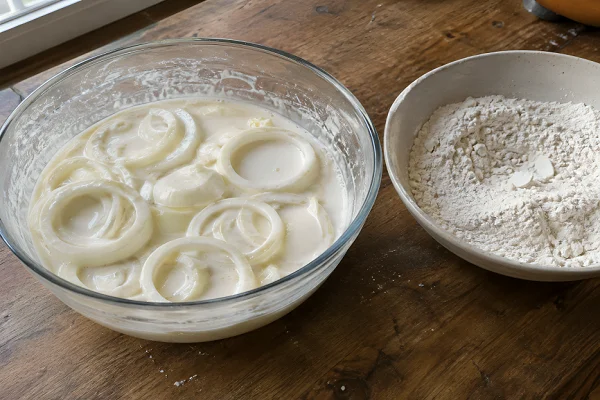
Drop the rings into a bowl and pour the buttermilk over them. Press them down until they are covered, then leave them for 15 to 30 minutes.
The soak softens the raw bite of the onion and gives the flour something to grip. If you use the milk-and-lemon substitute, mix it first and wait a few minutes before adding the onions.
3: Dredge in flour
Stir the flour, cornstarch, and salt together in a wide bowl. Pull out a handful of onions, let the extra buttermilk run off, and toss them in the flour.
Aim for a thin, even dusting. Tap off the loose flour before frying, because a heavy coating can turn dense and doughy when fried.
4: Heat the oil
Pour 2.5 to 5 cm (1 to 2 inches) of oil into the pan and bring it to 175°C (350°F). Check the oil temperature with a thermometer if you have one.
Oil that is too cool lets the onions soak up grease, and oil that is too hot browns the coating before the onion cooks through.
5: Fry a handful at a time
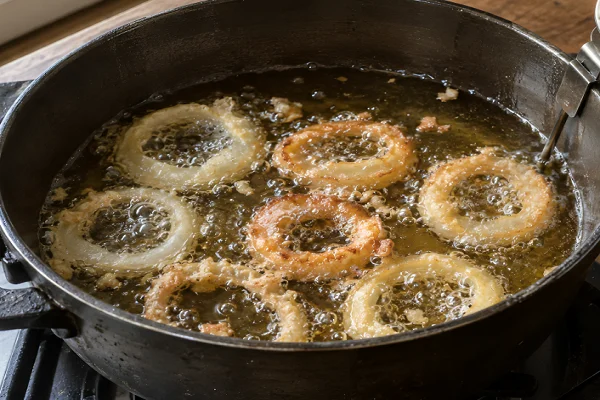
Slip a small batch into the oil and stir gently so the rings separate. Cook for 2 to 4 minutes. Adding too many onions at once cools the oil and creates steam, so let the temperature climb back to 175°C (350°F) before you start the next round.
6: Lift them out at golden
Scoop the onions out with a slotted spoon when they turn golden. They keep darkening for a short while after leaving the oil, and deep brown onions taste bitter, so pull them a little early.
7: Drain, spread, and salt
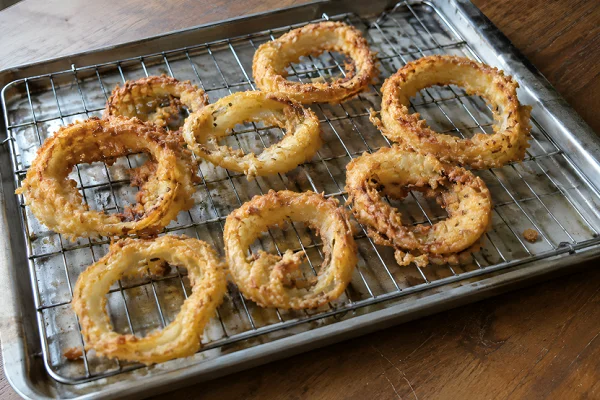
Lay the onions in a single layer on the rack or paper towels. Sprinkle a small pinch of salt over them while they are still hot, since salt sticks best to warm, freshly fried food. Do not pile them up. A heap traps steam, and steam ruins crunch.
Why This Method Works
Onions are mostly water. Thin slices have a lot of surface area, so that water escapes fast in hot oil. As the moisture leaves, the flour coating dries out and sets into a brittle crust.
Because cornstarch contains no gluten, it can help give the coating a lighter, crisper texture than flour alone.
Air Fryer Option
An air fryer can make crunchy onions, but they come out drier and less light than the deep-fried kind.
A wet coating of buttermilk and flour also browns poorly without hot oil around it, and many air fryer recipes skip the coating altogether.
To try it, toss thin slices with a little oil, spread them in one layer, and cook at 190°C (375°F) for 10 to 15 minutes. Shake the basket every 5 minutes and check often, because models and slice thickness change the timing.
Ways to Serve Them
- On burgers, hot dogs, and sandwiches
- Over soups and salads
- Between the layers of biryani, pulao, or other rice dishes
- On green bean casserole or mashed potatoes
- Over wraps, tacos, and curries
Frequently Asked Questions
Why did my onions turn out soggy?
Usually one of three things went wrong: the oil was too cool, the pan was crowded, or the onions were stored while still warm.
Is cornflour the same as cornstarch?
In many countries, yes. In some places “cornflour” means finely ground corn meal, so check the label before you buy. True cornstarch gives the lightest crust.
Can I use red onions instead?
Yes. The method is identical, though red onions fry up darker.
Can I reuse the oil?
You can, if you strain out the crumbs with a fine sieve or cheesecloth and keep the oil in a sealed container. The refrigerator helps it last. Throw it out if it looks cloudy, foams, or smells off.
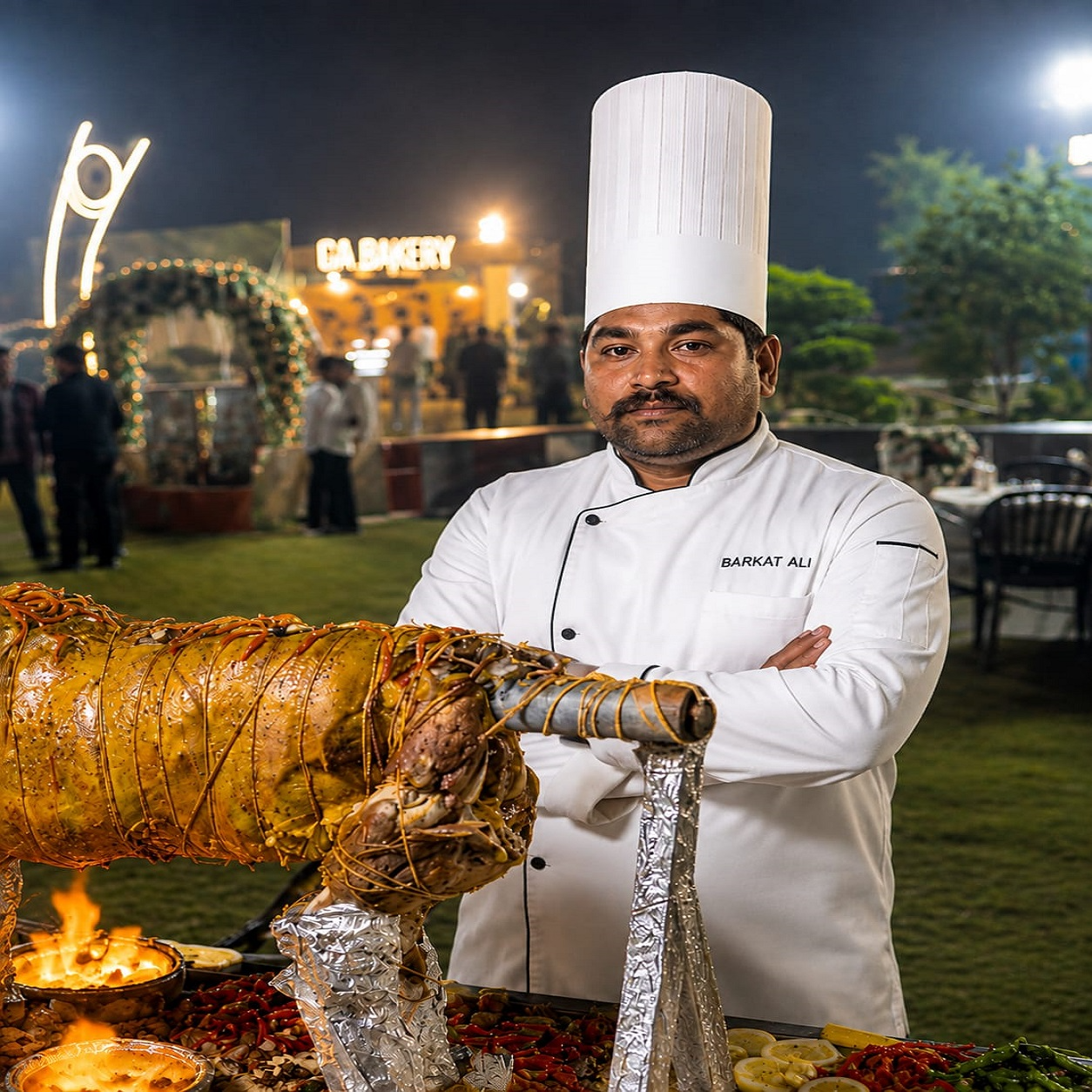
Barkat Ali is a culinary contributor who shares cooking demonstrations, recipe preparation, and practical cooking knowledge with Global Food Story. His contributions include original cooking videos and hands-on culinary content designed to help readers and viewers explore recipes, cooking techniques, and food traditions from around the world.