The Best Fluffy Pancakes recipe you will fall in love with. Full of tips and tricks to help you make the best pancakes.

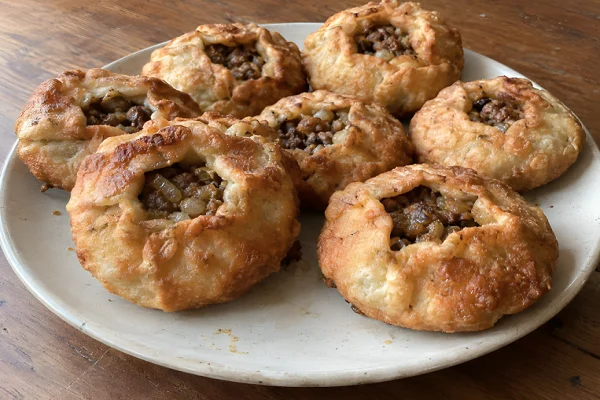
Tatar peremech is a small fried meat pie from Russia’s Volga Tatar and Bashkir kitchens.
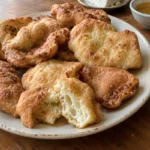
What sets it apart from every other stuffed pastry is a small open “window” at the top, left there on purpose, where the meat filling peeks through as it fries.
Below: where the dish comes from, what it actually tastes like, and a recipe you can follow at home.
What Peremech Actually Tastes and Feels Like
Calling it “a meat pie” undersells the texture. The dough stays thin and slightly chewy rather than bread-like, because it’s rolled out flat before folding, and the meat filling is deliberately loose rather than tightly packed.
The open top keeps the meat filling visible as the pastry fries, while the thin dough develops a crisp exterior around the juicy center, giving the dish a flavor closer to a savory dumpling than a baked pastry, richer and greasier in a good way, best eaten within minutes of coming out of the pan.
Once it cools, the exterior turns soft and chewy, losing the snap that makes it worth eating fresh.
Where Peremech Comes From
This pastry belongs to the Volga Tatars and Bashkirs, ethnic groups centered around the Republic of Tatarstan and the Republic of Bashkortostan in Russia.
Tatar cuisine developed where the northern forests meet the southern steppe, along the Volga and Kama rivers.
That location put Tatar cooks in contact with a wide mix of ingredients and neighboring food traditions over centuries. That mix shows up across Tatar pastries, and peremech is one of the clearest examples of it.
The dish carries particular weight for Mishar Tatars, a subgroup traditionally settled around Kazan and in Russia’s Nizhny Novgorod region.
Families there often prepare large batches of peremech together for guests and celebrations, and for many Tatars, the pastry itself brings up strong family memories. It’s food tied to gathering, not just eating.
How to Make Peremech: A Working Recipe
Recipes vary from family to family, but most traditional versions follow the same core method. This version makes about 20-24 pies.
For the dough:
- 3-3½ cups (400 g) flour
- 1 cup (240 ml) warm milk
- 1 egg
- 1 tablespoon active dry yeast
- 1 tablespoon sugar
- 2 tablespoons melted butter
- ½ teaspoon salt
For the filling:
- 14 oz (400 g) ground beef or lamb (or a mix of both)
- 3-4 medium onions, finely chopped
- Salt and black pepper, to taste
- 2-3 tablespoons water or broth (to keep the filling loose and juicy)
Vegetable oil, for frying
Steps:
Step 1
Mix the sugar and yeast into the warm milk, then let it sit for 10 minutes or so until it foams up.
Step 2
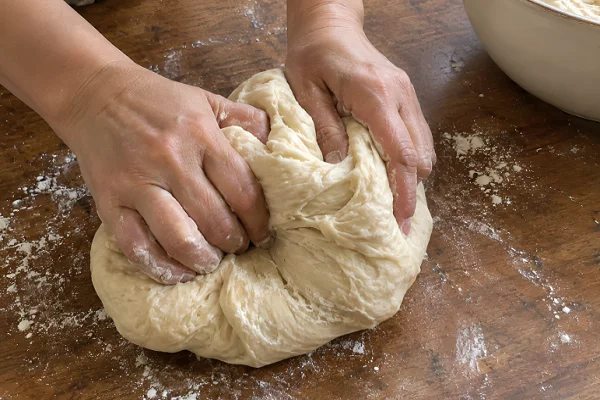
Add the egg, melted butter, and salt to the milk mixture. Work in the flour a little at a time until a soft dough forms, then knead it until the dough feels smooth and stretchy.
Cover the bowl and leave the dough somewhere warm for about 1 hour, or until it has roughly doubled in size.
Step 3
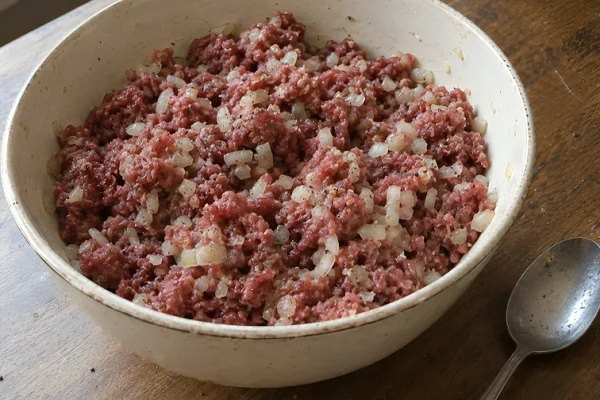
While the dough rises, mix the ground meat with the chopped onion, salt, pepper, and a splash of water or broth. The onion should roughly match the meat in volume.
This keeps the filling moist rather than dense.
Step 4
Press the dough down gently to release the excess air, then split it into small, even portions and shape each one into a ball. Roll each into a flat disk about 4 inches (10 cm) across.
Step 5
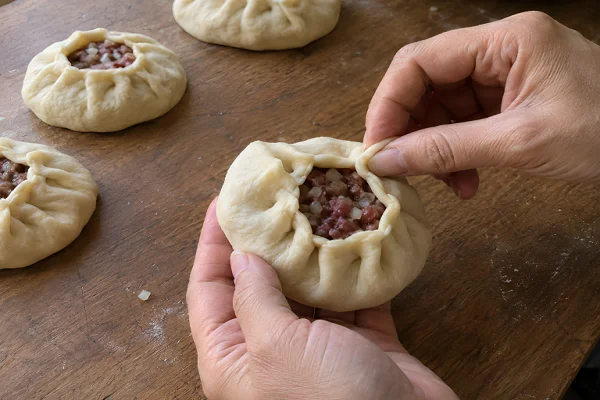
Spoon about 1–2 tablespoons of the meat mixture onto the middle of each dough round.
Gather the edges upward around the filling in small pleats, pinching them together but leaving a small opening, about ½-¾ inch (1-2 cm) wide, at the top.
Step 6
Let the shaped pies rest for 15-20 minutes, covered with a towel, so the pleats relax and the shape holds during frying.
Step 7
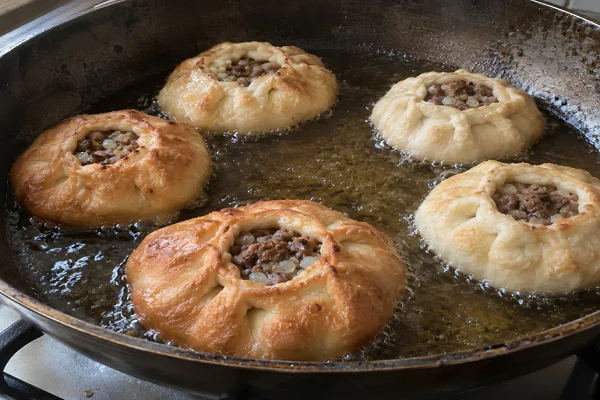
Heat oil to about 350°F (180°C) in a deep pan. Fry in batches until the dough is deep golden brown and the meat filling is fully cooked through, adjusting the heat as needed so the crust doesn’t brown before the filling finishes cooking.
If using a food thermometer, check that the center of the meat reaches 160°F (71°C). Cut one open to check doneness before serving the rest.
Step 8
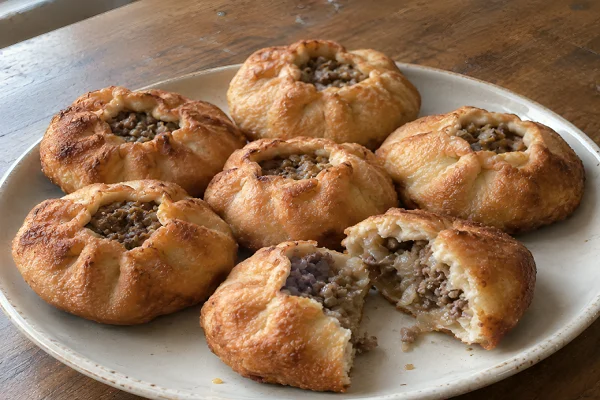
Drain briefly on paper towels and serve immediately, while the crust is still crackling hot.
A few things that make or break the result: don’t overfill the disks, or the pleats will tear during frying; keep the oil at a steady medium-high heat, since oil that’s too cool makes the pastry greasy instead of crunchy; and eat peremech hot. Reheated peremech loses the crackling crust that defines the dish.
Peremech vs. Belyash: Are They the Same Thing?
Largely yes, with one distinction worth knowing. Belyash is the name used across Russia and other post-Soviet countries for the same style of fried meat pie, and the term became common in the second half of the twentieth century.
Some cooks who grew up with traditional Tatar peremech consider belyash a looser, larger version that’s often made without the signature open hole, so the two names sometimes point to slightly different results depending on who’s making them, even though they share the same roots.
Peremech Compared to Other Tatar Pastries
| Dish | Shape | Filling | Cooking Method |
| Peremech | Round, open hole on top | Ground meat and onion | Deep-fried |
| Öçpoçmaq | Triangular | Meat, onion, potato | Baked |
| Bäleş | Cone-shaped, larger pie | Fatty meat with grains or potato | Baked |
| Qıstıbí | Folded flatbread | Mashed potato or millet | Cooked on a griddle |
Peremech stands out for its open top and frying method, while the other pastries in this comparison use different shapes, fillings, and cooking methods.
FAQs
Why does peremech have a hole in the top?
It’s functional, not decorative. The small opening exposes the filling and is a defining feature of the pastry; it also helps heat reach the meat while the pie cooks.
Can peremech be made without meat?
Yes. Mashed potato is a common substitute, and quark (a soft, fresh dairy product) is another traditional filling used in place of meat.
Is peremech the same as a Russian pirozhki?
No. Pirozhki are typically fully sealed and can be baked or fried, while peremech is commonly shaped with an open center and is most often fried, though baked versions exist too.
How long does peremech stay good after frying?
It’s best eaten within 30-60 minutes of frying, while the crust still has its crunch. Leftovers can be frozen and reheated, but the texture won’t fully match a freshly fried batch.

James Carter is a food researcher and writer passionate about global cuisines, street food, and the stories behind what we eat. He combines thorough research with a genuine love for food culture to bring readers accurate, well-written, and interesting content.