The Best Fluffy Pancakes recipe you will fall in love with. Full of tips and tricks to help you make the best pancakes.

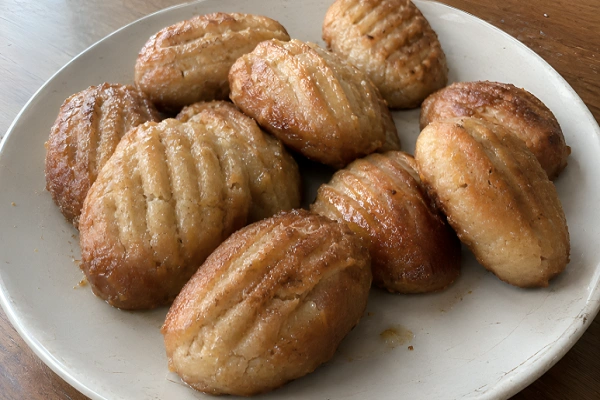
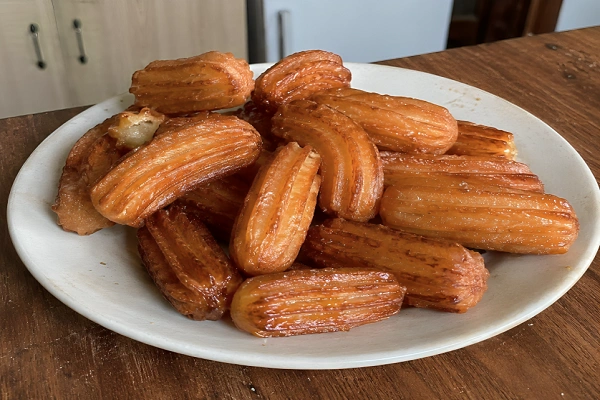
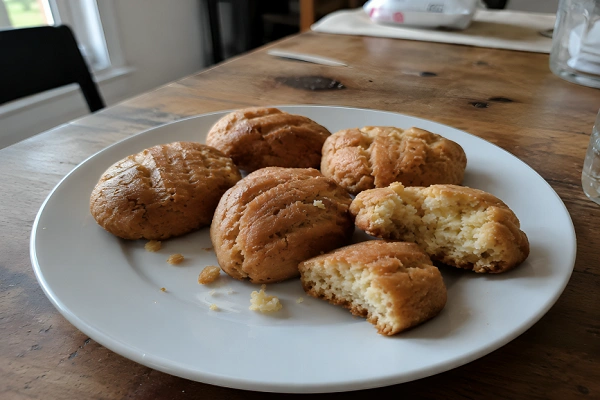
Hurmasice (hurmašice) are small oval cookies from Bosnia and the wider Balkans. They are baked until golden, then soaked in a sugar syrup called agda.
The ridged pattern on top comes from pressing the dough against a box grater. This hurmasice recipe uses a butter dough with a little semolina and lemon zest, and a lemon-flavoured syrup.
The semolina gives the dough some texture, and the syrup softens the cookies after baking.
Recipe details
Prep time: 30 minutes
Bake time: 20–25 minutes
Syrup: 15–20 minutes of simmering, done while you make the dough
Soaking: at least 30 minutes; 1 hour or overnight also works
Oven: 180°C
Ingredients
For the hurmasice
- 150 g butter, softened
- 50 g caster sugar
- 1 lemon, finely grated zest
- 2 eggs
- 300 g plain flour, sifted (start with 250 g and add the rest as needed)
- 1 tsp baking powder
- 50 g fine semolina
- Vegetable oil, for greasing the trays
For the agda (sugar syrup)
- 500 g granulated white sugar
- 600 ml water
- Juice of ½ lemon
How to make
Start the agda
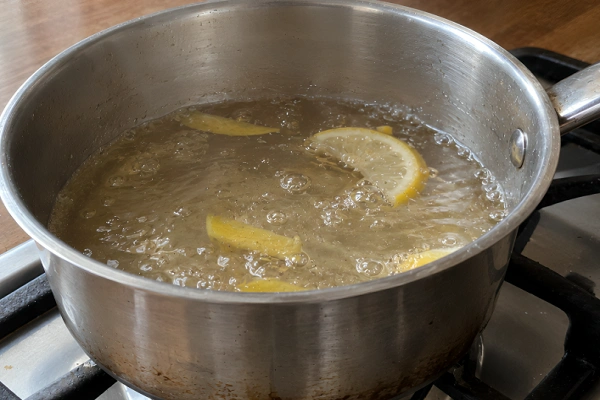
Heat the oven to 180°C and brush two large shallow trays with oil.
Put the sugar, water and lemon juice in a medium saucepan over medium heat. Stir until the sugar dissolves, then bring to a boil.
Turn the heat down to low and let the syrup simmer gently for 15–20 minutes, until it has thickened slightly. It will thicken further as it cools, so don’t reduce it too far.
Keep it hot until the cookies come out of the oven.
Prepare the dough
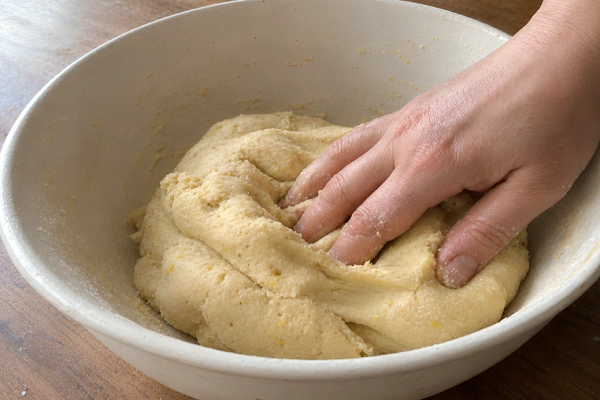
While the syrup simmers, beat the butter, caster sugar and lemon zest until pale and creamy. Adding one egg at a time and beating well after each one until the mixture is smooth.
Sift 250 g of the flour and the baking powder into a bowl and stir in the semolina. Add this to the butter mixture, and mix first with a wooden spoon, then with your hands.
If the dough still sticks to your hands, add the remaining flour a little at a time. The dough should be pliable and easy to work with, but not sticky. It should hold its form without clinging to your palms.
Shape
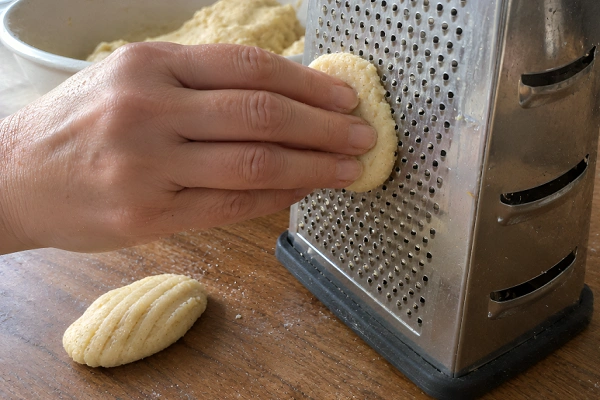
Take a piece of dough of roughly 25 g (about a tablespoon) and roll it into a log about 2 cm wide and 6.5 cm long. Press it lightly against the small-hole side of a box grater, not the zesting side.
This flattens the log to about 4 x 7 cm and 1 cm thick and leaves a ridged pattern on top. Peel it off the grater gently and round the ends with your fingers if needed.
Place the cookies on the oiled trays about 2 cm apart. If you don’t have a grater, pressing the surface with a fork gives a simpler pattern.
Bake
Bake for 20–25 minutes, swapping the trays halfway through, until the cookies are golden brown and cooked through.
Soak
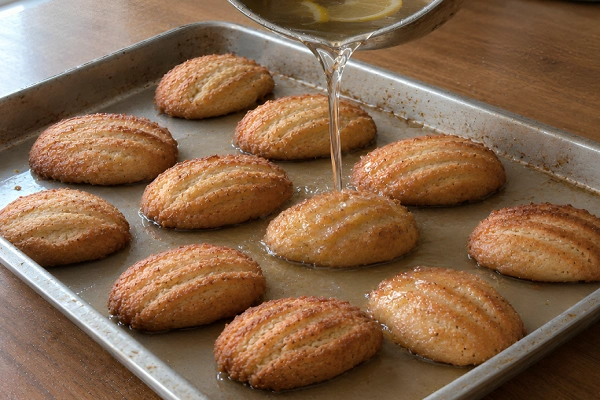
Pour the hot syrup over the hot cookies as soon as they leave the oven. Leave them until most of the syrup has been absorbed, which takes about 30 minutes.
They improve with longer soaking, so an hour or overnight is worth it if you have time.
Serving
Serve at room temperature or cold from the fridge, with coffee.
Storage
Store hurmasice in an airtight container in the refrigerator, with a little syrup spooned over them.
Note on the name and origin
Hurmašice are known by that name in Bosnia and Herzegovina, and as urmašice in other parts of the former Yugoslavia. They are similar to Turkish kalburabastı, another syrup-soaked pastry with a ridged surface.
FAQs
What is hurmasice?
Hurmasice (also spelled urmasice in some places) are small baked cookies, usually oval and rigid, that are soaked in sugar syrup after baking. They are a Bosnian and Balkan sweet.
What is agda in hurmasice?
Agda is the sugar syrup poured over the baked cookies. In this recipe it is flavoured with lemon juice.
Does the syrup have to be hot?
In this recipe, yes: hot syrup goes over hot cookies. Other hurmasice recipes use cooled or warm syrup, so the method varies from recipe to recipe. Follow the temperatures written in the recipe you are using rather than mixing methods.
Why is my hurmasice hard?
The usual causes are baking past golden brown, pressing the dough too hard against the grater, or soaking for too short a time. A dough that feels firm rather than soft before shaping can also lead to a dense cookie.
Why did my hurmasice become so soggy?
Soaking time and syrup thickness both affect how soft the cookies get. Follow the syrup thickness and soaking time given in the method.

Rachel Bradley is a food writer and recipe developer with a love for home cooking and global flavors. She has spent years testing recipes in her kitchen, exploring everything from quick weeknight meals to traditional dishes from around the world. Her goal is simple — make great food accessible to everyone.