The Best Fluffy Pancakes recipe you will fall in love with. Full of tips and tricks to help you make the best pancakes.

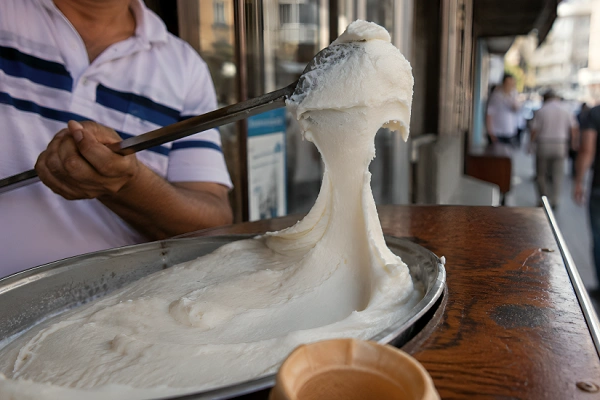
Maraş ice cream is one of the most unusual desserts you will ever taste. It does not melt quickly in the sun, it stretches like taffy, and some Turkish cafés serve it with a knife and fork instead of a spoon.
This dessert comes from Kahramanmaraş, a city in southeastern Turkey, and it has become one of the country’s most recognizable regional foods.
What Is Maraş Ice Cream?
Maraş ice cream, known in Turkish as Maraş dondurması, takes its name from the city of Kahramanmaraş, often shortened to Maraş. The city sits at the foot of Ahir Mountain in southeastern Turkey.
Locals and visitors both use the word “dondurma,” which simply means “frozen” in Turkish, to describe this treat, and two qualities set it apart from anything you have probably eaten before: a notably dense, chewy texture, and a resistance to melting that borders on stubborn.
Leave a scoop out on a warm day and it holds its shape far longer than it has any right to. These traits come straight from the ingredients and the method behind them.
Ingredients That Make It Unique
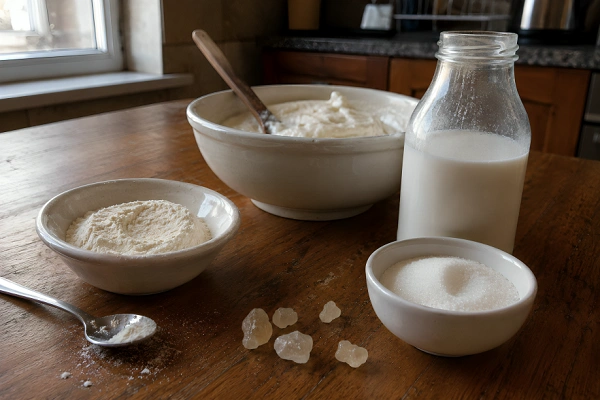
Traditional Maraş ice cream uses only a few ingredients.
- Goat’s milk – The recipe calls for milk from goats raised on Ahir Mountain, which gives the ice cream a rich, distinctive flavor that differs from cow’s milk ice cream.
- Salep – This is a powder made from the dried, ground tubers of a wild orchid native to the region. Salep thickens the mixture and gives Maraş ice cream its signature stretch.
- Mastic (sakız) – A natural resin, mastic adds chewiness and a subtle aroma to the final product.
- Sugar – Sugar sweetens the mixture during the initial heating stage.
Producers grind the mastic finely and mix it with sugar before adding it to the warmed goat’s milk. They then stir in the soup and whisk the mixture until it reaches the right thickness.
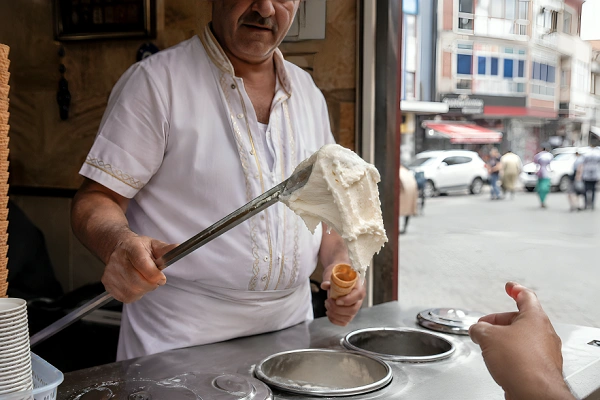
After that, the mixture cools at room temperature, then goes into a freezer overnight. Traditional makers knead the frozen mixture with long metal paddles.
That kneading is what builds the elastic, taffy-like texture Maraş ice cream is famous for.
Where Did Maraş Ice Cream Come From?
Several stories explain the origins of this dessert, and most trace back to the Ottoman era in the Maraş region.
One popular account describes a salep seller named Osman Ağa, who supplied salep to the Ottoman palace. He mixed leftover soup with milk and sugar, then buried the mixture in snow to keep it cool overnight.
When he checked it the next day, the cold air had thickened the mixture into a chewy, gum-like substance. People who tasted this new creation responded with enthusiasm, and the dessert spread from there.
Whether or not every detail of this story is accurate, the underlying facts are well documented. The dessert originated in the Kahramanmaraş region, it relies on wild orchids that grow specifically in the area, and it has been made using largely the same method for generations.
Some sources describe a tradition stretching back roughly 300 years.
How Maraş Ice Cream Differs From Regular Ice Cream
If you have only tried Italian-style gelato or Western ice cream, Maraş ice cream will surprise you. Regular ice cream softens and melts within minutes at room temperature.
This one holds its shape for a much longer stretch of time, thanks to the salep and mastic.
Because of that dense texture, some cafés across Turkey serve it in slices, cut with cutlery rather than scooped with a spoon.
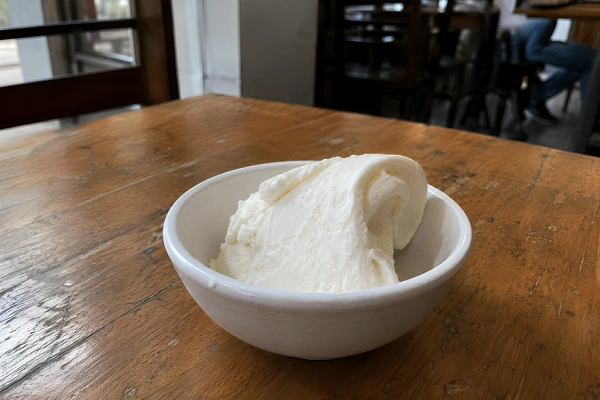
The flavor stands apart too. The mastic adds a light, resinous note you will not find in most Western desserts, while the goat’s milk gives it a heavier body than a typical cream-based scoop.
Plain (sade) is the classic order, though pistachio and cocoa both have their fans.
Street Vendor Tradition
Part of what makes Maraş ice cream so memorable is the way street vendors sell it. You hear the bell before you see the vendor.
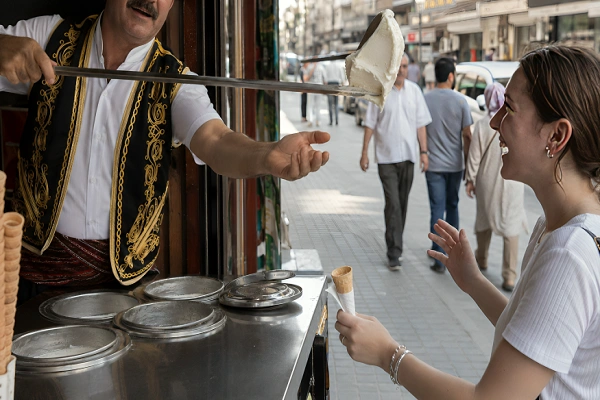
Many sellers dress in traditional Maraş costumes. They perform playful tricks with long metal paddles: flipping the ice cream, offering it to a customer, then pulling the cone away at the last second before finally handing it over.
This little performance has become almost as famous as the ice cream itself, and it draws crowds of curious visitors, especially in cities like Istanbul.
Maraş Ice Cream Around the World
Kahramanmaraş remains the best place to taste an authentic version of this dessert. Many local shops there still use goat’s milk from nearby mountain herds and salep from the same orchid roots.
That said, the dessert has traveled well beyond its hometown.
Several Turkish ice cream chains with roots in Kahramanmaraş have expanded internationally over the past few decades, bringing Maraş-style ice cream to outlets across Turkey and in more than 20 other countries.
One of the oldest, founded in 1850, still operates several hundred locations today.
Availability Throughout the Year
Many visitors assume ice cream is strictly a summer treat. But Maraş ice cream shops in Turkey typically stay open all year.
During colder months, many of these same shops sell warm salep instead, a hot drink made from the same orchid-root powder used in the ice cream, often topped with a sprinkle of cinnamon.
So you can enjoy the flavors connected to Maraş ice cream regardless of the season.
Why Maraş Ice Cream Matters to Turkish Food Culture
Maraş ice cream carries weight beyond its taste. The wild orchids used for sale grow only in this pocket of Turkey, so the dessert stays tied to its home region in a way that is hard to replicate elsewhere.
Add in the paddle-kneading and the street vendor performances, and a simple snack turns into something families pass down and tourists actively seek out.
What to Expect if You Try It
Maraş ice cream has earned its reputation the slow way, through three centuries of the same goat’s milk, salep, and mastic recipe. Nothing about it is rushed, and that shows in the texture, the flavor, and the way it is served.
Visitors to Kahramanmaraş, or to Turkey more broadly, will usually find it easy to spot: look for a vendor with a bell, a long metal paddle, and a bit of showmanship. The tricks are part of the tradition, and so is the dessert underneath them.

James Carter is a food researcher and writer passionate about global cuisines, street food, and the stories behind what we eat. He combines thorough research with a genuine love for food culture to bring readers accurate, well-written, and interesting content.