The Best Fluffy Pancakes recipe you will fall in love with. Full of tips and tricks to help you make the best pancakes.

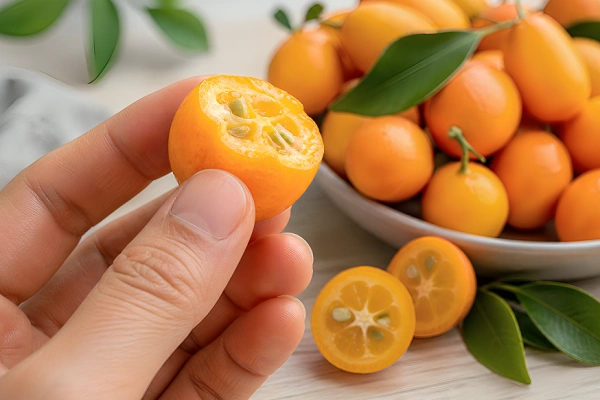
What Even Is a Kumquat?
Small, oval, citrus. About the size of a large olive or a fat grape. Originally from South China, it has been cultivated there for centuries before spreading across Asia and eventually the rest of the world. Unlike every other citrus fruit you’ve probably eaten, the skin is completely edible, not just technically edible, but actually the part you want.
The flesh inside is tart and acidic, almost aggressively so on its own. The peel is fragrant and sweet. Together they balance each other out into something genuinely interesting.
Eating a Kumquat the Right Way
Wash It Properly
Since the peel is going straight into your mouth, rinsing matters more here than with, say, a banana. Cold water, rub with your fingers, done. Thirty seconds of effort that actually makes a difference when you’re eating the skin directly.
Roll It First Seriously Don’t Skip This
Press the kumquat between your palms and roll it back and forth with a bit of pressure. What this does is break down the cells in the peel slightly, which releases the aromatic oils sitting just underneath the surface.
The difference in flavor between a rolled kumquat and one you just bit into straight is noticeable. Most guides don’t mention this step. It’s not optional if you want the full experience.
Then Just Bite Into It
Whole. Don’t slice it, don’t halve it, don’t remove anything. Put it in your mouth and chew slowly so the peel and the juice from inside hit at the same time.
The first moment is mostly sweet from the peel. Then the tartness of the flesh follows. Chewing them together is the point, one without the other is incomplete.
The Seed Situation
There will probably be seeds. Two to five, small, and bitter if you chew them. Some varieties have almost none but more on that below. You don’t have to do anything elaborate, just work them to the front of your mouth and spit them out as you go.
Ways to Use Kumquats Beyond Just Snacking
Sliced thin, they’re excellent in salads, especially anything with bitter greens like arugula or radicchio. The tartness cuts through creamy dressings really well. They also sit naturally on a cheese board next to something aged and sharp, no preparation needed at all.
For drinks, muddle two or three in a glass, add sparkling water. The sweetness from the peel comes through without needing sugar. It’s surprisingly good as a non-alcoholic option.
Cooking with them is a different story. Chinese and Southeast Asian cuisines have been using kumquats in sauces for duck and pork for a long time. The acidity functions like lemon juice or vinegar, cutting through fat.
Slice them and add toward the end of cooking so they don’t completely break down, or simmer them into a glaze where the peel and juice both contribute to the flavor.
Marmalade is probably the most well-known cooking application in Western kitchens. The peel has natural pectin, which helps the jam set without needing much added thickener. Halve, deseed, cook with sugar and water. Straightforward process, good result.
The Different Types and Why It Matters
Nagami
The one you’ll find in almost every grocery store. Oval shape, quite sour, several seeds. When people say kumquats are “too tart,” they’ve usually eaten a Nagami without knowing what to expect. Most widely available variety worldwide.
Meiwa
Rounder, noticeably sweeter, and can have very few seeds, sometimes almost none at all. Considered the best variety for eating raw. Harder to find than Nagami farmers markets and specialty Asian grocery stores are your best bet. Worth seeking out if you want a more approachable starting point.
Marumi
The round shape, flavor sits between Nagami and Meiwa, slightly sweeter than Nagami but not as mild as Meiwa. Less commonly available than either of the two above. A decent middle-ground option when you can find it.
Fukushu
Larger fruit, thicker peel, less acidic juice than Nagami. Noticeably sweeter and good for people who find standard kumquats too sharp. That said, Fukushu is not easy to find in regular markets or specialty stores or growing your own is usually the only way to get them.
How to Know If It’s Actually Ripe
The color should be deep, fully orange, no yellow patches, definitely no green. Press gently with a finger. A ripe kumquat gives very slightly without being soft or mushy. If it dents and doesn’t spring back, it’s gone too far. If it feels like pressing on a marble, give it another day.
Peel appearance matters too. Shiny and smooth means fresh. Wrinkled or dull skin usually means it’s been sitting too long since harvest, and the flavor will be noticeably duller too.
Storing Them Without Losing Quality
The counter keeps them fine for four to five days longer than that and the peel starts to dry out. Refrigerator extends that to about two to three weeks. Don’t seal them in an airtight bag with no airflow; a loosely closed container works better.
Freezing is an option if you have too many to use. Wash, dry thoroughly, freeze individually on a tray first so they don’t clump, then transfer to a bag. Frozen kumquats lose their texture for raw eating but work perfectly well in cooked recipes or blended drinks.
Mistakes That Ruin the Experience
Peeling them is the big one already covered, but worth repeating because it changes everything. Without the peel, you’re just eating very sour citrus pulp with no balance.
Eating underripe kumquats is the second most common issue. An orange-yellow kumquat that hasn’t fully developed will be almost entirely sour with barely any sweetness in the peel.
The tartness with no counterbalance is unpleasant, and it gives people a wrong impression of what kumquats actually taste like when they’re ready.
Expecting them to taste like oranges is a setup for disappointment. They’re related, yes, but kumquats are more intense, more complex, and more sour than most citrus people are used to. Go in expecting something different and you’ll appreciate what’s actually there.
Quick Nutritional Facts
Each kumquat is roughly 13 calories. Good source of vitamin C, dietary fiber, and antioxidants particularly flavonoids that are concentrated in the peel.
Because you eat the skin, you’re getting more of those compounds than you would from peeled citrus. No added sugar, low glycemic impact. The fiber content is decent given how small they are.
Kumquats are genuinely one of the easier fruits to eat once you stop trying to eat them like everything else. No peeling, no cutting, no prep beyond a quick rinse and roll. The flavor is unusual enough that they stick in your memory after the first proper one. Small fruit, but it delivers more than it looks like it should.

Rachel Bradley is a food writer and recipe developer with a love for home cooking and global flavors. She has spent years testing recipes in her kitchen, exploring everything from quick weeknight meals to traditional dishes from around the world. Her goal is simple — make great food accessible to everyone.