The Best Fluffy Pancakes recipe you will fall in love with. Full of tips and tricks to help you make the best pancakes.

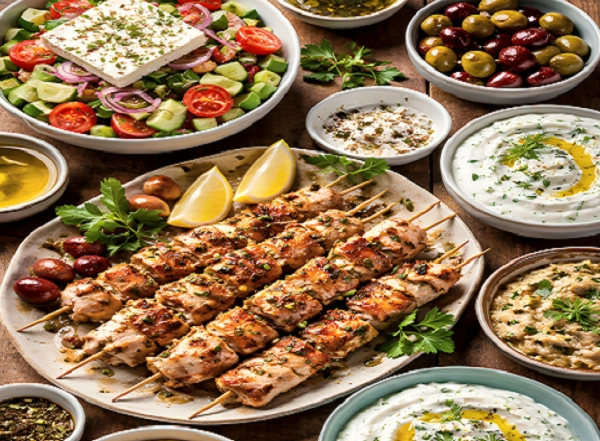
Greek cuisine brings to mind olive oil, fresh lemon, and the aroma of herbs. For people who are managing their carbohydrate intake, Greek food is actually a strong choice if the right dishes are selected. The traditional core of Greek cooking is built around proteins, healthy fats, and fresh vegetables.
Bread, pita, and potatoes often accompany Greek meals at restaurants, but they are not the backbone of the cuisine. In a real Greek taverna, grilled meats, seafood, and salads have always been at the center of the table.
This article covers the Greek dishes, ingredients, and eating strategies that are naturally low in carbohydrates without modifying any recipe or cutting out Greek flavor.
Where the Carb Problem Actually Comes From
Greek food as a whole is not a high-carb cuisine. The issue typically arises with tourist-facing or restaurant-style versions of meals, where pita bread, potatoes, and rice arrive automatically as side dishes alongside everything else.
Traditional Greek dishes like moussaka, bougatsa, and yemista are genuinely high in carbohydrates. But alongside those, fresh seafood, lamb, and fragrant vegetables have always existed as naturally low-carb options.
For anyone limiting carbs, the rule is simple: grilled dishes, salads, dips, and seafood form the foundation of low carb Greek eating.
Naturally Low Carb Greek Dishes
1. Souvlaki Without the Pita
Souvlaki is Greece’s most popular street food, small pieces of pork, chicken, lamb, or beef threaded onto skewers and grilled. The ingredients are remarkably simple: meat, olive oil, oregano, lemon juice, and salt. Carbs only enter the picture when souvlaki is wrapped in pita bread.
Without the pita, it is an excellent low carb protein source. A typical serving contains approximately 25–30 grams of protein depending on the meat and portion size, and pairs well with tzatziki, cucumber, and salad for a complete low carb meal.
2. Horiatiki Salata Greek Village Salad
The classic Greek salad contains no lettuce and is naturally low in carbohydrates. It is made with cucumber, tomatoes, olives, onions, and feta cheese, dressed simply with olive oil and oregano. Feta is a fermented cheese that may contain beneficial bacteria, along with solid protein content and calcium.
It is worth noting that the probiotic benefit of feta varies significantly depending on whether the cheese has been pasteurized and how it has been processed traditional unpasteurized feta is more likely to retain live cultures than commercially produced varieties. This makes feta a nutritious addition to what is otherwise a largely vegetable-based dish.
3. Tzatziki
Tzatziki is made from strained Greek yogurt, grated cucumber, garlic, olive oil, and fresh dill or mint. It appears across Greece as an accompaniment to grilled meat, alongside vegetables, or on its own.
Per 100 grams, tzatziki contains approximately 5 grams of carbohydrates, 6 grams of protein, and 4.6 grams of fat though these figures vary depending on the recipe and yogurt used. Compared to hummus, tzatziki is lower in carbohydrates.
Hummus contains more carbs due to its chickpea base. Tzatziki is also considered a healthier option than sour cream, offering vitamins, protein, and a relatively low fat content for a dip.
4. Grilled Seafood Octopus, Calamari, Prawns
Greece’s long coastline means seafood has always been central to the diet. Traditionally it is prepared with nothing more than olive oil, lemon, and oregano either grilled or slow-cooked.
Sea bass contains approximately 23–24 grams of protein per 100 grams with around 2.6 grams of fat and zero carbohydrates.
Sea bream has the same macros as other fish but more omega-3s. Octopus and grilled prawns are also naturally very low in carbohydrates and are a staple of traditional Greek coastal cooking.
5. Melitzanosalata Roasted Eggplant Dip
Melitzanosalata is a traditional Greek dip made from roasted eggplant blended with olive oil, garlic, and lemon juice.
It is commonly served alongside grilled meats, much like tzatziki. Eggplant is a low carb vegetable, and this preparation adds no starch or flour making it one of the cleanest carb-friendly options in the Greek meze spread.
6. Lamb Chops Paidakia
Lamb chops in Greece are grilled with sea salt, dried oregano, and lemon, nothing else. No marinade thickeners, no flour, no heavy sauce. This preparation is a natural fit for low carb eating, delivering high protein and healthy fat with essentially no carbohydrate contribution.
7. Horta Steamed Wild Greens
Horta refers to boiled or steamed wild greens typically chicory, dandelion greens, or spinach served with olive oil and lemon juice. This dish appears throughout Greece, especially in village-style restaurants.
It is rich in fiber, vitamins, and minerals, with practically no carbohydrates. Horta is widely eaten by locals as a side dish but is rarely ordered by tourists, making it one of the most underrated low carb options in Greek cuisine.
Which Greek Dishes to Avoid
Some traditional Greek dishes are genuinely high in carbohydrates and are worth being aware of:
Moussaka
The bechamel sauce layer is made with flour, which adds significant carbohydrates to an otherwise protein-rich dish.
Pastitsio
This is essentially a Greek-style baked pasta dish. Carbs are very high.
Spanakopita
Spinach pie wrapped in phyllo pastry. Phyllo dough is a major source of carbohydrates.
Yemista
Tomatoes or peppers stuffed with rice. The rice filling is the obvious carb source here.
Pita Bread
A single piece of traditional pita contains between 20 and 30 grams of carbohydrates. At Greek restaurants, it arrives with almost everything unless you ask otherwise.
Hidden Carbs to Watch For
Some Greek meatballs contain flour as a binding agent worth asking before ordering. Coffee in Greece is often sweetened automatically, so it is important to specify unsweetened when ordering.
Regarding ouzo, the traditional Greek spirit, it is worth knowing that sugar content varies by region and brand. Ouzo from northern Greece is typically dry and contains little to no added sugar, while ouzo from southern Greece is often mildly sweetened.
Either way, as an alcoholic beverage it contributes calories and is best consumed in moderation or avoided on a strict low carb plan.
Bread is placed on the table automatically at most Greek restaurants. Asking for it to be taken away keeps you from being tempted.
Yogurt with fruit, when listed as a dessert option, typically uses fruit preserved in syrup rather than fresh fruit and carries a significant amount of added sugar as a result.
Greek Herbs and Olive Oil The Real Foundation
What makes Greek food taste distinctly Greek is not sauces or starches it is the herbs and olive oil. Oregano, dill, mint, garlic, thyme, fennel seed, and parsley are all zero carb and nutritionally dense.
Oregano is particularly central: it is added to salads, used in soups, incorporated into meat marinades, and placed on tables so diners can add extra.
Olive oil, the true foundation of Greek cooking, is a source of heart-healthy monounsaturated fats and contains no carbohydrates. Both the herbs and the olive oil contribute the majority of flavor in traditional Greek dishes, which is why the simplest Greek preparations are often the most satisfying.
How to Order Low-Carb Food at a Greek Restaurant
Starting the meal with a horiatiki salad or tzatziki keeps things low carb from the beginning. For the main course, grilled souvlaki, lamb chops, grilled fish, or any grilled meat ordered without pita bread is a reliable choice.
For the side dish, asking for horta (steamed greens) instead of the potatoes that arrive automatically makes a significant difference.
For dips, tzatziki and melitzanosalata are both safe choices. Hummus contains more carbohydrates due to its chickpea base and is better consumed in moderation if carbs are being tracked.
At village-style restaurants in Greece, looking for “horiátika piáta” on the menu which means village dishes tends to lead to simpler preparations using fewer processed ingredients compared to standard tourist-facing menus.
Conclusion
The carbohydrate issue in Greek cuisine largely comes from the accompaniments pita, bread, rice, and potatoes that arrive alongside dishes by default.
The core of Greek food: grilled meats, fresh seafood, salads, olive oil, herbs, and yogurt-based dips is naturally compatible with a low carb eating pattern.
This is not a modification of Greek cuisine. It is actually how traditional Greek food was eaten before restaurant portions and tourist menus added extra starch to every plate.
For anyone looking to eat fewer carbohydrates without giving up bold, satisfying flavor, Greek food is one of the most practical and genuinely enjoyable options available.

James Carter is a food researcher and writer passionate about global cuisines, street food, and the stories behind what we eat. He combines thorough research with a genuine love for food culture to bring readers accurate, well-written, and interesting content.