The Best Fluffy Pancakes recipe you will fall in love with. Full of tips and tricks to help you make the best pancakes.

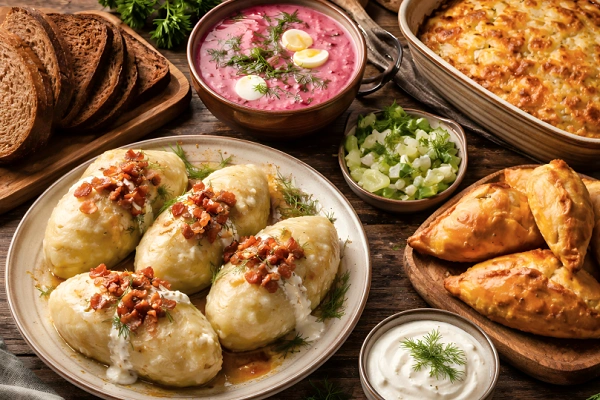
When I first heard about Lithuanian food, I honestly had no idea what to expect. Eastern Europe, potatoes, soup that was about it. But anyone who has actually tasted food from Lithuania will tell you it is a completely different world with simple ingredients, deep history, and genuinely satisfying flavors.
What Makes Lithuanian Food Different from Other European Cuisines
Lithuanian cuisine is built around ingredients that grow well in its cold and wet northern climate: barley, potatoes, rye, beets, greens, berries, and mushrooms. This is not a coincidence. Thousands of years of farming traditions taught people to get the most out of whatever was available locally.
Dairy products and root vegetables like potatoes, beets, and turnips are the foundation of Lithuanian cooking. And rye bread? It is eaten every single day for breakfast, lunch, and dinner and is considered the cornerstone of the entire cuisine.
What truly sets Lithuanian food apart is its layering. One dish can carry the influence of several different cultures. Lithuania borrowed heavily from Poland but the influence of Italy, France, Germany, Turkey, and Russia is also clearly visible in the food.
The Role of Climate in Shaping the Cuisine
It is important to understand that Lithuanian food was built for warmth and survival. Traditional dishes are often heavy and fatty; they were designed to fill people up and carry them through long, brutal winters.
Soups are widely considered essential for good health and are served constantly. Whether you are at someone’s home or in a restaurant, soup in some form will almost always appear on the table.
A Brief History of Lithuanian Food
The history of Lithuanian food is not just about recipes. It is a story of political changes, migrations, and cultural exchanges across many centuries.
Medieval Roots and Royal Influence
Italian culinary influence arrived in Lithuania through Bona Sforza, the Grand Duchess of Lithuania, who introduced the fork and Italian ingredients like olives and olive oil.
She also brought parsnips, cauliflowers, spinach, and even artichokes, which were then grown locally. In other words, one Italian duchess opened up an entirely new world of vegetables in Lithuania.
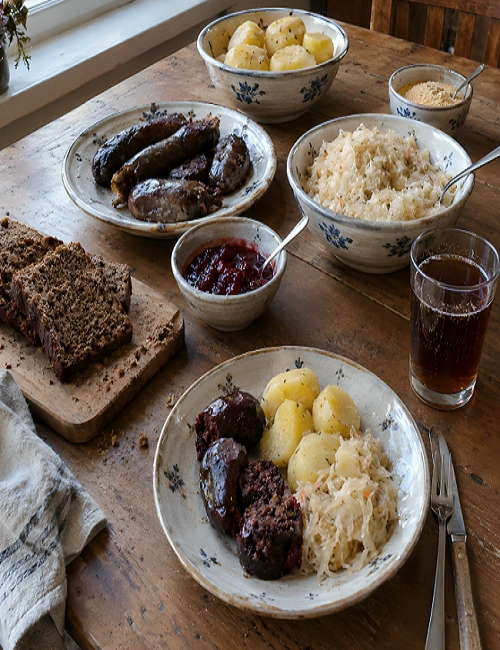
German traditions left their mark too, introducing pork and potato dishes such as potato pudding called kugelis, potato-stuffed intestines called vėdarai, and an elaborate cake known as šakotis.
Jewish, Tatar, and Karaite Influences
Before World War II, Jewish communities were a significant presence in Lithuanian cities, particularly in Vilnius which was historically known as the “Jerusalem of Lithuania.” Their influence on the food culture, especially in urban areas, is still felt today.
Dumplings called koldūnai arrived in Lithuania during the 14th and 15th centuries through Tatars, Karaites, and Jews who settled in the region. And bagels? Similar baked goods were already being mentioned in Lithuania as far back as 1394, where they became popular at fairs and as everyday gifts.
The Soviet Era and Its Food Legacy
During the Soviet occupation, potatoes were not just food, they were survival. The vitamins in potatoes, combined with heavy meat and venison dishes, helped people get through an extremely difficult period in history. This directly explains why hearty and filling dishes remain so central to Lithuanian cooking even today.
Traditional Lithuanian Food: 5 Must-Try Dishes
Cepelinai The National Dish
Cepelinai are large dumplings made from a mix of raw and cooked potato dough, stuffed with pork, and covered in sour cream and bacon sauce. They were originally called didzkukuliai but were renamed cepelinai in the 20th century because of their strong resemblance to zeppelin airships.
This dish is not just a meal, it is an experience. A single cepelinai is so large that first-time visitors are often surprised by the portion size. It is the kind of food that fills you up for hours.
Šaltibarščiai The Famous Pink Soup
Lithuania is well known for its bright pink soup called šaltibarščiai, which is a cold beet soup. During summer, it works almost like a refreshing drink. Its color comes naturally from beets, and it is typically served with kefir, which is a fermented milk product. A splash of dill and lemon brings the whole thing together nicely.
If eggs are added and the soup is served hot, it becomes more like a borscht, a warm beet and egg soup that is equally comforting during the cold winter months.
Kepta Duona Fried Rye Bread
Kepta duona is Lithuanian dark rye bread that is fried in oil, seasoned with garlic and salt, and served with a cheese sauce. It is usually eaten as a snack alongside beer and is considered a real comfort food for many Lithuanians.
It looks incredibly simple and it is but the combination of garlic and rye creates a smell and taste that is on a completely different level from what most people expect.
Kugelis The Potato Casserole
Kugelis is a hearty baked potato pudding or casserole that sometimes includes meat. It is served with lingonberry jam, bacon, or sour cream. It was adapted from a German dish but the Lithuanian version has developed its own distinct identity over the years.
Recipes also vary from cook to cook, which makes trying it in different places an interesting and enjoyable experience.
Kibinai Pastries from the Karaite Community
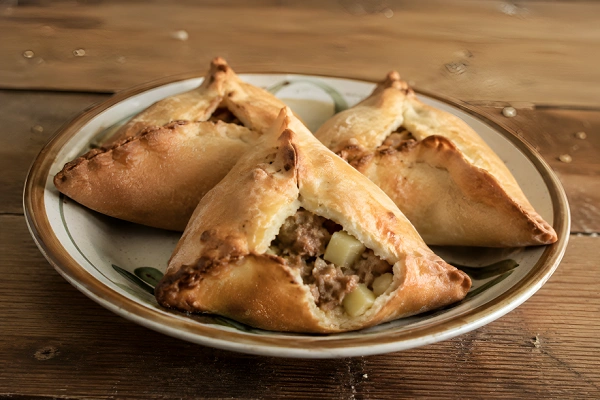
Kibinai are crescent-shaped pastries made with yeast dough and filled with chopped mutton or beef, then baked in an oven.
Today they are also made with vegetable, cheese, or poultry fillings. These pastries come from the Karaite community, a small ethnic minority that has lived in the Trakai region of Lithuania for centuries. If you ever visit Trakai, practically every café there serves them fresh.
Lithuanian Breads and Fermented Foods
Rye Bread The Foundation of Every Meal
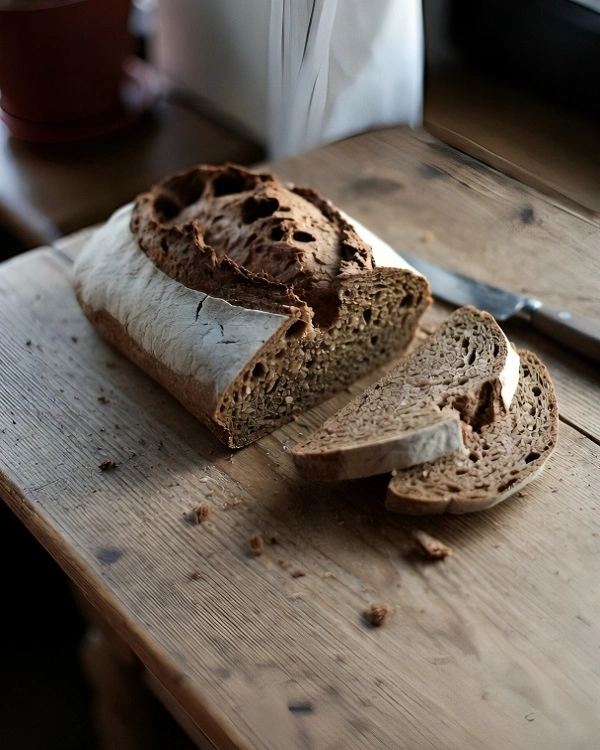
Lithuanian black rye bread is made from fermented dough using whole or ground rye flour, all-purpose flour, a starter, malt, salt, sugar, honey, and water. It comes in many varieties across the country; some are darker, more moist, and slightly sour, while others are lighter and a little sweet.
You will encounter it constantly during any visit to Lithuania, usually served with butter, cheese, ham, or vegetables.
Rye bread is so firmly rooted in Lithuanian culture that most people there genuinely cannot imagine a day without it. It is not just food, it is part of the national identity.
Gira The Fermented Bread Drink
Gira is a traditional non-alcoholic fermented drink made from dark rye bread. It is not quite like beer, but it has a similarly acquired taste.
Most people who try it for the first time describe it as something between roasted bread and a light, slightly sweet fizz. The draught version is generally considered much better than the bottled one.
Traditional Lithuanian Sweets and Desserts
Šakotis The Remarkable Tree Cake
Šakotis is a traditional Lithuanian cake served at weddings, Christmas Eve, and Easter. It is a large hollow ring with spike-like shapes around the edges, created by slowly dripping batter onto a rotating spit over an open fire. Making one properly requires around 30 to 50 eggs and about a kilogram of flour.
Interestingly, this cake originally came to Lithuania from Germany in the early 19th century. The authentic recipe and form have been lost in Germany over time, but Lithuania kept it alive and it continues to thrive there today.
A useful tip: the more sharp points a šakotis has, the more skilled its baker is considered to be.
Grybukai Mushroom-Shaped Cookies
Despite the name, grybukai contain no mushrooms at all. They are simply cookies shaped like mushrooms, flavored with cinnamon, cloves, nutmeg, and cardamom, and glazed so that the stalk appears white and the cap appears dark.
They are a charming example of how Lithuanian food culture brings creativity to the simplest of ingredients.
Fried Cheese Curd Cakes
In Lithuania, fresh cheese curd is a common food. To make fried cheese curd cakes, mix curd with a little flour, egg, and sugar. Then cook the mixture in oil until it turns golden. They are served with fresh berries and jam and can be eaten at any time of day as breakfast, a snack, or a light dessert.
Regional Differences in Lithuanian Food
Lithuanian cuisine is not the same everywhere across the country. People in Aukštaitija serve a lot of potato and dough-based foods, like pork innards stuffed with mashed potatoes or meals made with dark bread.
In the Dzūkija region, mushroom and berry-based dishes are far more common, made from ingredients collected directly from the national forests nearby.
This regional variety is a reminder that Lithuania does not have just one single cuisine. Every area has slowly developed its own style and specialties over centuries of local tradition.
What Lithuanians Drink with Their Food
Two drinks with a very long history are Starka, which is an aged vodka, and Krupnikas, which is a honey liqueur. Both date back to the Polish-Lithuanian Commonwealth period of the 16th to 18th centuries and are still enjoyed today.
Beer culture is also remarkably strong in Lithuania. Traditional farmhouse brewing has survived there better than almost anywhere else in the world. After independence, the country developed a large number of breweries, and even today roughly 60 to 70 of them produce beer styles that are essentially unknown anywhere else on the planet.
This makes Lithuanian beer a truly rare experience for any visitor interested in craft brewing.
Festive and Seasonal Food Traditions
Christmas in Lithuania typically brings fish, mushrooms, and sweets to the table. Easter is a time for richer and more elaborate food: fried veal, pork head, stuffed geese, decorated cakes, and painted eggs all appear during the celebration.
Lithuania also has a growing and enthusiastic wine culture. Wine shops and specialty events have become increasingly common in the bigger cities, and an annual wine exhibition held every May draws attention from across the wider European region.
How Lithuanian Food Has Changed in Recent Years
Recent decades have brought a real and noticeable revival of interest in Lithuanian food. People are going back to old family cooking traditions while also trying out new food trends.
Today, many restaurants in Lithuania specialize in historic dishes given a modern approach honoring the past without being trapped by it.
This revival is not just happening in restaurants. Home cooks, food bloggers, and younger Lithuanians are rediscovering old recipes and giving them new life. It is a quiet but meaningful movement that is keeping a rich culinary heritage alive.

James Carter is a food researcher and writer passionate about global cuisines, street food, and the stories behind what we eat. He combines thorough research with a genuine love for food culture to bring readers accurate, well-written, and interesting content.