The Best Fluffy Pancakes recipe you will fall in love with. Full of tips and tricks to help you make the best pancakes.

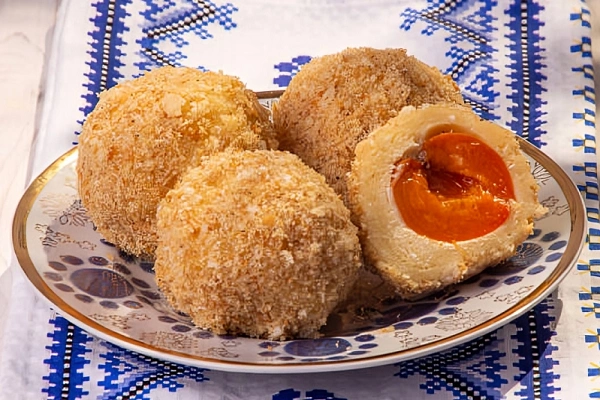
The knedle recipe is one of the most beloved dumpling traditions in Central and Eastern Europe. These soft, round dumplings are made from a simple potato dough, wrapped around a whole plum, boiled until tender, and finished with butter-toasted breadcrumbs and a dusting of cinnamon or sugar.
Across Poland, Bosnia, Croatia, Serbia, Slovakia, and Hungary, knedle appears on family tables as a meatless main dish or a satisfying dessert and every household has its own version.
Ingredients
The ingredient list for knedle is short, but the quality of each component directly affects the final result. Pay particular attention to the type of potato it makes the biggest difference in the dough.
For the dough:
- Starchy potatoes (Russet or similar) — 500g / 1 lb, cooked, cooled, and riced or mashed
- All-purpose flour — 100–125g / ¾–1 cup (add gradually)
- Egg — 1 large
- Salt — ½ teaspoon
- Butter — 1 tablespoon, softened (optional, adds richness)
The filling:
- Small European or Italian plums — 8–10 whole, ripe but firm
- Sugar cubes or granulated sugar — 1 per plum
- Ground cinnamon — a pinch per plum (optional but traditional)
For serving:
- Fine breadcrumbs — ¼ cup
- Butter — 3 tablespoons
- Sour cream — ½ cup, whisked with powdered sugar
- Cinnamon and sugar — to sprinkle on top
Potato tip: Always use starchy potatoes like Russet, Maris Piper, or older brown-skinned varieties. These have lower water content, which means the dough absorbs less flour and stays light. Waxy potatoes red, fingerling, or new potatoes produce a gummy, heavy dough that is difficult to work with.
Step-by-Step Method
Step 1
Cook and cool the potatoes. Peel and dice the potatoes into even chunks. Boil in salted water for 15,20 minutes until completely fork-tender. Drain well.
While still warm, press through a potato ricer or mash thoroughly with a potato masher do not use an electric mixer, as it makes the starch gluey.
Spread the mashed potatoes on a clean surface and allow them to cool completely before proceeding. Warm potatoes absorb more flour, which leads to a tough, dense dumpling.
Step 2
Make the potato dough. Once the mashed potatoes are cool, add the egg, salt, and softened butter if using. Add the flour in small amounts roughly ¾ cup to start. Mix gently with a spoon, then knead briefly with your hands until a soft ball forms.
The dough should be a little sticky, but it should be easy to handle. Do not overwork it, and do not add more flour trying to chase perfect smoothness. Flour your hands instead of the dough when needed.
Step 3
Prepare the plums. Slice each plum carefully along one side just enough to remove the pit while keeping the fruit in one piece. Discard the pits.
Place a sugar cube (or ½ teaspoon of granulated sugar) and a small pinch of cinnamon where the pit was. Press the plum closed.
Step 4
Shape the dumplings. Divide the dough into portions one per plum. Flour your hands lightly. Flatten one portion into a rough disc about 10–12 cm across. Put a plum that has been prepped in the middle.
Wrap the dough around the plum and pinch the seams shut tightly. To make a smooth ball, roll it lightly between your palms. Place finished dumplings on a well-floured board while you shape the rest.
Step 5
Cook the knedle. Fill a large, wide pot with salted water and bring it to a boil. Reduce to a gentle simmer rapid boiling can tear the dumplings open. Lower 4,5 dumplings at a time into the water using a slotted spoon.
After about one minute, gently stir to prevent sticking to the bottom. Keep cooking for another 4 to 5 minutes when the dumplings rise to the top.
Remove with a slotted spoon and drizzle immediately with a little melted butter to prevent sticking.
Step 6
Prepare the toppings. While the dumplings cook, melt butter in a small pan over medium heat. Add fine breadcrumbs and stir continuously for 2,3 minutes until golden brown.
Watch closely they burn quickly. In a separate bowl, whisk sour cream with a tablespoon of powdered sugar until smooth.
Step 7
Serve immediately. Spoon the buttered breadcrumbs over the warm dumplings and add a dollop of sweetened sour cream on the side. Dust with cinnamon and sugar. Knedle are best eaten hot, right after cooking.
Key cooking tip: Always simmer, never boil hard. A rolling boil puts too much pressure on the seams and causes the dumplings to split open. If one splits during a test run, seal the seams more firmly next time and reduce the heat further.
Regional Variations Across Europe
Knedle exist in some form across nearly all of Central and Eastern Europe. While the potato dough base is shared, the finishing, serving style, and even the name change depending on the country.
Poland: Served as a meatless main course rather than dessert, particularly in summer. With sweetened sour cream and buttered breadcrumbs (bułka tarta) on top. Cinnamon is common. Less sugar is used in the dough itself compared to other versions.
Bosnia and Croatia: Treated as a dessert roughly 90% of the time. After boiling, the dumplings are rolled in breadcrumbs fried in butter and oil, then coated in sugar and cinnamon. Sometimes finished with vanilla sugar.
Slovakia and Czech Republic: A separate steamed loaf-style dumpling (parená knedľa) is the main side dish tradition served sliced alongside goulash or roasted pork. Fruit-filled potato knedle also exist and are prepared similarly to the Polish version.
Hungary and Austria: Known as gombóc in Hungary. Often filled with apricots instead of plums. Coated in sugary breadcrumbs, sometimes mixed with ground nuts.
Served warm as a dessert. In Austria, a cheese-based dough is also used for apricot dumplings (Marillenknödel).
All versions share the same core technique: boiled potato dough around the whole fruit. Regional names include okruglice (Croatia), gomboce (Serbia), cmoki or knedli (Slovenia), and galuste (Romania).
Substitutions and Variations
Fruit alternatives: Strawberries are widely used in Poland as a seasonal substitute. Apricots are the standard choice in Austria and Hungary.
Cherries (4,5 per dumpling), dried prunes soaked in water, and frozen blueberries (thawed and drained) can all work. Larger fruits should be halved or quartered before wrapping.
Dough alternatives: Some cooks replace a portion of the mashed potato with quark or twaróg (fresh farmer’s cheese) for a richer, slightly tangier dough. The potato version remains the most common and the most forgiving for beginners.
Topping alternatives: Instead of breadcrumbs, some families use crushed biscuits, ground poppy seeds mixed with sugar, or grated farmer’s cheese with sugar and melted butter poured over the top.
Storage and Reheating
Knedle are best eaten fresh. Cooked dumplings can be stored in an airtight container in the refrigerator for up to 2,3 days. The potato starch firms slightly over time, which is normal.
To reheat: the best method is to steam them briefly for 2,3 minutes, or drop them back into gently simmering water for 1,2 minutes.
Pan-frying in butter until lightly golden is another popular option and adds a pleasant crisp texture on the outside. If you can, don’t use the microwave because it makes the dough rubbery.
For freezing, shape the dumplings but do not boil them. Place on a floured tray and freeze for 15 minutes until firm, then transfer to freezer bags.
Cook directly from frozen in gently simmering salted water for 20,25 minutes. Do not freeze already-cooked knedle.
Final Words
Making a good knedle recipe comes down to a few non-negotiable rules: use starchy potatoes, let them cool completely, add only as much flour as needed, seal the dumplings tightly, and always cook at a gentle simmer.
The topping buttered breadcrumbs, sour cream, cinnamon brings everything together into a dish that is simple, comforting, and deeply rooted in Central European home cooking tradition.
Whether you follow the Polish version with sour cream, the Balkan style with sugar coating, or the Slovak tradition served alongside a hearty stew, the core dumpling-making technique remains the same across all six culinary traditions and the result is always worth the effort.

James Carter is a food researcher and writer passionate about global cuisines, street food, and the stories behind what we eat. He combines thorough research with a genuine love for food culture to bring readers accurate, well-written, and interesting content.