The Best Fluffy Pancakes recipe you will fall in love with. Full of tips and tricks to help you make the best pancakes.

Most mornings do not go as planned, the alarm goes off late, breakfast gets skipped, and the day starts on an empty stomach. The problem is rarely a lack of options. It is a lack of time.
That is exactly where 5-minute smoothie bowl recipes come in. No cooking, no complicated prep, just frozen fruit, a blender, and five minutes and the result is a thick, filling bowl that actually holds until lunch.
This guide covers the core ingredients, blending technique, five tested recipes, and everything needed to make a great smoothie bowl at home, every time.
What Is a Smoothie Bowl?
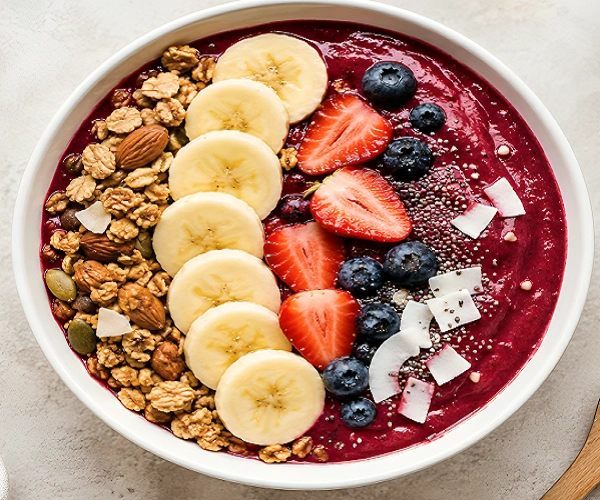
A smoothie bowl is a thick, spoonable version of a blended smoothie served in a bowl rather than a glass. Unlike a drinkable smoothie, the consistency is closer to soft-serve ice cream dense enough that a spoon stands upright in it. The top is typically layered with fresh fruit, seeds, granola, nut butter, or other toppings that add texture and nutritional value.
The concept has grown in popularity because it bridges the gap between a fast breakfast and a nutrient-dense meal. It satisfies visually as well as nutritionally, making it a staple in plant-based diets, clean eating routines, and meal prep plans.
The key difference between a smoothie bowl and a regular smoothie is the ratio of frozen ingredients to liquid. A smoothie bowl uses significantly less liquid, which produces a thicker base that holds toppings without sinking.
Why 5 Minutes Is Enough
The entire process measuring, blending, pouring, and adding toppings takes about five minutes when the right ingredients are on hand. The main reason this works is that the prep time is eliminated by using frozen fruit. There is no peeling, chopping, or cooking involved.
Keeping a supply of frozen bananas, frozen mixed berries, frozen mango chunks, and similar items in the freezer means a complete breakfast is always within reach. Stock the freezer once or twice a week and you’ve had breakfast a couple of mornings without any further work.
A high-powered blender further speeds up the process. It handles dense frozen ingredients without stalling. Standard blenders also work fine when the correct technique is used which is covered in the blending tips section below.
Key Ingredients for Every Smoothie Bowl
While recipes vary widely, most smoothie bowls are built on the same core structure:
1. Frozen Fruit Base
This is the foundation. Frozen banana is the most commonly used fruit because it blends into a smooth, creamy consistency and provides natural sweetness eliminating the need for added sugar in most recipes. To prepare ahead, peel ripe bananas, cut into chunks, and freeze in an airtight bag.
Other popular choices include frozen strawberries, frozen blueberries, frozen raspberries, frozen mango, frozen pineapple, frozen açaí packets, and frozen dragon fruit. Using frozen rather than fresh fruit is essential; it creates thickness without needing ice, which dilutes flavor.
2. Liquid Base
A small amount of liquid is needed to help the blender process the frozen fruit. Options include:
- Coconut milk adds mild sweetness and a creamy texture
- Almond milk mild and neutral, helpful for keeping the calories down
- Oat milk slightly sweet and works well with berry flavors
- Orange juice adds natural vitamin C and a citrus note
- Plain water works when the fruit flavor should stand alone
The key is to use as little liquid as possible just enough to get the blender moving. Too much liquid produces a thin consistency that will not hold toppings.
3. Protein or Enrichment (Optional)
For added nutritional value, many people include:
- Greek yogurt adds protein and creaminess; whole milk or low-fat versions work best
- Vanilla protein powder increases protein content without altering flavor significantly
- Chia seeds or flaxseeds commonly associated with omega-3 fatty acids and fiber
- Rolled oats add soluble fiber and help thicken the base
- Nut butter Using almond or peanut butter to increase protein and good fats
Tip: If you only have plain Greek yogurt, sweeten it with a small drizzle of honey or maple syrup before blending. This prevents the bowl from tasting too sour.
Blending Tips for the Right Consistency
Getting the right texture is the most important part of making a good smoothie bowl. These techniques consistently produce the best results:
Blend on low speed first
Starting slowly breaks down the frozen chunks without over-liquidizing the mixture.
Scrape the sides regularly
Frozen fruit tends to stick to blender walls. Stopping to scrape down ensures even blending.
Use a tamper if available
A tamper tool pushes ingredients toward the blade without adding extra liquid.
Keep everything frozen
Room temperature fruit will not produce the right consistency. All fruit should be frozen solid before blending.
Add liquid one tablespoon at a time
Pour in the minimum needed and add more gradually only if the blender stalls.
Target a soft-serve texture
The finished blend should hold its shape in the bowl dense enough that toppings sit on top without sinking.
Top 5 Smoothie Bowl Recipes
Recipe 1: Classic Mixed Berry Bowl
Ingredients: 1 frozen banana (chunks), 1 cup frozen mixed berries (blueberries, raspberries, strawberries), 2–3 tbsp coconut milk or almond milk
Method: Add frozen banana and berries to a blender. Blend on low speed until smooth, using the blending tips above. Pour into a bowl and top with chia seeds, hemp seeds, and coconut flakes.
Why it works: This is the most straightforward version of a whole-food, plant-based breakfast. The natural sweetness comes from the ripe frozen bananas, so there’s no additional sugar. Berries are widely recognized as a source of antioxidants and dietary fiber, supporting digestive health and steady energy throughout the morning.
5 min • Vegan • Vegetarian • Gluten-free • ~214 calories
Recipe 2: Blueberry Raspberry Honey Bowl
Ingredients: 1 frozen banana, 3 ice cubes, 2 tablespoons of water, and ½ cup of frozen blueberries and raspberries 1 teaspoon of honey
Method: Blend all ingredients on low until smooth. Add water in small amounts only if the blender stalls. Pour into a bowl and top with sliced fresh banana, sliced kiwi, and chia seeds.
Why it works: Honey adds a light natural sweetness that balances the tartness of raspberries. Blueberries are widely cited in nutrition literature for their antioxidant content, and kiwi on top provides a natural source of vitamin C. The deep purple color of this bowl makes it one of the most visually distinct options in this guide.
5 min | Gluten-free | ~200 calories
Recipe 3: Strawberry Pineapple Greek Yogurt Bowl
Ingredients: 1 cup frozen strawberries, ⅓ cup frozen pineapple chunks, ½ cup vanilla Greek yogurt
Method: Combine all three ingredients in a food processor fitted with an S-blade. Process for 2–4 minutes, stopping to scrape the sides. Spoon into a bowl and add desired toppings.
Why it works: Greek yogurt acts as both the liquid base and the protein source, making this bowl higher in protein than most fruit-only versions. Pineapple contains bromelain, an enzyme that some research suggests may support digestion, though studies are ongoing. The result is ultra-thick and naturally sweet with no added sugar when vanilla yogurt is used.
5 min | High protein | ~250 calories
Recipe 4: Açaí Smoothie Bowl
Ingredients: 1 packet (100g) unsweetened frozen açaí, 1 frozen banana, ¼ cup non-dairy milk
Method: Add all three ingredients to a high-powered blender. Blend on low, using a tamper to push ingredients toward the blade. Add a small amount of extra milk only if needed. Top with cereal, fresh berries and coconut flakes.
Why it works: Açaí is widely discussed in nutrition literature for its content of anthocyanins and polyphenols compounds found in many deeply pigmented fruits. It has a naturally earthy, slightly chocolate-like flavor that pairs well with sweeter toppings. This bowl closely replicates what specialty juice bars commonly serve, at a fraction of the cost.
5 min | Vegan | Dairy-free | ~300 calories
Recipe 5: Dragon Fruit Bowl
Ingredients: ½ cup frozen dragon fruit (pitaya), 1 frozen banana, ¼–½ cup light coconut milk (beverage-style, not canned)
Method: First, blend the banana and dragon fruit on low speed. Add coconut milk gradually until the mixture blends smoothly. Pour into bowls and top with sliced kiwi, shredded coconut, chia seeds, and granola.
Why it works: Dragon fruit is a source of vitamin C, iron, and magnesium. Its naturally vivid pink color makes this one of the most visually striking smoothie bowl options. Beverage-style coconut milk keeps the base lighter than canned versions while still providing a mild tropical flavor. This recipe is also notably high in dietary fiber, with exact amounts depending on portion size and specific ingredients used.
Vegan | ~356 calories | High fiber | 5 minutes
Best Toppings and Why They Matter
Toppings are not just decorative. They add contrasting texture and additional nutrients, and make the bowl more satisfying as a complete meal. A smoothie bowl without toppings can feel incomplete because the blended base alone lacks crunch and chew.
| Topping | Nutritional Benefit | Texture |
| Chia seeds | Fiber, plant-based omega-3s | Soft, gel-like when wet |
| Hemp seeds | Complete protein, magnesium | Soft, nutty |
| Granola | Complex carbohydrates, fiber | Crunchy |
| Coconut flakes | Healthy fats, manganese | Chewy or crispy |
| Sliced almonds | Vitamin E, healthy fats | Crunchy |
| Fresh berries | Antioxidants, vitamin C | Juicy, soft |
| Nut butter | Protein, monounsaturated fats | Creamy, rich |
| Flaxseeds | Soluble fiber, plant-based omega-3s | Fine, slightly crunchy |
| Cacao nibs | Iron, magnesium | Hard, crunchy |
| Rolled oats | Beta-glucan fiber, B vitamins | Chewy |
The best toppings are a combination of three things: something crunchy (granola, almonds), something creamy (nut butter, a yogurt drizzle) and something fresh (berries, sliced fruit). This approach covers a broader range of macronutrients and micronutrients in a single bowl.
Nutritional Breakdown
Smoothie bowls made with whole-food ingredients provide a combination of complex carbohydrates, dietary fiber, natural sugars, vitamins, and minerals. The exact nutritional profile depends heavily on which ingredients and how much of each topping is added.
It is worth noting that toppings especially sweetened granola, dried fruit, and flavored yogurt can significantly increase caloric and sugar content. For people monitoring sugar intake, choosing unsweetened versions of coconut milk, yogurt, and açaí packets is the most straightforward adjustment.
A standard base made from one frozen banana and one cup of frozen mixed berries with two tablespoons of coconut milk provides roughly:
- 210–220 calories
- 47–50g carbohydrates
- 8–10g dietary fiber
- 2–3g protein
- 2–3g fat
These are estimates. Exact values vary by ingredient brand, quantity, and specific fruit used.
Adding a tablespoon of hemp seeds and a quarter cup of granola brings total protein to approximately 8–10g enough to support a moderate-activity morning for most people.
Note: People following low-glycemic or blood sugar-conscious diets may benefit from including protein (Greek yogurt or protein powder) and healthy fat (nut butter or seeds) in the base itself, not just as toppings to help slow the absorption of natural fruit sugars. Consulting a registered dietitian for personalized guidance is always advisable.
Making 5-minute smoothie bowl recipes part of a regular routine is one of the more practical ways to increase whole-food intake, dietary fiber, and micronutrient density without requiring significant time or cooking skill. The five recipes in this guide from the classic mixed berry bowl to the dragon fruit bowl cover a range of flavors, textures, and nutritional profiles, making it straightforward to find an option that fits any dietary preference, including vegan, gluten-free, dairy-free, and high-protein eating patterns.
James Carter is a food researcher and writer passionate about global cuisines, street food, and the stories behind what we eat. He combines thorough research with a genuine love for food culture to bring readers accurate, well-written, and interesting content.