The Best Fluffy Pancakes recipe you will fall in love with. Full of tips and tricks to help you make the best pancakes.

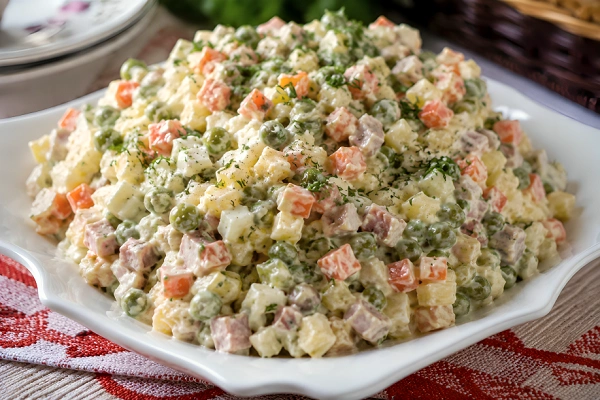
Russian salads are among the most recognized and widely eaten dishes in Eastern European cuisine. Whether served at a festive gathering, a birthday dinner, or a holiday table, these dishes have been part of Russian food culture for well over a century. Unlike the leafy green salads common in Western cooking, most Russian salads are hearty, filling, and built from boiled vegetables, eggs, pickled ingredients, and creamy dressings.
This guide covers the most well-known traditional Russian salads, their history, key ingredients, regional variations, and what makes each one distinct.
What Are Russian Salads?
The term “Russian salad” refers to a broad category of cold, mixed dishes that originated in or were adopted into Russian cuisine and later spread across the former Soviet Union and Eastern Europe. Most are made from boiled or pickled vegetables, hard-boiled eggs, canned fish or cooked meat, and a creamy dressing typically mayonnaise, though lighter oil-and-vinegar versions also exist.
Several features are common across traditional Russian salads:
- Ingredients are finely diced or grated by hand into small, uniform pieces
- No lettuce or raw greens the salads depend on items that have been cooked or stored
- Many are prepared a day in advance so flavors can fully develop
- They are traditionally served as cold appetizers (zakuski) before the main course
These salads became especially popular during the Soviet era, when limited grocery access made simple, affordable ingredients potatoes, carrots, canned peas, and eggs the foundation of everyday cooking. Over time, they became deeply tied to cultural celebrations, winter holidays, and family gatherings across Russia and neighboring countries.
1. Olivier Salad The Most Famous Russian Salad
Olivier salad, also called Russian salad or Stolichny salad, is the most recognized dish in Russian cuisine. It appears on nearly every festive table across Russia and the post-Soviet states, especially during New Year’s Eve (Novy God) celebrations where its presence is considered as essential as a glass of champagne.
Origin and History
The salad was created in the 1860s by Lucien Olivier (1838–1883), a chef of Belgian and French descent who was born in Moscow and ran the Hermitage, one of the most celebrated restaurants in the city at that time. The original recipe was a luxury dish containing hazel grouse, crayfish tails, capers, olives, aspic, and Provençal dressing. Olivier never disclosed the full recipe, and it was carried to his grave; his tomb was not even rediscovered until 2008.
One of his sous-chefs, Ivan Ivanov, later attempted to replicate the recipe after secretly observing Olivier’s preparations. He gave other restaurants and printing houses a version of the salad called the “Stolichny” (metropolitan) salad, which made it popular all over Russia.
After the 1917 Revolution, during widespread food shortages, the gourmet ingredients were gradually replaced with far more accessible ones boiled potatoes, carrots, pickled cucumbers, hard-boiled eggs, canned peas, and bologna sausage, all bound with mayonnaise.
Core Ingredients (Modern Version)
- Boiled potatoes — diced
- Boiled carrots — diced
- Hard-boiled eggs
- Dill pickles or brined cucumbers
- Green peas (canned)
- Onion — finely chopped
- Ham, chicken, or bologna sausage (optional)
- Mayonnaise — mixed with mustard and black pepper
Tip: Do not add extra salt to the dressing. Mayonnaise contains salt. Dijon mustard contains salt. Dress the salad first, taste it, then adjust only if needed.
Today the salad exists in countless regional variations. In Ukraine and Bulgaria, ham or bologna is almost always included. In Poland, where it’s called sałatka jarzynowa, it doesn’t have any meat in it, and some cooks add apple, celery root, or carrot. The Iranian version (Salad Olivieh) uses chicken and eggs as the main proteins and is often served as a sandwich filling.
2. Shuba Herring Under a Fur Coat
Shuba (шуба) literally means “fur coat” in Russian. Its full name, Selyodka pod Shuboy, means “herring under a fur coat,” which refers to the thick layers of grated veggies that cover the fish. It is one of the most visually striking Russian salads, instantly recognizable by its deep red beet topping.
Origin and History
According to the most widely repeated account, the salad was created around 1918–1919 by a Moscow merchant and tavern owner named Anastas Bogomilov. It is said that his cook, Aristarkh Prokoptsev, prepared the dish for New Year’s Eve to serve as a hearty appetizer that would prevent guests from getting drunk too quickly and starting fights on the premises.
The name SHUBA was originally an acronym Shovinizmu i Upadku Boikot i Anatema meaning “To Chauvinism and Decline Boycott and Anathema.”
The ingredients also carried symbolic meaning: salted herring represented the working class, red beets echoed the color of the Bolshevik flag, and potatoes symbolized the peasantry. Because shuba also simply means “fur coat” in Russian, the name evolved colloquially into “Herring Under a Fur Coat.”
It is worth noting that similar layered herring and beet salads existed in Scandinavia and Germany well before this account a Swedish herring salad recipe with beets, potatoes, and pickles appeared in a British cookbook as early as 1845. The Bogomilov origin story, while widely cited, is considered a popular legend rather than a fully documented historical fact.
Layers (Bottom to Top)
- Salted herring — chopped, placed at the base
- Scalded or raw onion
- Boiled potatoes — grated or diced
- Boiled carrots — grated
- Optional: hard-boiled eggs or green apple
- Boiled beets — grated, forms the final “fur coat” on top
- Mayonnaise spread between each layer
The salad is best assembled in a deep dish or glass bowl so the layers stay intact. It must rest in the refrigerator for several hours or overnight before serving this allows each layer to absorb the dressing and the flavors to blend properly.
3. Vinegret
Vinegret (винегрет) is considered the oldest salad in Russian culinary tradition. Though its exact origins are debated among food historians, most sources agree it appeared in Russia toward the end of the 18th century, likely introduced during the reign of Catherine the Great (1762–1796) through French and European culinary influence.
Some sources point to the early 19th century as the period when it became more widely documented. It is one of the few Russian salads that is both vegan and gluten-free in its traditional form.
Name and Origin
The name comes from the French word vinaigrette, referring to an oil-and-vinegar dressing. A popular story is that a French chef working for a Russian noble family inquired if there was vinegar in the salad.
The people who were making it repeated the word “vinegret, vinegret” to check, and the name stuck. Whatever the precise origin of the name, it has been in consistent use since at least the 19th century.
Classic Ingredients
- Boiled beets — diced (the defining ingredient)
- Boiled potatoes — diced
- Boiled carrots — diced
- Dill pickles or brined cucumbers
- Sauerkraut (in some regional versions)
- White beans or kidney beans
- Onion — finely chopped
- Dressing: sunflower oil, vinegar or lemon juice, sometimes mustard
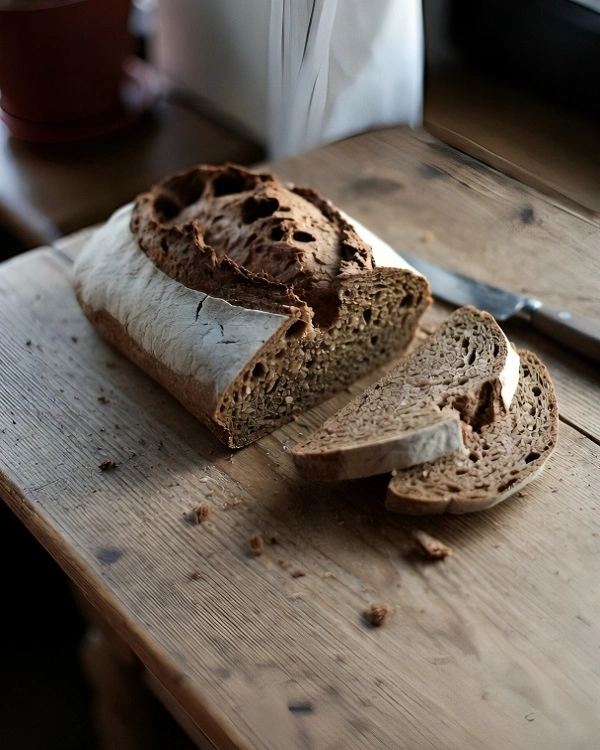
The beets turn everything a deep purple-red this is expected and part of the salad’s character. Because it uses an oil-based dressing, vinegret is noticeably lighter on the palate than mayonnaise-heavy counterparts. It is commonly served alongside Russian black bread, herring, or sausages, and pairs well with both meat and fish dishes.
4. Mimoza Salad
Mimoza (мимоза) is a layered Russian salad named after the mimosa flower, whose bright yellow blooms inspired the salad’s signature topping of finely grated egg yolk. It gained popularity during the Soviet era as a special-occasion dish, at a time when canned fish was one of the most consistently available proteins in Russian households.
Key Ingredients
- Canned fish — tuna, mackerel, salmon, or sardines (mashed)
- Hard-boiled egg whites — grated (used in middle layers)
- Hard-boiled egg yolks — finely grated on top
- Onion — finely chopped
- Grated cheese (in many versions)
- Boiled carrots and potatoes (optional, regional)
- Mayonnaise between each layer
Unlike Shuba where ingredients are diced everything in Mimoza is finely grated, giving it a much softer and more delicate texture. The fluffy yellow yolk on top is not just decorative; it signals the salad’s character before the first bite. It should be refrigerated for at least two hours before serving so the layers settle and bind together.
5. Crab Salad (Krab Salat)
Crab salad, or Krab Salat, is one of the quickest and most straightforward Russian salads. Despite its name, it is most commonly made with imitation crab sticks (surimi) rather than real crab meat. Its simplicity made it a reliable choice for celebrations and parties where a flavorful dish was needed without lengthy preparation.
Ingredients
- Crab meat or crab sticks — chopped
- Hard-boiled eggs — chopped
- Canned sweet corn
- Canned peas (in some versions)
- Spring onion or white onion
- Mayonnaise
- Optional: cooked rice (for a more filling version) or horseradish stirred into the dressing
All ingredients are chopped, combined, and dressed with mayonnaise. The sweet corn and onion give it a fresh, mildly sweet flavor that sets it apart from the earthier root-vegetable salads. A small amount of fresh dill is a common addition for aroma. It keeps well in the refrigerator for one to two days.
Quick Comparison of Classic Russian Salads
| Salad | Main Ingredients | Dressing | Structure |
| Olivier | Potato, carrot, egg, pickle, peas, meat | Mayonnaise + mustard | Mixed |
| Shuba | Herring, potato, carrot, beet, egg | Mayonnaise | Layered |
| Vinegret | Beet, potato, carrot, pickle, beans | Oil + vinegar | Mixed |
| Mimoza | Canned fish, egg, cheese, onion | Mayonnaise | Layered |
| Crab Salad | Crab sticks, egg, corn, onion | Mayonnaise | Mixed |
Russian Salads Around the World
Russian salads particularly Olivier have traveled far beyond their original borders and taken on new identities in different countries:
- Spain: Called ensaladilla rusa, it is one of the most popular tapas dishes in the country, often served alongside a beer in local bars.
- Italy: Known as insalata russa, it appears as an antipasto and may include anchovies, tuna, or pickled cauliflower depending on the region.
- Iran: The Salad Olivieh version uses chicken and eggs as the main proteins and is widely eaten as a sandwich filling.
- Latin America: Found across Colombia, Peru, Argentina, and Brazil as ensalada rusa, often adapted with local spices like cumin and served with sour cream.
- Turkey: Introduced during periods of Russian migration in the early 20th century, it is known as rus salatası and remains a common meze item.
- Poland: Called sałatka jarzynowa (vegetable salad), it is made without meat and sometimes includes celery root or apple for extra texture.
Did you know? In Denmark and Norway, Olivier salad is called italiensk salat meaning “Italian salad” acknowledging its wide popularity in northern Italy, where locals themselves call it insalata russa.
Final Thoughts
Russian salads reflect far more than cooking preferences; they carry the culinary history, social conditions, and cultural identity of an entire region. From the carefully guarded recipe of Olivier salad in a 19th-century Moscow restaurant, to the symbolism embedded in Shuba’s layered ingredients, each dish tells its own story.
What connects them all is an approach to food that values simple, honest ingredients treated with care. Whether layered or mixed, fish-based or vegetarian, dressed with mayonnaise or a clean oil-and-vinegar combination, Russian salads have earned their place among the most enduring dishes in Eastern European culinary tradition.
FAQs
What is the most popular Russian salad?
Olivier salad is widely considered the most popular. It has spread globally under names like Russian salad, ensaladilla rusa, and Salad Olivieh, and remains a defining dish at festive tables across Russia and the former Soviet states.
Do Russian salads always use mayonnaise?
No. While mayonnaise is the most common dressing, vinegret is a well-known exception; it uses oil and vinegar, making it a lighter, vegan-friendly alternative. Some modern cooks also substitute Greek yogurt or sour cream for part of the mayonnaise in other recipes.
Are Russian salads served warm or cold?
All classic Russian salads are served cold. Most benefit from being made the day before, as resting overnight allows the dressing to be fully absorbed and the flavors to deepen considerably.
What vegetables are most commonly used?
Boiled potatoes, carrots, and beets are the most common base vegetables. Dill pickles, brined cucumbers, canned peas, and onions appear across nearly all recipes. Vinegret may contain sauerkraut and kidney beans.
Can Russian salads be made vegetarian or vegan?
Yes. Vinegret is naturally vegan in its traditional form. Olivier salad is easily made vegetarian by leaving out the meat. For a fully vegan Olivier, plant-based mayonnaise can be used in place of the standard dressing.

Rachel Bradley is a food writer and recipe developer with a love for home cooking and global flavors. She has spent years testing recipes in her kitchen, exploring everything from quick weeknight meals to traditional dishes from around the world. Her goal is simple — make great food accessible to everyone.