The Best Fluffy Pancakes recipe you will fall in love with. Full of tips and tricks to help you make the best pancakes.

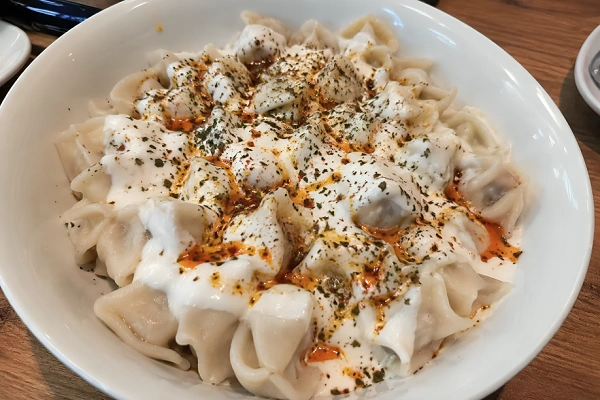
What Is Turkish Manti?
Manti (pronounced mahn-tuh) is a traditional Turkish dish made of small dough pockets filled with seasoned ground meat, most commonly lamb or beef. It is distinctly identified by two things: its tiny size and its double-sauce presentation a cool, thick garlic yogurt on the bottom and a hot, spiced butter drizzle on top.
The dish belongs to a broader family of filled dumplings found across Central Asia, the Middle East, and Eastern Europe from Uzbek manti to Kazakh manti to Armenian manti.
Each version has its own identity, and the Turkish one is particularly celebrated for the delicacy of its dough and the interplay between the two contrasting sauces.
Origin and History of Manti
The word “manti” is believed to have roots in the Mongolian word “mantu” or the Chinese “mantou,” pointing toward Central Asian origins. Food historians generally trace the spread of this dumpling tradition along the Silk Road, with Turkic nomadic tribes carrying the concept westward as they migrated across centuries.
By the time the Ottoman Empire was established, manti had already become embedded in Anatolian cooking. A 15th-century Ottoman cookbook by physician Muhammed bin Mahmud Shirvani contains the earliest written manti recipe a steamed dumpling filled with minced lamb and crushed chickpeas, served with garlic yogurt.
Today, the city of Kayseri in central Anatolia is considered the heartland of manti in Turkey, a place so proud of this dish that locals use it as a measure of a bride’s skill. According to a well-known Turkish saying, a good bride should be able to fit 40 manti on a single spoon.
Types of Turkish Manti Across Different Regions
Turkey is not a monolith when it comes to food, and manti is no exception. The dish takes on different forms depending on where you are.
Kayseri Manti
This is what most people mean when they say Turkish manti. The dumplings are extremely small less than 1 cm in some cases boiled until tender, and served with garlic yogurt and paprika-infused butter. Kayseri manti uses a thin, tightly folded dough, and the filling is often just a small pinch of seasoned raw meat placed inside each square before folding.
Baked Manti (Firinda Manti)
In some homes and regions, the dumplings are baked first before being finished with a pour of hot broth or yogurt sauce. This gives the dough a slightly firmer bite and a toasted flavor that many people prefer. Baked manti is also more common in restaurants because it allows for batch preparation.
Open-Style Turkish Manti
Some central Anatolian villages prepare a larger, unsealed version pressed into a boat-like shape, then boiled or baked. This is a Turkish regional style distinct from Armenian manti, which is also open-topped but smaller, baked differently, and served in broth rather than yogurt sauce.
The Turkish open-style version is less delicate than Kayseri manti but equally satisfying in its own way.
Authentic Turkish Manti Recipe Ingredients
Below are the ingredients for a full homemade manti meal serving 4 people.
The Dough
- 2 cups (250g) all-purpose flour
- 1 egg
- ½ teaspoon salt
- ½ cup warm water add gradually
For the Meat Filling
- 250g (about 9 oz) ground lamb or beef (or a mix)
- 1 small onion, grated not chopped, grating matters
- Salt and black pepper to taste
- A small pinch of dried mint (optional but traditional in some regions)
The Garlic Yogurt Sauce
- 2 cups plain full-fat yogurt (room temperature)
- 2 to 3 garlic cloves, broken up into a paste
- Pinch of salt
For the Spiced Butter Topping
- 4 tablespoons unsalted butter
- 1 teaspoon red pepper flakes (pul biber Turkish Aleppo-style pepper is traditional)
- ½ teaspoon dried mint
- ½ teaspoon sumac (optional, for garnish)
How to Make Turkish Manti Step by Step
Step 1 Making the Dough
Put the flour and salt in a big bowl and mix them together. Make a well in the center and crack in the egg. Begin mixing with a fork, then slowly add warm water a little at a time. The goal is a stiff but pliable dough, not sticky, not crumbly.
You might not use all the water or you could need a touch extra depending on your flour.
Once the dough comes together, turn it onto a clean surface and knead firmly for 8 to 10 minutes until it is smooth and elastic. Wait at least 30 minutes before covering it with a damp cloth. This rest is not optional it relaxes the gluten and makes rolling much easier.
Step 2 Preparing the Filling
Combine the ground meat with the grated onion, salt, black pepper, and dried mint if using. Mix well with your hands. Keep this mixture refrigerated while you work on the dough. The filling should be used raw when the meat cooks inside the dough during boiling.
One common mistake is over-seasoning the filling. The meat itself should be quite basic, since the dish is served with a strong garlic yogurt and a spicy butter. All it requires is salt, pepper and onion.
Step 3 Rolling and Cutting the Dough
Divide the rested dough into two or three portions. Using a rolling pin or a pasta machine on its thinnest setting, roll each portion out as thin as possible ideally 1 to 2mm thick. Turkish manti dough should be thin enough that you can almost see through it.
Using a knife or a pastry cutter, cut the rolled dough into small squares. Authentic Kayseri manti squares are about 2 to 2.5 cm. Slightly larger squares are fine for beginners they are easier to fold and still taste the same.
Step 4 Filling and Folding the Manti
Place a tiny amount of filling roughly the size of a chickpea in the center of each square. Do not overfill. Bring all four corners up together and pinch them firmly at the top, forming a small pyramid. Make sure the seams are completely sealed or the filling will escape during cooking.
Place the filled manti on a lightly floured tray. Keep them from touching each other. If making a large batch, you can freeze them at this stage directly on the tray, then transfer to a bag once frozen. They keep well for up to two months.
Step 5 Boiling the Manti
Bring to a roaring boil in a big pot of well-salted water. Carefully drop in the manti in batches so it is not overcrowded. Stir gently at first to prevent sticking. It takes about 10 to 15 minutes to cook fresh manti. Cut one open to check the dough should have no raw flour taste and the meat inside should be cooked through.
If using the baked method, spread the folded dumplings on an oiled baking tray and bake at 200°C (390°F) for 15 to 20 minutes until lightly golden. Then pour hot salted water or broth over them and let them absorb it for another 5 minutes before serving.
Step 6 Preparing the Sauces
For the yogurt sauce: stir the crushed garlic and salt into the room-temperature yogurt until smooth. Do not heat the yogurt it is meant to be cool when it meets the hot mantis. That temperature contrast is intentional and important.
For the butter sauce: melt the butter in a small pan over medium heat until it just starts to foam. Remove from heat and immediately stir in the red pepper flakes and dried mint.
The residual heat brings out the spices, but doesn’t cook them. Make this right before serving and it should arrive at the table hot.
Step 7 Serving Turkish Manti
Drain the cooked manti and divide into bowls. Spoon a generous layer of garlic yogurt over them and do not hold back. Then drizzle the hot spiced butter on top. Finish with a sprinkle of sumac and dried mint if desired. Serve immediately. Manti waits for no one.
Techniques That Make a Difference
Dough Thickness Is Everything
Thin dough is the hallmark of well-made manti. If the dough is too thick, the dumplings become dense and gummy rather than delicate. Roll it thinner than you think is necessary. If it tears, cover it and let it rest another 10 minutes the gluten needs more time.
Grate, Don’t Chop, the Onion
Chopped onion pieces inside small dumplings create uneven texture and can prevent the seams from closing properly. Grating releases the onion’s moisture and flavor more evenly into the meat without adding bulk.
Room Temperature Yogurt, Not Cold
Cold yogurt straight from the refrigerator cools the manti down too quickly. Let it come to room temperature before serving. It should not be hot, just not fridge-cold.
Nutritional Profile of Turkish Manti
A serving of homemade manti (approximately 20 to 25 dumplings with sauces) provides protein from the meat and yogurt, carbohydrates from the dough, and fat from the butter.
The yogurt also contributes calcium and probiotics. Exact figures vary based on portion size, fat content of your meat, and how generously you use the butter sauce.
Because the dish uses full-fat yogurt and butter, it is energy-dense. For those watching fat intake, the butter portion can be reduced the yogurt sauce carries enough flavor to hold the dish together on its own.
Common Mistakes to Avoid When Making Manti
- Too much filling: The dumplings will not seal and will burst during boiling.
- Skipping the dough rest: Unrested dough snaps back during rolling and tears when folding.
- Overcrowding the pot: Too many dumplings at once drops the water temperature and causes sticking.
- Skipping the butter topping: Both sauces together are what define the dish one without the other is incomplete.
- Letting manti sit after dressing: They keep absorbing moisture and go soggy fast. Serve immediately.
Vegetarian and Modern Variations of Manti
While traditional manti uses ground meat, vegetarian versions have become more common in Turkish home cooking.
Fillings of seasoned lentils, spinach and white cheese, or mashed potatoes with herbs are all used across different households. The sauce and bread are all the same, only different fillings.
Some modern Turkish restaurants, particularly in western Turkey, serve manti with a tomato-based sauce alongside or instead of yogurt. It is a departure from the Kayseri tradition but has built its own following in urban settings.
The Cultural Significance of Manti in Turkey
Manti is not just food in Turkey it is a social ritual. Making manti has traditionally been a communal activity. Women in a family or neighborhood would gather to roll dough, cut squares, and fold hundreds of dumplings together over hours of conversation. The labor-intensive process is part of its meaning the effort is the point.
In Kayseri especially, manti is tied to notions of hospitality and skill. Serving a guest manti is considered an act of genuine honor. The dish appears at weddings, family gatherings, and religious celebrations. Its cultural weight is perhaps disproportionate to its size which is fitting, given how small each individual dumpling is.
I remember the first time I tried making manti at home. It took most of an afternoon, there was flour on every surface, and the results were far from the neat little pyramids I had imagined. But that evening, sitting down to eat them, the chilled yogurt, the sizzling butter on top, made the whole procedure feel well worth it.
That is probably the best argument for making manti from scratch: the experience of it, not just the result.
Final Thoughts
Turkish manti is the kind of recipe that rewards patience. It is not a weeknight dinner for most people, it is a weekend project, the sort of cooking that fills a kitchen with warmth before anyone has taken a single bite. The technique builds with each batch you make, and the dumplings get smaller, tighter, and more even as your hands learn what to do.
Whether you are exploring Turkish food for the first time or trying to recreate something you once ate in Kayseri or Istanbul, this guide gives you everything you need to make an honest, traditional bowl of manti from scratch.
Start with the dough, work slowly, and do not skip the garlic yogurt. That part is non-negotiable.
FAQs
Can you make manti ahead of time?
Yes. Raw, folded manti can be frozen on a tray and then stored in freezer bags for up to two months. Just add a few minutes to the cooking time if you want to cook them straight from frozen.
What is the difference between Turkish manti and Armenian manti?
Armenian manti (known as sini manti) are open-topped, boat-shaped dumplings that are baked and served in broth not boiled and not finished with the spiced butter sauce used in the Turkish style. Turkish manti are fully sealed before cooking.
The two share a name and distant origins but are genuinely different dishes in form, cooking method, and presentation. The open-style Turkish village manti mentioned earlier is also distinct it is a regional Turkish variation, not the same as Armenian sini manti.
Can I use a pasta machine for manti dough?
Yes, and it produces excellent results. Run the dough through progressively thinner settings until you reach the thinnest or second-thinnest setting. The consistency a pasta machine provides makes it easier to achieve the paper-thin dough that defines good manti.
What type of yogurt works best?
Full-fat, plain yogurt with no added thickeners or starches gives the best results. Turkish-style or Greek-style plain yogurt both work well. Stay away from low-fat forms; they’re usually too watery to stand up to the hot dumplings.

Rachel Bradley is a food writer and recipe developer with a love for home cooking and global flavors. She has spent years testing recipes in her kitchen, exploring everything from quick weeknight meals to traditional dishes from around the world. Her goal is simple — make great food accessible to everyone.