The Best Fluffy Pancakes recipe you will fall in love with. Full of tips and tricks to help you make the best pancakes.

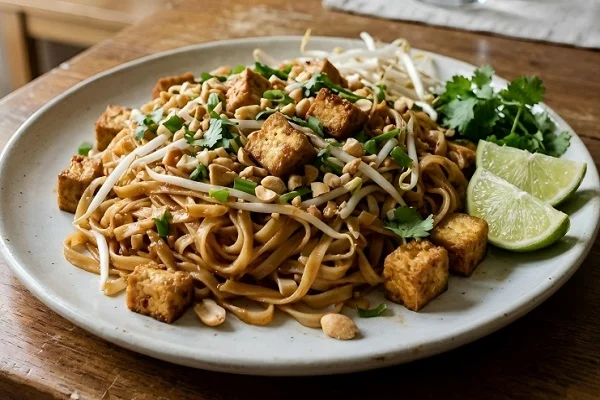
This vegan pad thai recipe gives you the sweet, sour, and salty balance of the classic street-food noodles without fish sauce, shrimp, or egg.
You need about 40 minutes, and most of that time is hands-off while the noodles soak and the tofu presses. Crispy tofu, chewy rice noodles, and a tamarind sauce carry the flavor. Roasted peanuts and fresh lime finish every plate.
Below, you will find the ingredients, the exact steps, and quick fixes for the problems that most often trip up homemade pad thai.
Ingredients (Serves 4)
For the noodles and stir-fry
- 8 oz (225 g) dried flat rice noodles, 3 to 5 mm wide
- 14 oz (400 g) extra-firm tofu
- 3 tablespoons neutral oil
- 3 garlic cloves, minced
- 1 small shallot, thinly sliced
- 2 cups (about 200 g) bean sprouts
- 4 green onions, cut into 1-inch pieces
The sauce
- 3 tablespoons tamarind paste (pure concentrate)
- 3 tablespoons soy sauce
- 2 to 3 tablespoons sugar (palm, coconut, or brown)
- 1 tablespoon lime juice
- ¼ to ½ teaspoon chili flakes
- 3 tablespoons water
For serving
- ⅓ cup roasted peanuts, roughly chopped
- Lime wedges
- Fresh cilantro
- Extra chili flakes
Ingredient Notes That Matter
Tamarind paste
Tamarind gives pad thai its tangy, fruity depth, so do not skip it. Pick a paste or concentrate whose label lists only tamarind, and possibly water.
If you only have a block of tamarind, soak a small piece in hot water for 10 to 20 minutes, then strain out the seeds and fibers.
Rice noodles
Look for flat dried noodles labeled “pad thai” or “stir-fry” noodles. Thin vermicelli turns soft and clumpy in a wok.
Tofu
Choose extra-firm tofu, not silken. Silken tofu is too delicate to hold its shape during cooking.
How to Make
1. Soak the noodles
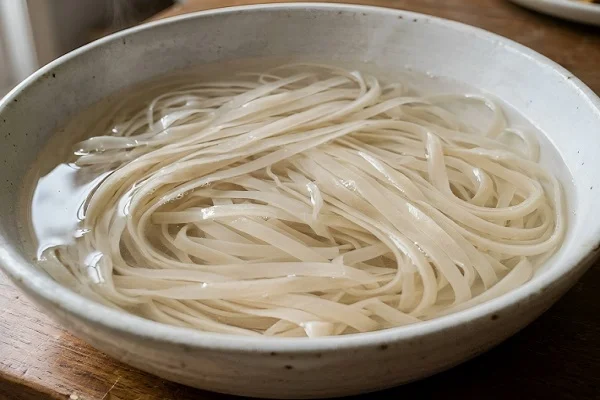
Put the noodles into a large bowl, then pour in enough hot tap water to cover them. Do not use boiling water, and do not boil the noodles in a pot.
Let them soak for 15 to 20 minutes, then test one. The noodles should bend easily but still feel firm in the center.
Soaking time varies by brand and width, so check the package and taste as you go. Drain them well.
2. Press the tofu
As the noodles soak, cover the tofu with a clean kitchen towel. Set a heavy pan or a few books on top and press it for about 15 minutes. Cut it into ¾-inch cubes.
3. Mix the sauce
Whisk the tamarind paste, soy sauce, sugar, lime juice, chili flakes, and water in a small bowl. Taste it. It should taste bold on its own, because the noodles will dilute it.
Adjust the sauce with extra sugar if it needs sweetness, or a little more lime if it needs acidity.
4. Crisp the tofu
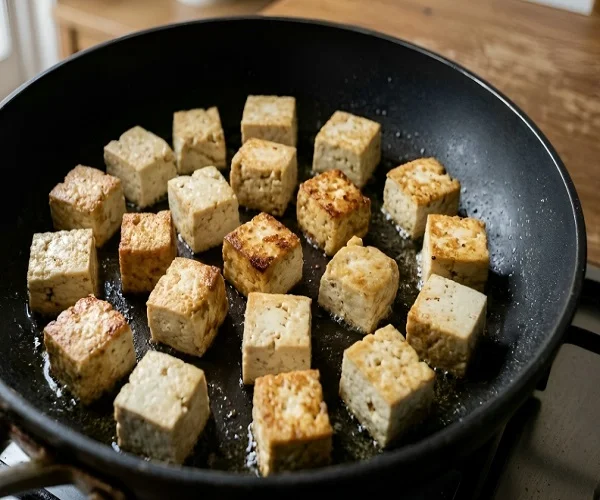
Warm 2 tablespoons of oil in a wok or large nonstick skillet over medium-high heat. Add the tofu in a single layer.
Cook it for 6 to 8 minutes, turning occasionally, until golden on most sides. Move it to a plate.
5. Build the base
Pour the remaining tablespoon of oil into the same pan. Stir-fry the garlic and shallot for 30 seconds, until fragrant. Keep an eye on the garlic, as it can brown and burn quickly.
6. Cook the noodles
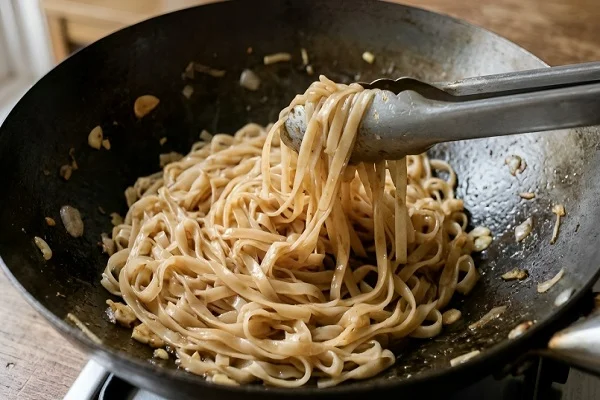
Tip the drained noodles into the pan and pour the sauce over them. Keep the noodles moving with the tongs as they cook for 2 to 3 minutes.
If the noodles still feel hard, splash in a little water and cook for another minute. Stop when they turn tender and the sauce coats them.
7. Finish the dish
Fold the tofu back in, then scatter the bean sprouts and green onions on top. Toss for 30 to 60 seconds so the vegetables keep their crunch.
Serve right away with peanuts, lime, cilantro, and extra chili. Pad thai tastes best straight from the pan.
Troubleshooting Your Pad Thai
The noodles stay hard
Splash a tablespoon or two of water into the pan and keep tossing. The steam finishes cooking them.
The noodles clump
Starch on the surface makes them cling. Drain them well and separate the strands with tongs as soon as they hit the pan.
The dish tastes too sour
Stir in a teaspoon of sugar. If it tastes too sweet, squeeze in extra lime.
The dish tastes too salty
Pour in a little water and fresh lime juice, then toss the noodles once more.
The tofu sticks to the pan
Let the pan heat fully before adding the tofu, and leave each side alone for a minute or two before you flip it. Tofu releases once it forms a crust.
The noodles steam instead of fry
The problem occurs when there is too much food in the pan. Cook two smaller batches rather than one large one.
Easy Variations and Substitutions
- Gluten-free: Rice noodles contain no gluten, but check the package. Swap the soy sauce for tamari labeled gluten-free.
- Nut-free: Replace the peanuts with toasted sesame seeds or roasted pumpkin seeds.
- Extra protein: Add shelled edamame or baked tempeh.
- More vegetables: Add shredded carrot, thinly sliced red cabbage, or chopped bok choy.
- Mild version: Skip the chili flakes and serve chili on the side.
- Crispier tofu: Toss the pressed tofu in 1 tablespoon of cornstarch before frying.
Storage and Reheating
Refrigerate leftovers within 2 hours of cooking. Store them in an airtight container and eat them within 3 to 4 days.
Cold rice noodles turn hard, so add a tablespoon of water to a skillet and stir the noodles over medium heat until they loosen. Heat them until steaming hot.
Keep the peanuts, lime, and sprouts separate so they stay fresh.
Final Thoughts
Pad thai rewards a little prep and a hot pan. Once you cook this version a few times, you will know how you like the sauce, and you can start changing it.
Try a spoonful of peanut butter for creaminess, more chili for heat, or different vegetables with the season. Make it your own, and cook it fresh whenever you can.
Frequently Asked Questions
Is traditional pad thai vegan?
No. Traditional pad thai usually contains fish sauce, and many versions include dried shrimp and egg. At a restaurant, ask the kitchen to leave out fish sauce, shrimp, and egg.
What can I use instead of tamarind paste?
Nothing matches tamarind exactly. In a pinch, mix lime juice or rice vinegar with brown sugar. You will get sourness, but you will lose tamarind’s fruity depth.
Can I make vegan pad thai ahead of time?
You can mix the sauce, press the tofu, and chop the vegetables a day ahead. Soak and cook the noodles right before serving for the best texture.

Rachel Bradley is a food writer and recipe developer with a love for home cooking and global flavors. She has spent years testing recipes in her kitchen, exploring everything from quick weeknight meals to traditional dishes from around the world. Her goal is simple — make great food accessible to everyone.