The Best Fluffy Pancakes recipe you will fall in love with. Full of tips and tricks to help you make the best pancakes.

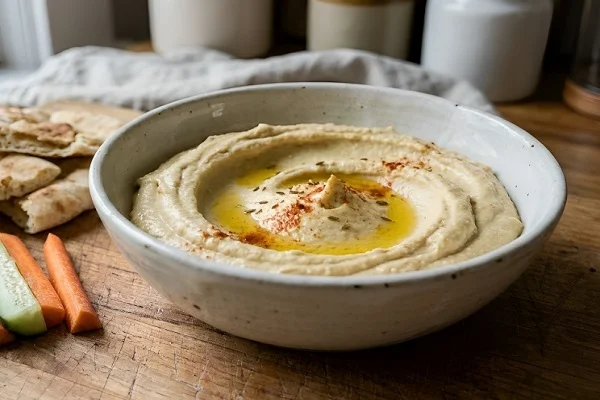
Good 5-minute creamy hummus does not need a long soak, a pressure cooker, or an evening of peeling chickpea skins. A can of chickpeas, a spoonful of tahini, a lemon, and a food processor will get you there while the pita warms up.
The trick lies in the order you add things and in using ice-cold water. Get those two right, and the dip comes out pale, fluffy, and smooth enough to scoop with a carrot stick.
A note on the 5 minutes: That number covers hands-on time when your chickpeas come from a can and your ingredients sit ready on the counter. Firm chickpeas or a smaller food processor may need a few extra minutes of blending, and draining, rinsing, and serving add a little more.
Ingredients
Grab these before you start:
- 1 can (15 oz / 425 g) chickpeas
- ⅓ cup (80 g) tahini
- 3 tablespoons lemon juice, squeezed fresh
- 1 small garlic clove
- ½ teaspoon salt
- ½ teaspoon ground cumin
- 2 tablespoons olive oil, plus more for the top
- 3 to 4 tablespoons ice-cold water
- ½ teaspoon baking soda (only for the optional extra-smooth upgrade below)
This makes roughly 1 1⁄2 to 2 cups, enough for about four people to share with some bread and vegetables.
One word on tahini: taste it from the jar first. If it tastes harsh or bitter on a spoon, it will taste harsh or bitter in your hummus. A good jar pours easily and tastes nutty and mild.
Method
Mellow the garlic
Grate or mince the garlic straight into the lemon juice and let it sit for a few minutes while you measure everything else. The lemon softens the raw bite.
Start with the tahini, not the chickpeas
Put the tahini, the garlic-lemon mixture, and the salt in the food processor and run it for about a minute. Scrape the bowl, then run it for another 30 seconds. The paste will look stiff and strange. Keep going.
Pour in the ice water
Add the olive oil and cumin, then drizzle the cold water in with the motor running, one tablespoon at a time. The mixture lightens in color and turns fluffy, almost like frosting.
Now add the chickpeas
Drain and rinse them, tip them in, and blend for two to three full minutes. Pause the processor and clear any mixture stuck to the sides, then blend again.
If the chickpeas feel firm or you spot bits of skin, keep blending for a few more minutes. A longer blend breaks the chickpeas and their skins down into smaller pieces, which makes the texture smoother.
Taste it
Need more salt? Add a pinch. Too thick? Add a splash of water. Flat? Squeeze in more lemon.
Spoon it into a shallow bowl, drag the back of the spoon around to make a swirl, and pour olive oil into the groove.
How the Hummus Comes Together
Blending the tahini with lemon juice before adding anything else is a commonly used technique for smoother hummus. The tahini tightens first, then loosens into a lighter paste once you add liquid. Starting with the chickpeas makes that step harder to control.
Ice-cold water is also commonly used in hummus recipes. Cold water helps the tahini whip into a lighter paste instead of a heavy, oily one. The liquid left in the chickpea can can work too, but cold water gives the hummus a more neutral taste.
The word “hummus” means chickpeas in Arabic, so the bean is the foundation of the dish. Tahini brings flavor and richness along with the creamy texture.
When Your Hummus Goes Wrong
It feels grainy
Blend longer. If it still feels rough, try a commonly used upgrade: put the drained chickpeas in a pot, cover them with plenty of water, and add ½ teaspoon of baking soda.
Simmer for 10 to 20 minutes, until the beans turn very soft and the skins start floating. Skim off the skins you can, then drain and rinse the chickpeas well before blending.
This pushes you past five minutes, so save it for days when you want extra-smooth results. You can also peel the chickpeas by hand, which takes patience but gives a smoother result.
It tastes bitter
Blame the tahini first. Switch brands before you change anything else.
It tastes too sharp
You probably used too much raw garlic. Next time, use half a clove, or let the garlic sit in the lemon juice a little longer before blending.
It looks too thick
Add ice water, one tablespoon at a time. Hummus also firms up in the fridge, so thin it a little before serving cold leftovers.
A Few Ways to Change It Up
Once you have the base down, play with it. Blend in half a cup of roasted red peppers for a sweeter, rosier dip. Stir chopped parsley and extra lemon zest in at the end for a fresh, green version.
Add a pinch of cayenne or a spoonful of harissa if you want heat. Leave the garlic out entirely if you cook for people who dislike it.
What to Serve It With
Warm pita is the obvious choice. Cucumber, carrots, and bell pepper strips work well too. You can also spread hummus inside a sandwich instead of mayo, or spoon it under roasted vegetables for a quick lunch.
What’s in It, Nutritionally
Chickpeas carry most of the protein and fiber here. A 100-gram portion of drained canned chickpeas contains about 139 calories, 7 grams of protein, and 6.4 grams of fiber.
Tahini and olive oil add fat and calories, so a spoonful of hummus is denser than a spoonful of plain chickpeas. The exact numbers depend on your brands and how generous you are with the oil.
Note on Sesame Allergy
Tahini is made from sesame, so anyone with a sesame allergy needs to avoid it. Sesame must be listed on packaged foods in the United States. Since January 1, 2023, the FASTER Act has required packaged foods to label it.
If you serve hummus to friends or family, mention that it contains sesame. People who are allergic to sesame should avoid hummus made with tahini.
Storing
This section follows general food safety guidance for leftovers, not a rule written only for hummus. Put the hummus in an airtight container and refrigerate it within two hours of making it.
Refrigerated leftovers generally stay safe for three to four days when your fridge runs at 40°F (4°C) or colder, so plan to finish it in that window.
You can freeze it too. For frozen leftovers in general, the best quality lasts about three to four months. Thaw the hummus in the fridge, stir it well, and add a teaspoon of water if it looks stiff.
At a picnic or party, do not leave the bowl out for more than two hours, or one hour if the weather tops 90°F (32°C). When you are unsure, throw it out.
Quick Answers
Can I use a blender?
Yes. A strong blender works, though you may need to scrape the sides often and add a bit more water.
Can I use dried chickpeas?
Yes, but cook them until they turn very soft first. That takes you well beyond five minutes.
Can I skip the tahini?
You can, but you will end up with a chickpea dip that tastes and feels different from hummus made with tahini.
Is it vegan?
Yes, as long as your ingredients have no hidden animal products. Always check the labels.

Barkat Ali is a culinary contributor who shares cooking demonstrations, recipe preparation, and practical cooking knowledge with Global Food Story. His contributions include original cooking videos and hands-on culinary content designed to help readers and viewers explore recipes, cooking techniques, and food traditions from around the world.