The Best Fluffy Pancakes recipe you will fall in love with. Full of tips and tricks to help you make the best pancakes.

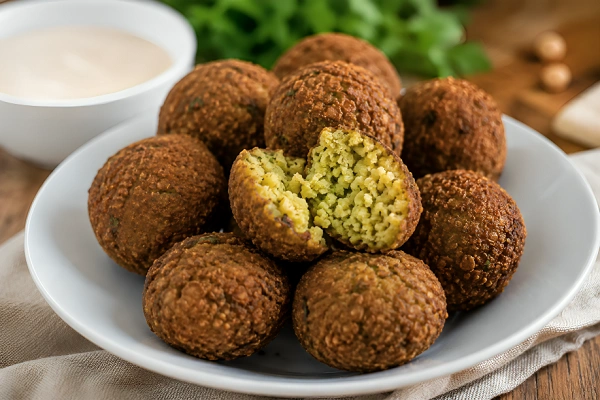
Making crispy falafel at home is not as hard as most people think. You just need to follow the right steps, use the right ingredients, and pay attention to a few key details. If you do that, you will get falafel that is golden and crunchy on the outside, soft and fluffy on the inside just like the ones from a good restaurant.
This article covers everything from start to finish. No complicated cooking terms, no confusing steps. Simple directions that make the whole process easy to understand and apply.
The Most Important Rule Use Dried Chickpeas, Not Canned
Before anything else, this is the one rule that matters the most.
Always use dried chickpeas. Never use canned chickpeas.
This is where most beginners go wrong. Canned chickpeas already have too much water in them. When you grind them, the mixture becomes too wet and sticky. When you fry it, the falafel breaks apart in the oil or turns out soft and mushy instead of crispy.
Dried chickpeas, on the other hand, give you full control over moisture. After soaking, you use them completely raw, no boiling, no cooking. That raw texture is exactly what makes falafel light on the inside and crispy on the outside.
Ingredients Makes 20 to 25 Falafel
- 250 grams dried chickpeas — soaked overnight
- 1 small onion — roughly chopped
- 4 to 5 garlic cloves
- 1 cup fresh cilantro (coriander) — stems are fine to include
- ½ cup fresh parsley or mint leaves
- 1½ teaspoon cumin — ground
- 1 teaspoon coriander powder
- ½ teaspoon black pepper
- 1 teaspoon salt — or to taste
- ¼ teaspoon red chili — optional, if you like heat
- 1 teaspoon baking soda
- 2 tablespoons all-purpose flour — you may need a little more
- Oil for frying — Vegetable oil, sunflower oil, or canola oil for frying
Step by Step Instructions
Step 1 Soak the Chickpeas
Add the dried chickpeas to a spacious bowl. Add enough water so they are fully covered, with a few extra inches of water on top because they will expand a lot. Leave them for 12 to 16 hours, or just soak them the night before.
When they are done soaking, drain the water completely. Spread the chickpeas on a clean kitchen towel and pat them dry. Removing extra moisture at this stage is important for a better final result.
Step 2 Grind Everything Together
Add the soaked chickpeas, onion, garlic, cilantro, parsley or mint, all the spices, and the baking soda into a food processor.
Do not use a blender. A blender will make the mixture too smooth and liquid. A food processor gives you more control.
Now here is a very important point: do not over-process the mixture. You want it to look like coarse crumbs, not a smooth paste. There should still be tiny bits and pieces visible. This rough texture is what makes falafel light and crispy. If it turns into a paste, your falafel will be dense and heavy.
Use the pulse button on your food processor. Pulse in short bursts, stopping every few seconds to scrape down the sides with a spatula. Stop as soon as everything is combined but still looks rough and crumbly. The exact number of pulses depends on your machine’s focus on the texture, not the count.
Step 3 Rest the Mixture in the Fridge
spoon the mixture into a bowl and cover it. Place it in the fridge for at least 1 hour.
Do not skip this step. Resting helps the mixture firm up so it holds its shape when you fry it. Falafel made from warm, freshly ground mixture is much more likely to fall apart in the oil.
When you take it out of the fridge, check the texture. If the mixture feels too wet and does not hold together when you press it in your hand, add 1 to 2 extra tablespoons of flour and mix again.
Step 4 Shape the Falafel
Wet your hands slightly with water this stops the mixture from sticking to your palms.
Take about 1 to 1.5 tablespoons of the mixture and roll it between your palms into a ball or a slightly flat disc shape. Do not squeeze it too hard. Gentle pressure is enough.
Place each one on a tray or plate as you go. Shape all of them before you start frying.
Step 5 Fry the Falafel
This stage is key to getting that perfect crisp texture.
Pour enough oil into a deep pan or pot so the falafel can be fully submerged at least 3 inches of oil. Heat the oil on medium-high heat. The right temperature is 175°C to 180°C (350°F to 360°F).
If you do not have a cooking thermometer, here is a simple test. Dip the handle of a wooden spoon into the oil. If small bubbles form around it quickly and steadily, the oil is ready.
If the oil is too hot, the outside will burn before the inside cooks. If the oil is too cool, the falafel will soak up oil and become greasy.
Fry only 4 to 5 falafel at a time. Adding too many at once drops the oil temperature and ruins the crispiness.
Fry each batch for 3 to 4 minutes per side until they are a deep golden brown color all around. Remove them with a slotted spoon and place them on a plate lined with kitchen paper towels to drain the extra oil.
Why Does Falafel Fall Apart? Common Problems and Fixes
If your falafel breaks apart during frying, one of these is the reason:
You used canned chickpeas
The extra moisture makes the mixture impossible to bind properly. There is no fix for this mid-recipe always starting with dried.
The oil was not hot enough
When oil is too cold, falafel sits in it for too long before a crust forms. That is when it starts to fall apart. Always test the oil before adding falafel.
You added too many at once
Overcrowding the pan drops the oil temperature quickly. Stick to 4 to 5 at a time, no matter how tempting it is to fry them all at once.
You shaped them too loosely
If the balls are not pressed together firmly enough, they will crack open in the oil. Apply a bit more pressure when shaping just not so much that they become rock hard.
The mixture was too dry
This happens sometimes if the chickpeas were not soaked long enough. If the mixture crumbles and will not hold shape at all, add a teaspoon of cold water at a time until it just comes together.
Baking Option If You Prefer Not to Fry
You can bake falafel instead of frying, but be honest with yourself, baked falafel will not be as crispy. The flavor and texture will be marginally modified. Still good, just not the same.
To bake: preheat your oven to 220°C (425°F). It is recommended to use a small quantity of oil to coat a baking pan, and then line the tray with parchment paper. Place the falafel on the tray, then apply a light coating of oil on the surface of each piece. Bake for 25 to 30 minutes, turning them once halfway through so they cook evenly on all sides.
For air fryer: cook at 200°C (390°F) for 15 to 18 minutes. Halfway through, stop and give the basket a gentle shake.
How to Serve Falafel
Falafel is very flexible. You are able to provide it in the following simple and speedy ways:
In pita bread: Stuff warm pita with falafel, sliced tomato, cucumber, onion, and a drizzle of tahini sauce. This is the most classic way.
With a simple salad: Chopped cucumber, tomato, onion, olive oil, and a squeeze of lemon go perfectly with falafel on the side.
With hummus: Spread hummus on a plate, place the falafel on top, and drizzle with a little olive oil. Simple and satisfying.
With yogurt dip: Mix plain yogurt with a little garlic, lemon juice, and salt for a quick dipping sauce.
Quick Tahini Sauce Recipe
Falafel and tahini sauce belong together. Here is how to make it at home in two minutes:
- 3 tablespoons tahini (sesame paste)
- 2 tablespoons lemon juice
- 1 garlic clove crushed or minced
- 3 to 4 tablespoons water
- Salt to taste
Mix everything in a small bowl. Add water little by little until the sauce becomes pourable but not watery. Pour it over the falafel or enjoy it as a dipping sauce.
How to Store Falafel
Fried falafel is best eaten fresh, right after frying. If you are in a warm climate, do not leave them out for more than 1 hour at room temperature. Stored in the refrigerator, they keep well for up to three days.
To reheat, use an oven or air fryer and a microwave will make them soft and chewy.
Raw falafel mixture can be stored in an airtight container in the fridge for up to 2 days. You can also freeze the shaped but unfried falafel for up to 1 month. When you are ready to cook, fry them directly from frozen just add an extra minute or two to the frying time.
One Last Thing Taste the Mixture Before You Fry
Before you shape and fry all your falafel, take a small piece of the mixture and fry just that one test piece first. Taste it. Check the salt. Check the spice level. It is much easier to adjust the seasoning now than after you have fried the whole batch.
This is a small habit that makes a big difference, especially the first time you make a new recipe.
The first time you make falafel at home, it might not be perfect. That is completely fine. Once you understand what to look for the right texture, the right oil temperature, the right color every batch after that gets better. It is one of those recipes that teaches you something new every time you make it.

James Carter is a food researcher and writer passionate about global cuisines, street food, and the stories behind what we eat. He combines thorough research with a genuine love for food culture to bring readers accurate, well-written, and interesting content.